Christmas Lights
Source wholesale Christmas lights directly from vetted manufacturers and suppliers capable of handling high-volume production. Designed for importers, distributors, and brands seeking reliable OEM/private-label manufacturing, this selection covers commercial-grade and residential lighting engineered for strict market compliance.
Sourcing seasonal lighting in bulk requires navigating a minefield of electrical safety standards, rigid production timelines, and highly variable component quality. The difference between a profitable seasonal run and a costly recall often comes down to unseen details on the factory floor: wire gauge, LED binning consistency, and the integrity of waterproof seals.
For volume buyers, securing a reliable supply chain means moving beyond surface-level aesthetics to specify exact material grades and testing protocols before the seasonal rush begins.
Critical Technical Specifications
When negotiating with lighting manufacturers, vague specifications lead to cost-cutting on critical components. To ensure durability and safety, you must define the exact materials and tolerances required for your target market.
Wire Quality and Insulation
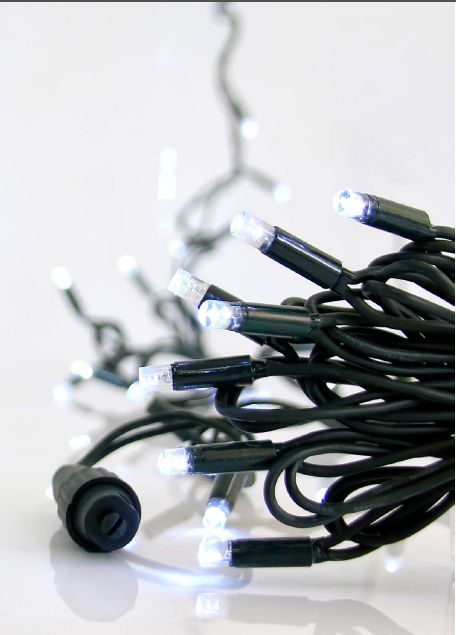
The wire itself is the most common area for hidden downgrades. Standard consumer lights often use copper-clad aluminum (CCA) to save money, which increases resistance and fire risk over long runs. Commercial-grade products require pure copper wiring. Furthermore, the insulation material dictates the product's temperature rating and lifespan.
| Insulation Material | Characteristics | Typical Application |
|---|---|---|
| Standard PVC | Cost-effective, moderate flexibility, becomes brittle in extreme cold | Indoor or temporary residential outdoor |
| Rubber (H05RN-F) | High durability, UV resistant, maintains flexibility in sub-zero temps | Commercial installations, permanent outdoor |
| Transparent PVC | Blends into backgrounds, prone to yellowing under UV exposure | Indoor decorative, window displays |
LED Chip Binning and Color Consistency
Inconsistent color temperature (e.g., warm white varying from 2700K to 3200K within the same batch) is a frequent defect in poorly managed production runs. Factories must purchase LEDs from the same "bin" to guarantee uniformity. Always specify the exact MacAdam ellipse step or precise Kelvin range in your purchase order.
Struggling with inconsistent quality or failed electrical certifications? Let us connect you with vetted lighting manufacturers who meet strict international standards.
Talk to our teamManufacturing Tolerances and Quality Control
Electrical products demand rigorous in-line and pre-shipment inspection. Relying solely on a factory's internal QA is risky, especially during the peak production months of May through August when temporary workers are often brought in.
Integrating professional Quality Control & Inspection into your timeline ensures that critical safety tests are performed on the actual production line, not just on golden samples.
Essential Factory Testing Protocols
- Hi-Pot (High Potential) Testing: Verifies electrical insulation integrity to prevent short circuits.
- Strain Relief / Pull Testing: Ensures the connection between the wire and the plug/bulb socket can withstand mechanical stress.
- Water Ingress Testing: Confirms IP44 (splash-proof) or IP65 (jet-proof) ratings using standardized spray chambers.
- Aging Tests: Running the lights continuously for 24 to 48 hours to identify early LED failures or thermal issues.
Certifications and Compliance
Importing electrical goods without the correct regional certifications will result in customs seizures. For the US market, UL 588 is the standard for seasonal lighting. In Europe, CE marking and RoHS compliance are mandatory. Ensure your supplier has valid, verifiable test reports for the specific components used in your order, and consider third-party Compliance & Testing to verify the final assembled product.
Buying Mechanics: MOQs, Pricing, and Lead Times
The seasonal nature of this category dictates aggressive procurement schedules. Factories prioritize large orders placed early in the year. If you are developing custom lengths, specific bulb shapes, or proprietary packaging through OEM/ODM Services, you must factor in additional time for tooling and sample approval.
Pricing Drivers
Prices fluctuate based on the cost of copper, LED chip quality, and the complexity of the controller (e.g., simple multi-function vs. app-controlled smart lights). Expect a 15 to 30 percent premium for rubber insulation and heavy-gauge pure copper wiring compared to standard PVC/CCA consumer grades.
Need to finalize your seasonal lighting orders before peak factory capacity is reached? We can help negotiate terms and manage the production schedule.
Get a free consultationFrequently Asked Questions
Successfully sourcing Christmas lights in bulk requires a proactive approach to quality assurance and a rigid adherence to seasonal timelines. By specifying component-level details and enforcing strict electrical testing at the factory, you can eliminate the costly defect rates that plague poorly managed seasonal imports.
Get Sourcing Help for Christmas Lights
Tell us your requirements and our experts will connect you with verified manufacturers.