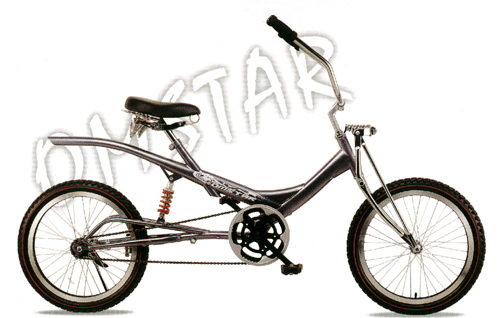
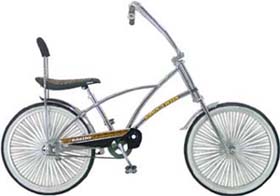
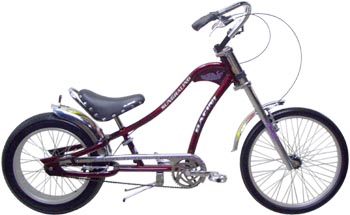
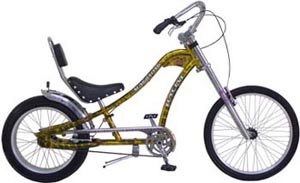
Chopper Bikes
Source premium Chopper Bikes from vetted suppliers and manufacturers across Asia. Designed for importers, wholesalers, and brands seeking reliable OEM and private-label production, our network delivers custom cruisers built to exacting specifications. Secure competitive pricing on bulk orders with full quality assurance.
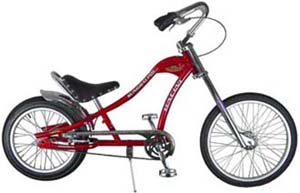
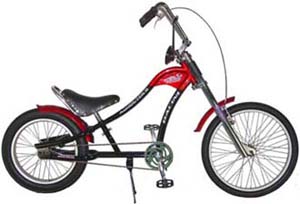
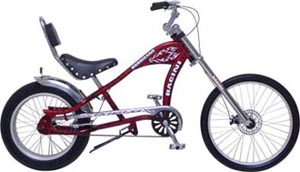
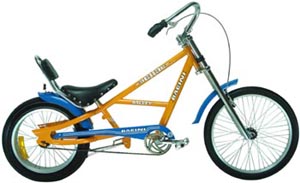
Chopper bikes present a unique manufacturing challenge: their defining elongated frames, exaggerated fork rakes, and custom geometries place non-standard stress loads on the head tube and bottom bracket. Sourcing these bicycles in volume requires balancing aggressive aesthetic demands with rigorous structural integrity. For bulk buyers, success depends on specifying the right materials, verifying factory welding capabilities, and managing the logistics of shipping oversized frames.
Frame Geometry and Material Specifications
The core of any chopper bike is its frame and fork assembly. The extended wheelbase and slack head tube angle (often exceeding 40 degrees) act as a lever, amplifying the force applied to the frame joints during riding. When negotiating with manufacturers, the choice of frame material dictates both the unit cost and the maximum safe rider weight.
| Material | Cost Tier | Structural Rigidity | Weight Profile |
|---|---|---|---|
| Hi-Ten Steel | Entry-Level | Moderate (Prone to flex on long wheelbases) | Very Heavy |
| 4130 Chromoly | Mid to Premium | High (Excellent fatigue resistance) | Moderate |
| 6061 Aluminum | Premium | Very High (Requires oversized tubing) | Lightweight |
Beyond the frame material, buyers must specify the fork construction. Triple-tree forks are standard for chopper designs, providing the necessary stiffness for extended lengths. Ensure your technical specification sheet explicitly details the stanchion diameter and the crown material (forged aluminum is preferred over stamped steel for durability).
Developing a custom chopper geometry? Let us evaluate your CAD designs and match you with a manufacturer capable of executing complex frame alignments.
Talk to our teamManufacturing Tolerances and Quality Control
Because chopper bikes prioritize form, many entry-level factories cut corners on structural welding. The elongated head tube junction is the primary failure point. When conducting factory audits, it is critical to verify the supplier's welding processes. TIG welding is strongly recommended over MIG for chromoly and aluminum frames, as it provides deeper penetration and cleaner beads on complex tube intersections.
Critical Factory Inspection Points for Chopper Bikes
- Head tube alignment: Must be perfectly parallel to the seat tube despite the extreme rake.
- Weld penetration: Inspect bottom bracket and head tube junctions for consistent bead width without undercutting.
- Surface preparation: Ensure frames are properly sandblasted before powder coating or chrome plating to prevent flaking.
- Component clearance: Verify chainline clearance around ultra-wide rear tires (often 3.0 to 4.25 inches wide).
Customization and Surface Treatments
Chopper bikes are highly visual products, making surface finish a primary selling point. Factories typically offer liquid paint, powder coating, and electroplating (chrome). If you are utilizing OEM/ODM services to build a private-label line, specify your salt-spray testing requirements for chrome parts, especially if distributing to coastal regions. A standard requirement is 48 to 72 hours of salt-spray resistance without pitting.
Additionally, custom saddles (banana seats or sprung tractor seats), ape-hanger handlebars, and custom-molded grips require coordination with secondary component suppliers. A capable final assembly factory will manage these sub-tier suppliers efficiently, but lead times can extend if custom tooling is required for proprietary accessories.
Buying Mechanics: MOQs, Pricing, and Logistics
Purchasing chopper bikes at wholesale involves managing the physical size of the product. The elongated frames mean fewer units fit into a standard shipping container compared to traditional mountain or city bikes, which directly impacts your landed cost per unit.
Most factories prefer to ship chopper bikes in SKD (Semi-Knocked Down) 85% condition. However, due to the fork length, the front wheel, handlebars, and sometimes the entire triple-tree fork assembly must be detached to optimize carton dimensions. Implementing strict quality control & inspection prior to container loading ensures that all proprietary hardware (like extended brake cables and custom axle nuts) is included in the hardware box.
Struggling with high freight costs due to oversized bike cartons? We can help negotiate better packaging configurations and consolidate your shipments.
Get a free consultationFrequently Asked Questions
Sourcing chopper bikes requires a sharp eye for structural integrity hidden beneath custom aesthetics. By mandating precise material specs and enforcing rigorous pre-shipment inspections on the frame's critical junctions, buyers can deliver striking, high-margin bicycles that perform safely in the real world.
Get Sourcing Help for Chopper Bikes
Tell us your requirements and our experts will connect you with verified manufacturers.