Car Fenders
Source car fenders in bulk from vetted manufacturers. This category is designed for auto parts importers, aftermarket distributors, and brands seeking reliable OEM or private-label production. Connect with suppliers offering precise fitment, durable e-coatings, and custom tooling capabilities for high-volume orders.
Sourcing automotive fenders at scale requires strict attention to dimensional accuracy, material composition, and surface treatment. Whether you are supplying the collision repair aftermarket or developing custom widebody kits, the factory's tooling capabilities and quality management systems dictate the final fit and finish. A millimeter of deviation in the stamping process translates to panel gaps that end-users will immediately reject.
Material Specifications and Tooling
The choice of material dictates the manufacturing process, tooling investment, and the factory profile you need to target. Most commercial fender production falls into two categories: sheet metal stamping and plastic injection molding.
| Material | Process | Typical Thickness | Common Application |
|---|---|---|---|
| Cold-Rolled Steel | Multi-stage Stamping | 0.8mm - 1.2mm | Standard aftermarket replacement |
| Aluminum Alloy | Stamping / Pressing | 1.0mm - 1.5mm | Premium / weight-reduction OEM |
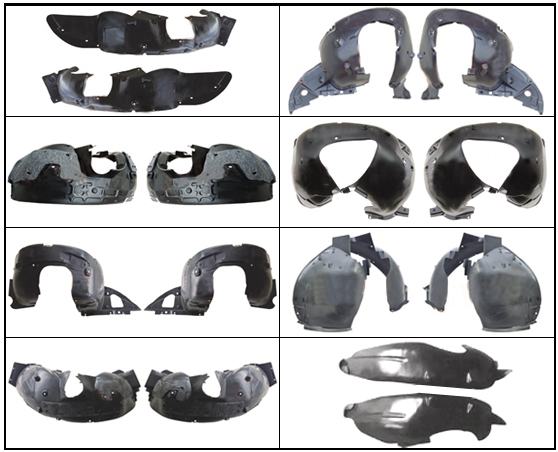
| Polypropylene (PP) | Injection Molding | 2.5mm - 3.5mm | Off-road / flexible aftermarket |
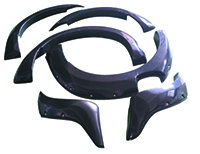
| ABS Plastic | Injection Molding | 2.5mm - 4.0mm | Custom widebody kits |
For steel and aluminum fenders, the quality of the stamping dies is paramount. Progressive dies offer higher production speeds but require massive upfront investment, making them suitable only for the highest-volume vehicle models. Transfer dies or tandem press lines are more common for standard aftermarket runs. When executing your product sourcing strategy, evaluating a factory's in-house tooling maintenance capabilities is just as critical as checking their production line.
Need help verifying a factory's tooling capabilities and production capacity before committing to a large order?
Talk to our teamSurface Treatment and Corrosion Resistance
For metal fenders, the raw stamped part is highly susceptible to flash rust. Reputable manufacturers use Electrophoretic Deposition (ED coating or e-coating) to apply a uniform, rust-resistant primer.
The e-coating process involves submerging the fender in a specialized bath and applying an electrical current to bind the paint particles to the metal. A standard high-quality e-coat should measure between 15 and 25 microns in thickness. Inferior factories may skip proper pre-treatment (degreasing and phosphating) or use low-grade ED baths, resulting in a coating that flakes off during transit or fails salt-spray testing.
Critical Quality Control Checkpoints for Fenders
- Dimensional accuracy verified against a checking fixture (jig) specifically built for that vehicle model.
- E-coating thickness measured via dry film thickness (DFT) gauge (target 15-25 microns).
- Cross-hatch adhesion testing on the e-coat to ensure the primer will not peel when the end-user applies topcoat.
- Visual inspection for stamping defects: tearing, wrinkling, or springback distortion on character lines.
- Verification of all mounting hole alignments and bracket weld integrities.
Catching these issues at the factory is essential. Implementing rigorous quality control & inspection before the fenders are packaged prevents unsellable inventory from leaving the origin country.
Packaging and Freight Optimization
Car fenders present a unique logistical challenge: they are bulky, lightweight, and highly susceptible to denting or scratching. Shipping "air" is expensive, but over-packing containers leads to crush damage.
Nesting vs. Individual Boxing
Advantages
- Nesting (stacking bare/lightly wrapped fenders) maximizes container space and drastically reduces freight cost per unit.
- Individual boxing provides maximum protection for premium or retail-ready aftermarket parts.
Disadvantages
- Nesting increases the risk of surface scratches and edge deformation if not properly buffered with pearl cotton.
- Individual boxing significantly increases volumetric weight, resulting in higher shipping costs and fewer units per container.
For standard aftermarket replacements, most bulk buyers opt for a hybrid approach: heavy-duty corrugated corner protectors, foam wrapping, and careful nesting on custom pallets. Coordinating this with your shipping and freight strategy ensures you optimize container yields without sacrificing product integrity.
MOQs, Pricing, and Custom Tooling Realities
Pricing for car fenders is driven by raw material costs (steel/aluminum indexes), the complexity of the part, and whether you are purchasing existing aftermarket designs or commissioning new molds.
If you are developing custom body kits or replacement panels for niche vehicles, you will need to engage in OEM/ODM services. Developing a new steel stamping die for a fender can easily cost tens of thousands of dollars, whereas plastic injection molds for PP/ABS are generally more accessible. Always establish clear mold ownership agreements before transferring tooling deposits.
Planning a custom fender project? Let us help you negotiate tooling costs, MOQs, and mold ownership terms.
Get a free consultationFrequently Asked Questions
Successfully sourcing car fenders requires balancing unit costs with the hidden expenses of high defect rates and inefficient shipping. Working with suppliers who possess robust tooling maintenance and strict quality management systems is the most effective way to protect your margins and your brand reputation.
Get Sourcing Help for Car Fenders
Tell us your requirements and our experts will connect you with verified manufacturers.