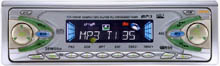
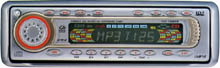
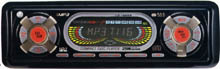
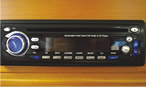
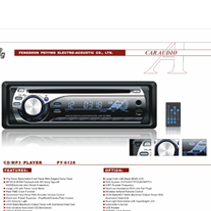
Car CD Players
Source reliable car CD players from vetted manufacturers and suppliers in China. Designed for importers, automotive electronics distributors, and brands seeking OEM or private-label production, our bulk sourcing solutions ensure high-quality audio components, stable supply, and competitive wholesale pricing.
Sourcing car CD players in volume requires navigating a mature but highly technical manufacturing landscape. While digital media dominates, the demand for high-fidelity optical drives in automotive environments persists. The primary sourcing challenge is identifying assembly partners who maintain strict quality standards for mechanical anti-vibration systems and optical lens durability, ensuring the units survive harsh vehicular conditions over years of use.
Critical Components and Specifications
A car CD player's longevity is entirely dependent on its internal mechanical and optical components. When evaluating a supplier's bill of materials (BOM), pay close attention to the following core modules:
- Optical Pickup (Laser Mechanism): The laser lens and loader mechanism are the heart of the unit. Premium units typically utilize mechanisms from established brands like Sanyo, Hitachi, or Sony, which offer superior read accuracy and longevity compared to unbranded alternatives.
- Electronic Skip Protection (ESP): Automotive environments require robust anti-shock capabilities. A standard buffer for CD-DA is 10 to 45 seconds, achieved via onboard RAM that reads ahead of the playback track.
- Amplifier ICs: The internal amplifier determines audio output quality and heat generation. Standard units often use generic ICs, while higher-end models specify TDA series chips (such as the TDA7388) for stable 4x45W or 4x50W output with lower harmonic distortion.
- Heat Dissipation: Look for extruded aluminum heatsinks integrated into the rear chassis. Insufficient thermal management leads to premature amplifier failure.
| Component | Standard Market Unit | Premium/OEM-Grade Unit |
|---|---|---|
| Optical Mechanism | Generic brand | Sanyo or Hitachi loader |
| Amplifier IC | Generic 7388 equivalent | Original STMicroelectronics TDA series |
| Anti-Shock Memory | 10-15 seconds | 45+ seconds with mechanical dampening |
| Chassis Material | Stamped steel (thin) | Thick galvanized steel with aluminum heatsink |
Manufacturing Vulnerabilities and Quality Control
The assembly of optical drives requires environments that standard electronics factories may not maintain. Dust contamination during the mounting of the optical pickup or poor soldering on the vibration-heavy loader mechanism will result in high defect rates.
Before committing to a production run, it is crucial to verify the factory's assembly conditions. Conducting thorough factory audits ensures the supplier maintains clean-room standards for optical assembly and has the necessary testing equipment on the floor.
Factory Floor Evaluation Checklist
- Verify clean-room or dust-free enclosures for optical mechanism assembly.
- Check for automated wave soldering machines to ensure consistent PCB joint integrity.
- Confirm the presence of vibration testing tables (sweep sine wave testing).
- Inspect high-temperature aging rooms used for thermal stress testing.
Need help verifying a manufacturer's clean-room standards and production capabilities?
Talk to our teamCustomization and OEM/ODM Integration
Modern car CD players are rarely standalone devices; they must integrate seamlessly with Bluetooth, USB, and AM/FM RDS modules. If you are developing a private-label line, you will need to choose between customizing an existing white-label unit or investing in custom tooling for a unique faceplate and UI.
Utilizing OEM/ODM services allows you to dictate the exact feature set, screen type (LCD, VA, or TFT), and button illumination colors to match specific vehicle dashboards.
Faceplate Sourcing Strategies
Advantages
- White-Label: Zero tooling costs, faster time to market, lower MOQs.
- Custom Tooling: Unique brand identity, tailored button layout, proprietary UI design.
Disadvantages
- White-Label: High market competition, identical appearance to competitor products.
- Custom Tooling: High upfront injection molding costs, extended development lead times.
Pricing Dynamics, MOQs, and Lead Times
Pricing for car CD players is heavily influenced by the cost of the optical mechanism and the amplifier IC. Because the optical loader is a complex mechanical part, it sets a hard floor on unit costs that digital-only media receivers do not have.
When negotiating with suppliers, ensure the contract specifies the exact component brands. A common factory tactic to offset rising material costs is swapping a branded optical loader for a generic one mid-production. Implementing rigorous quality control and inspection protocols before shipment is the only reliable way to prevent unauthorized BOM substitutions.
Optimize your unit costs and negotiate better terms with vetted automotive audio suppliers.
Get a free consultationFrequently Asked Questions
Successfully sourcing car CD players requires balancing legacy mechanical precision with modern digital integration. By strictly controlling the BOM and verifying factory testing standards, you can secure reliable units that perform consistently in demanding automotive environments.
Get Sourcing Help for Car CD Players
Tell us your requirements and our experts will connect you with verified manufacturers.