Bridge Cranes
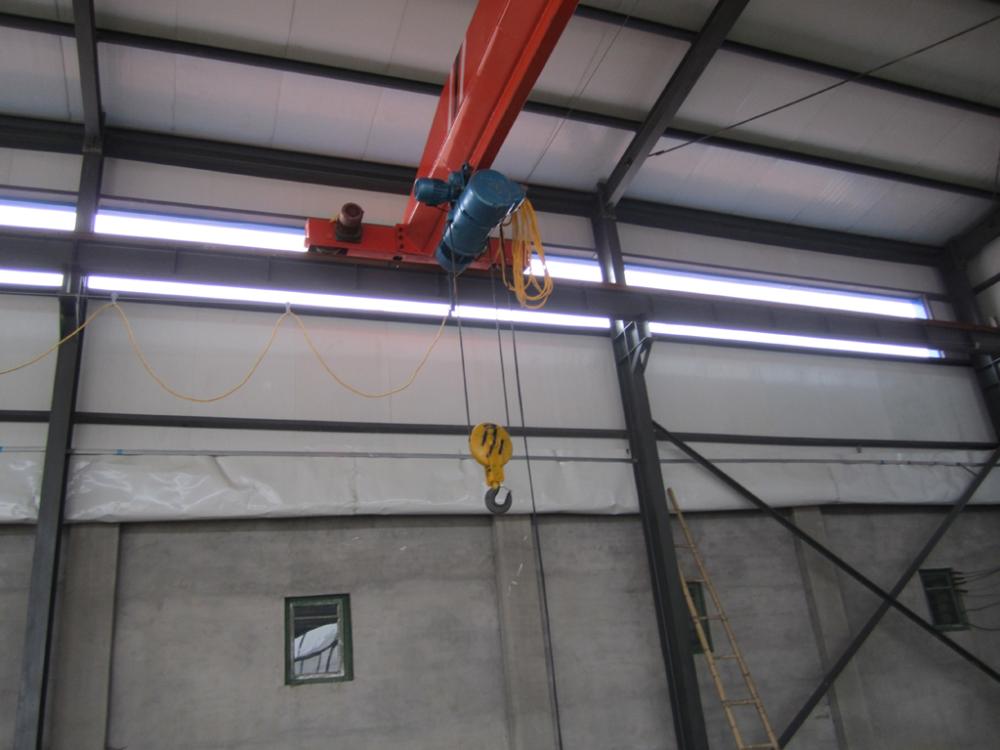
Source industrial-grade bridge cranes from vetted manufacturers and suppliers in China and across Asia. Designed for procurement managers, industrial distributors, and heavy-machinery importers, our wholesale network provides customized overhead lifting solutions engineered for high-duty cycles and strict regulatory compliance.
Sourcing overhead bridge cranes directly from overseas manufacturers requires more than just negotiating a price per ton. These are critical capital expenditure (CAPEX) assets where structural engineering, duty cycle alignment, and electrical reliability dictate facility safety and operational uptime. A successful procurement strategy relies on strict factory vetting, precise technical specifications, and a robust plan for international out-of-gauge logistics.
Defining Core Specifications and Duty Cycles
When communicating with crane manufacturers, providing basic capacity and span dimensions is insufficient. The most common point of failure in overseas crane procurement is misaligning the crane's duty classification with the end-user's actual operational tempo.
Specify the exact working class (FEM/ISO or CMAA standards) required. A crane designed for a maintenance workshop (A3) will suffer rapid mechanical and electrical failure if deployed in a continuous-production steel mill (A7/A8).
| Duty Class (ISO/FEM) | Typical Application | Operational Tempo |
|---|---|---|
| A3 / A4 (Light) | Maintenance shops, light assembly | Infrequent lifts, low speeds |
| A5 / A6 (Medium to Heavy) | General manufacturing, machining | Regular daily use, medium loads |
| A7 / A8 (Severe Duty) | Steel mills, foundries, scrap yards | Near-continuous operation, full capacity |
Beyond duty class, ensure your technical dossier explicitly details:
- Clearance and Dimensions: Span, maximum lifting height, and required headroom.
- Power Supply: Voltage, phase, and frequency (e.g., 480V/3Ph/60Hz for North America). Misaligned electrical specs require costly on-site transformers.
- Control Systems: Specify Variable Frequency Drives (VFDs) for smooth acceleration and deceleration, reducing load sway and mechanical wear.
Need to validate a factory's engineering capabilities? We help procurement teams align technical specifications with capable, vetted manufacturers.
Talk to our teamManufacturing Quality and Factory Validation
The structural integrity of a bridge crane relies entirely on the manufacturer's steel fabrication and welding standards. You cannot assess this from a product catalog. Evaluating a supplier requires verifying their internal quality management systems and their certifications for non-destructive testing (NDT) on critical welds.
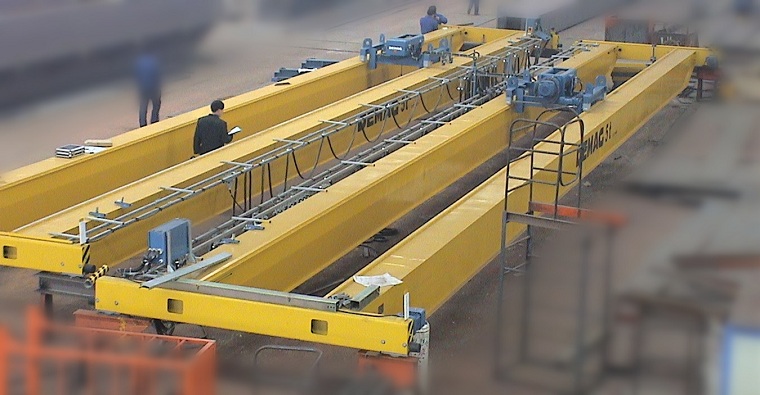
Conducting rigorous factory audits is essential before placing a deposit. You must confirm the factory has the physical floor space, heavy-duty boring machines, and automated submerged arc welding equipment required to fabricate long-span girders accurately.
Critical Component Sourcing
Top-tier Chinese crane manufacturers fabricate the steel structures in-house but rely on specialized sub-suppliers for moving parts and electricals. To ensure longevity and ease of maintenance, dictate the origin of critical components:
- Electrical Contactors & PLCs: Specify globally recognized brands (e.g., Schneider, Siemens, ABB) to ensure replacement parts are locally available in the destination country.
- Motors and Gearboxes: Look for suppliers using reputable domestic brands or imported European gearmotors (e.g., SEW-Eurodrive, Nord) for heavy-duty applications.
- Wire Rope vs. Chain: Ensure the hoist mechanism matches the capacity. Chain hoists are typical for under 5 tons; wire rope is standard for larger capacities.
Factory Acceptance Testing (FAT) Checklist
- Review NDT (Ultrasonic or X-Ray) reports for main girder butt welds.
- Verify camber (upward curve) of the main girder meets specified tolerances.
- Test all limit switches (hoist travel, cross travel, long travel).
- Run no-load and dynamic load tests (usually at 110 percent capacity).
- Measure dry film thickness (DFT) of the epoxy paint system.
Catching a defect after the crane has been shipped is a costly disaster. Implementing professional quality control during assembly and prior to containerization ensures the equipment arrives ready for installation.
Logistics and International Freight
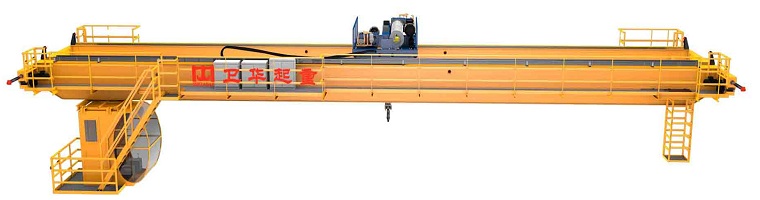
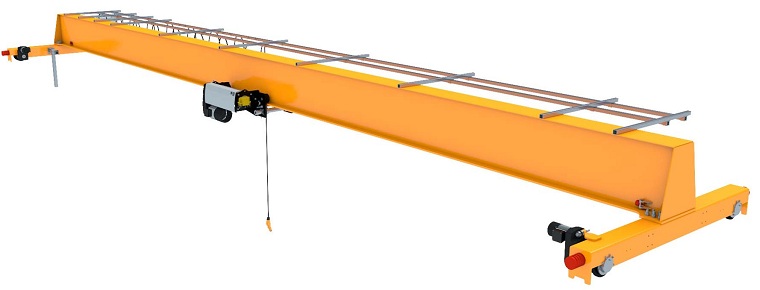
Transporting bridge cranes presents a massive logistical challenge. Single and double girders often exceed the 12-meter length limit of standard 40-foot shipping containers.
Containerization Strategies
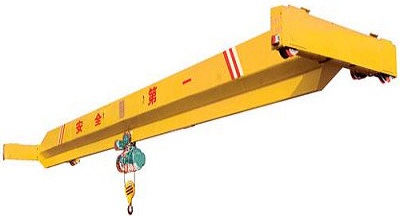
For spans between 12 and 18 meters, advanced manufacturers can engineer the main girder with high-strength bolted splice connections. This allows the girder to be divided, shipped in standard 40HQ containers, and reassembled on-site, saving thousands in out-of-gauge (OOG) shipping costs.
If the crane cannot be spliced due to extreme capacity or span, it must be shipped via Open Top containers, Flat Racks, or Bulk Break vessels. Coordinating this requires specialized shipping and freight expertise to manage port handling, route surveys, and heavy-lift rigging.
Pricing, MOQs, and Lead Times
Bridge crane pricing is highly variable, driven by raw steel costs, the chosen duty cycle, and the origin of electrical components.
Managing heavy machinery logistics and total landed costs is complex. Let us help you map out the most efficient supply chain for your CAPEX equipment.
Get a free consultationFrequently Asked Questions
Sourcing bridge cranes successfully is an exercise in risk mitigation. By enforcing strict engineering standards, demanding global-brand components, and managing the complex logistics proactively, you can secure heavy-duty lifting equipment that delivers exceptional total cost of ownership. Proper oversight at the factory level ensures your equipment performs safely and reliably for decades.
Get Sourcing Help for Bridge Cranes
Tell us your requirements and our experts will connect you with verified manufacturers.