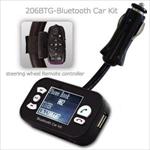
Bluetooth Car Kits
Source bulk Bluetooth Car Kits directly from vetted manufacturers and wholesale suppliers. Designed for automotive electronics importers, distributors, and brands seeking OEM or private-label production, our network delivers reliable connectivity solutions built to strict international compliance standards.
Sourcing Bluetooth car kits at volume requires navigating a fragmented supply base concentrated heavily in China's Guangdong province. The primary challenge isn't finding a supplier; it is identifying a manufacturer capable of delivering consistent RF stability, effective echo cancellation, and strict adherence to international wireless regulations across thousands of units. For bulk buyers, success depends on specifying the right internal components and enforcing rigorous testing on the factory floor.
Chipset Selection and Technical Specifications
The core of any Bluetooth car kit—whether an FM transmitter, an AUX receiver, or a hardwired integration module—is the System-on-Chip (SoC). The chipset dictates audio quality, connection stability, latency, and noise reduction capabilities.
When negotiating with suppliers, you must specify the exact chipset family, as this is where low-end factories often cut corners to reduce costs.
| Market Tier | Typical Chipset | Bluetooth Version | Audio & Features |
|---|---|---|---|
| Entry-Level | Jieli (JL) / AS | 5.0 or 5.1 | SBC codec, basic digital signal processing (DSP) |
| Mid-Range | Realtek / Actions | 5.3 | AAC support, hardware echo cancellation |
| Premium | Qualcomm (CSR series) | 5.3+ | aptX / aptX HD, dual-mic CVC noise reduction |
Beyond the SoC, buyers must define requirements for the microphone array. Single-mic setups are standard, but premium OEM builds should specify dual-microphone arrays with Clear Voice Capture (CVC) technology to isolate voice frequencies from highway road noise.
Need to verify a factory's component sourcing? We can audit suppliers to ensure they use genuine chipsets and maintain strict assembly standards.
Talk to our teamManufacturing Quality and Defect Prevention
Bluetooth car kits are highly sensitive to poor Printed Circuit Board (PCB) layout and subpar soldering. Poor antenna placement on the PCB leads to signal drops and static interference, particularly in FM transmitter models.
To ensure yield consistency, robust Quality Control & Inspection protocols must be implemented before and during production. Relying solely on final visual inspections will not catch underlying electronic flaws.
Critical Factory-Level Tests
- RF Signal Testing: Verifying antenna gain and transmission stability inside a Faraday cage to ensure compliance with FCC/CE output limits.
- Acoustic & DSP Testing: Simulating cabin noise to measure the effectiveness of the echo cancellation and microphone sensitivity.
- Thermal Stress Testing: Cycling units between -20°C and 70°C, as dashboard and 12V socket temperatures fluctuate wildly in vehicles.
- Voltage Fluctuation Protection: Testing the over-voltage and short-circuit protection on the 12V/24V power input step-down circuitry.
Compliance and Wireless Certifications
Importing wireless electronics carries strict regulatory requirements. Customs authorities and major retail channels require verifiable documentation. Do not accept generic "CE/FCC" badges on a supplier's Alibaba page; you must verify the actual test reports for your specific SKU.
If you are modifying the PCB or the outer housing, you may need to conduct updated Compliance & Testing to ensure the device still meets market standards. Furthermore, any device utilizing Bluetooth technology must legally be declared with the Bluetooth SIG (BQB certification). Ask the factory for their Declaration of ID (DoID) to avoid intellectual property seizures at the border.
Pricing, Lead Times, and MOQs
Pricing for Bluetooth car kits is highly elastic, driven almost entirely by the chosen chipset, the complexity of the digital display (e.g., segment LCD vs. full-color TFT), and the charging output capabilities (e.g., standard 1A vs. dual-port PD/QC3.0 fast charging).
If you are looking to develop a unique form factor or integrate proprietary firmware (such as custom voice prompts or app integrations), leveraging professional OEM/ODM Services is highly recommended to manage the tooling and engineering phases efficiently.
Streamline your procurement process with our end-to-end supply chain management and negotiated bulk pricing.
Get a free consultationFrequently Asked Questions
Sourcing reliable vehicle electronics means looking past the outer casing and verifying the underlying PCBA, chipset authenticity, and regulatory compliance. A rigorous vetting process ensures your shipments perform flawlessly on the road and clear customs without delay.
Get Sourcing Help for Bluetooth Car Kits
Tell us your requirements and our experts will connect you with verified manufacturers.