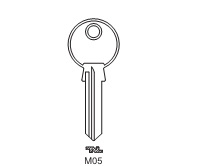
Blank Keys
Source high-quality Blank Keys from vetted manufacturers and suppliers. Designed for hardware wholesalers, locksmith distributors, and OEM brands, our network delivers precision-milled blanks in brass, nickel silver, and steel to meet exacting tolerances for global security markets.
Sourcing blank keys in high volume requires strict attention to milling tolerances, alloy composition, and tooling longevity. A fraction of a millimeter variance in the blade profile renders an entire batch useless, while inferior alloys accelerate wear on your customers' key-cutting machines. Securing a reliable supply chain means partnering with factories that maintain their milling cutters rigorously and source consistent raw materials.
## Material Selection and Machinability
The base material of a key blank dictates its durability, corrosion resistance, and how it behaves during duplication.
<ComparisonTable headers={["Base Material", "Machinability & Characteristics", "Typical Application"]} rows={[ { label: "Brass (Leaded)", values: ["Optimal machinability, causes minimal wear on cutting wheels, accepts plating easily.", "Standard residential and commercial pin-tumbler locks."] }, { label: "Nickel Silver", values: ["High tensile strength, highly resistant to bending and snapping, harder to cut.", "High-security locks, automotive keys, and heavy-duty institutional hardware."] }, { label: "Steel", values: ["Lowest cost, prone to rust if plating fails, accelerates wear on standard duplication machines.", "Budget padlocks, temporary lockouts, and low-cost bulk applications."] }, { label: "Aluminum", values: ["Extremely lightweight, easily anodized for color coding, lower overall durability.", "Novelty keys, lightweight padlock systems."] } ]} />
## The Manufacturing Process
Consistent key blank production is a high-speed, high-volume operation. The critical failure point in this process is usually the milling stage, where the longitudinal grooves (the profile) are cut into the blade.
<Steps steps={[ { title: "Blanking (Stamping)", description: "Raw coil stock is fed into high-tonnage presses to punch out the basic 2D silhouette of the key bow and blade." }, { title: "Milling", description: "The flat blanks are passed through specialized milling machines where rotary cutters carve the precise longitudinal grooves. As cutters wear down, profiles drift out of tolerance." }, { title: "Coining", description: "The blanks are stamped with high pressure to imprint logos, part numbers, or "Do Not Duplicate" text onto the bow." }, { title: "Finishing", description: "Keys are tumbled to remove sharp burrs, then typically nickel-plated or brass-flashed to prevent tarnishing and improve aesthetics." } ]} />
<InlineCTA buttonText="Talk to our team">Dealing with inconsistent milling or poor plating in your key blank supply? We audit and vet manufacturers to ensure strict quality control.</InlineCTA>
## Quality Control Defect Checklist
When evaluating samples or executing [Quality Control & Inspection](/logistics-operations/quality-control) protocols, inspect batches for the following common manufacturing defects:
<Checklist title="Key Blank Inspection Points" items={[ "Profile Drift: Verify blade profiles against standard go/no-go gauges to ensure they slide smoothly into the target cylinder without binding.", "Burrs and Flash: Check the edges of the blade and bow. Inadequate tumbling leaves sharp burrs that interfere with duplication.", "Plating Adhesion: Ensure nickel plating is even and does not flake when the key is subjected to minor bending or cutting.", "Coining Alignment: Verify that stamped logos and part numbers are centered on the bow and struck deep enough to remain legible after handling.", "Alloy Verification: Test brass blanks to ensure they are solid brass, rather than brass-plated steel (which destroys locksmith cutting wheels)." ]} />
Assessing a factory's capability requires looking at their tooling maintenance schedules. A factory that runs dull milling cutters to save money will inevitably produce keys with shallow or inaccurate profiles. Conducting thorough [Factory Audits](/sourcing-manufacturing/factory-audits) before placing large orders is the best way to verify their machinery and quality management systems.
## MOQs, Tooling, and Lead Times
Key blanks are a classic high-volume, low-margin commodity. Production economics rely on continuous machine runs.
<StatGrid columns={3} stats={[ { value: "50,000+", label: "Typical MOQ (Per Profile)", description: "Volume required to justify tooling setup and machine time." }, { value: "30-45 Days", label: "Standard Production Lead Time", description: "From order confirmation to completion, assuming standard profiles." }, { value: "Low to Moderate", label: "Custom Tooling Costs", description: "Custom bows (coining dies) are inexpensive; custom milling profiles cost more." } ]} />
If you are a hardware brand or locksmith distributor looking to create a proprietary keyway or a custom-branded bow, [OEM/ODM Services](/sourcing-manufacturing/oem-odm-services) can facilitate the creation of custom coining dies and milling cutters tailored to your specifications.
<InlineCTA buttonText="Get a free consultation">Ready to optimize your high-volume key blank sourcing? Connect with our experts to discuss custom tooling, MOQs, and pricing.</InlineCTA>
## Buyer FAQs
<FAQ items={[ { title: "Why do some brass key blanks wear out duplication machines faster?", content: "This usually happens when suppliers substitute solid brass with brass-plated steel or use a low-quality brass alloy with insufficient lead content. Always specify the exact material grade (e.g., CuZn39Pb3) in your purchase order." }, { title: "Can I customize the shape of the key bow?", content: "Yes. Creating a custom bow requires a new stamping die. The tooling cost for this is generally low, making it a highly cost-effective way to private-label your blanks." }, { title: "What are the standard tolerances for the milled profile?", content: "While it varies by the specific lock system, standard tolerances for the milling depth and width are typically held between +/- 0.02mm and +/- 0.05mm. High-security profiles demand even tighter tolerances." } ]} />
Sourcing key blanks requires a partner who understands the mechanical realities of the locksmithing and hardware industries. By focusing on material integrity and tooling precision, you can eliminate the hidden costs of defective profiles and poor machinability.
Get Sourcing Help for Blank Keys
Tell us your requirements and our experts will connect you with verified manufacturers.