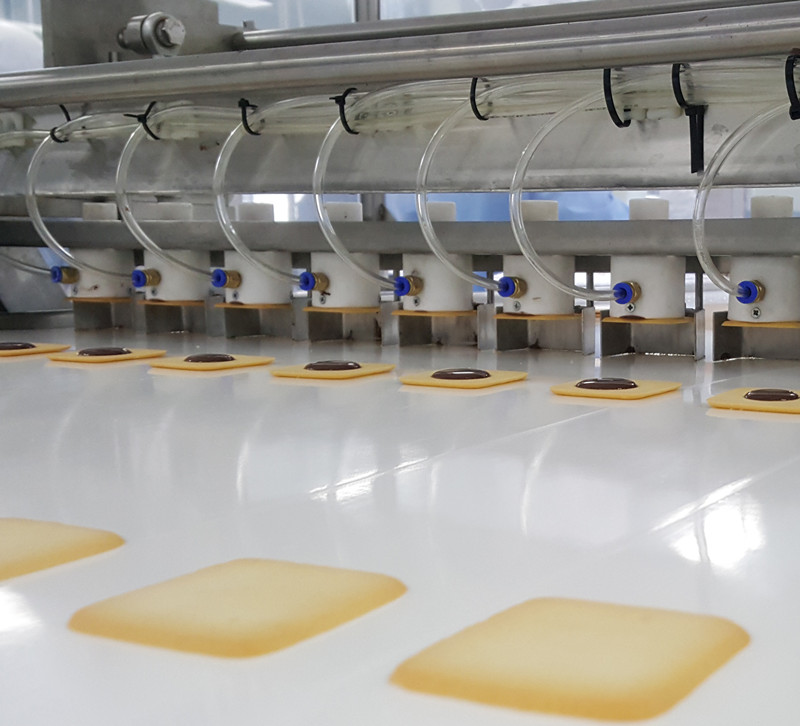
Biscuit Making Machines
Source industrial Biscuit Making Machines from vetted suppliers and manufacturers. Designed for commercial food processors, distributors, and brands seeking OEM production, our bulk sourcing solutions connect you with reliable factories capable of high-volume, precision manufacturing.
Sourcing commercial biscuit production lines requires balancing throughput targets with strict hygiene, safety, and automation standards. Whether you are configuring a fully automated line for hard dough or a specialized rotary molder for soft biscuits, the key to a successful procurement cycle lies in matching your exact formulation requirements with a manufacturer's engineering capabilities.
Specifying Your Production Line
Industrial biscuit manufacturing equipment is rarely bought off-the-shelf. Buyers must specify the exact parameters of their production environment to ensure the machinery can handle the required capacity and dough consistency. The primary distinction dictates the forming equipment and oven configurations: hard biscuits (like crackers or Marie biscuits) require lamination and sheeting, while soft biscuits (like digestives or butter cookies) rely on rotary molding or wire-cut extrusion.
| System Component | Hard Biscuit Configuration | Soft Biscuit Configuration |
|---|---|---|
| Dough Forming | Laminator, gauge rolls, and rotary cutter | Rotary molder or wire-cut extruder |
| Baking Profile | High initial heat, steel band oven preferred | Moderate heat, wire mesh oven typical |
| Cooling Requirement | Standard cooling conveyor (1.5x oven length) | Extended cooling to prevent crumbling |
Beyond the forming method, capacity is the primary driver of machine design. Buyers must define their target output in kilograms per hour (kg/hr) and provide the physical dimensions of their factory floor, as tunnel ovens and cooling conveyors require significant linear space.
Configuring a complex production line requires precise supplier matching. We can help you identify manufacturers with proven engineering capabilities for your specific capacity requirements.
Talk to our teamQuality Control & Component Standards
Machinery sourcing is not just about the technical spec sheet; it is about long-term reliability and build quality. Food-contact surfaces must be constructed from SUS304 or SUS316 stainless steel to comply with international food safety standards (such as CE, UL, or NSF).
A critical failure point in imported machinery is the electrical and pneumatic control systems. Ensure that the manufacturer uses internationally recognized brands (such as Siemens, Mitsubishi, Omron, or Schneider) for PLCs, inverters, and motors. This guarantees that replacement parts can be sourced locally in your target market, minimizing expensive downtime.
Conducting a thorough factory audit before placing a deposit is essential to verify the supplier's machining precision, assembly capacity, and quality management systems. Furthermore, pre-shipment quality control is non-negotiable. You should insist on a Factory Acceptance Test (FAT) where the machine is run continuously for several hours using your actual dough recipe to identify any tracking or forming issues before the equipment leaves the facility.
Pricing, Lead Times, and Logistics
Because commercial biscuit lines are built to order, pricing varies drastically based on the level of automation, oven length, and output capacity.
For brands requiring custom mold designs, embossed logos, or specialized packaging integration, leveraging OEM/ODM services ensures the machinery is tailored to your exact product dimensions.
Logistics for this category present a unique challenge. Complete lines involve tunnel ovens that can span tens of meters, requiring multiple shipping containers. Oversized components often necessitate open-top or flat-rack containers. Coordinating this requires experienced shipping and freight management to ensure the equipment is properly secured, protected from moisture during transit, and clears customs without delays.
Need accurate pricing, lead times, and freight estimates for a commercial biscuit line? Let our team manage the sourcing and logistics.
Get a free consultationFrequently Asked Questions
The true cost of a biscuit making machine is not the FOB price—it is the cost of downtime if a proprietary component fails mid-production. Prioritize manufacturers who use standardized, globally available electrical parts and offer transparent, rigorous pre-shipment testing.
Get Sourcing Help for Biscuit Making Machines
Tell us your requirements and our experts will connect you with verified manufacturers.