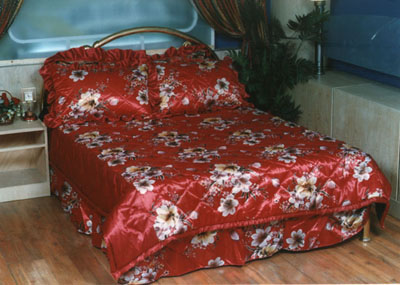
Bedding Sets
Source high-quality bedding sets in bulk directly from vetted manufacturers and suppliers. Designed for importers, wholesalers, distributors, and home textile brands looking for reliable wholesale pricing, consistent quality, or custom OEM/private-label production at scale.
Sourcing bedding sets at volume requires a delicate balance between fabric hand-feel, durability, and strict dimensional tolerances. Whether you are stocking standard hotel-grade linens for hospitality distributors or developing a premium retail collection, success depends on locking in exact specifications before the first yard of fabric is woven, dyed, or cut.
Navigating the home textiles supply chain means distinguishing between true weaving mills and cut-and-sew operations, while strictly controlling the finishing processes that dictate the final product's performance.
Defining Your Fabric Specifications
The foundation of any bedding set is the textile itself. Vague specifications lead to inconsistent batches. Professional buyers must define the fiber composition, yarn size (count), weave type, and finishing treatments.
| Material & Weave | Typical Specs | Primary Application |
|---|---|---|
| Cotton Percale | 200-400 TC, single-ply | Crisp, matte finish; standard for hospitality and premium retail |
| Cotton Sateen | 300-600 TC | Smooth, lustrous drape; luxury residential markets |
| Microfiber (Polyester) | 85-120 GSM | High-volume, cost-sensitive wholesale and institutional markets |
| Lyocell / Bamboo | 250-400 TC | Cooling, eco-conscious premium retail collections |
When dealing with high thread counts (TC), specify single-ply yarns. Some manufacturers artificially inflate thread counts by twisting multiple lower-grade yarns together, resulting in a heavier, less breathable fabric that pills easily.
Need reliable sourcing and technical support for your custom bedding line?
Talk to our teamManufacturing Tolerances and Quality Control
Quality in bedding sets is won or lost during the dyeing and finishing stages, long before the fabric reaches the cutting table. Poorly finished fabrics will fail standard wash tests, leading to massive returns for brands and distributors.
To ensure consistency, implement a rigorous Quality Control & Inspection protocol that targets the most common failure points in home textiles.
Critical QC Checks for Bedding Sets
- Dimensional Stability: Ensure shrinkage remains under 3 percent after standard commercial washing cycles.
- Colorfastness: Test for resistance to fading against washing, rubbing (crocking), and light exposure.
- Seam Slippage and Tensile Strength: Verify that seams can withstand tension without yarns pulling apart.
- Pilling Resistance: Conduct Martindale or Box Pilling tests, especially for poly-blends and shorter-staple cottons.
- Sizing Tolerances: Confirm flat sheet, fitted sheet pocket depths, and duvet cover dimensions fall within a +/- 1 inch tolerance.
Compliance and Certifications
If you are importing into the EU or North America, chemical compliance is non-negotiable. Ensure your supplier's dyeing processes meet REACH standards or hold OEKO-TEX Standard 100 certification, verifying the absence of harmful substances like azo dyes and formaldehyde. Proper Compliance & Testing protects your brand from regulatory delays and consumer liability.
OEM/ODM Customization: Printing and Dyeing
For brands utilizing OEM/ODM Services to create custom collections, the method of applying color or pattern drastically affects both cost and quality.
- Reactive Printing: The dye physically bonds with the cotton fibers. This results in vibrant, wash-resistant colors that do not compromise the soft hand-feel of the fabric. It is the standard for premium bedding.
- Pigment Printing: Color is essentially painted onto the fabric surface. While cheaper and faster, it can leave the fabric feeling stiff and is more prone to fading over time.
Pricing, MOQs, and Production Lead Times
Pricing in the bedding sector is highly volatile, tied directly to raw cotton and polyester commodity indices. Furthermore, Minimum Order Quantities (MOQs) are dictated by the fabric processing stage rather than the sewing stage.
If a factory quotes exceptionally low MOQs for custom prints, they are likely outsourcing the printing to a digital facility, which carries a higher per-unit cost, or they are sourcing leftover fabric lots, which ruins batch-to-batch consistency. Conducting thorough Factory Audits is essential to verify whether your partner controls their own weaving and dyeing, or if they are purely an assembly workshop.
Looking for transparent pricing and verified production capacity for your next volume order?
Get a free consultationFrequently Asked Questions
Sourcing bedding sets at scale is an exercise in strict material specification and process control. By clearly defining your yarn sizes, finishing methods, and dimensional tolerances upfront, you protect your margins and ensure a consistent product line. Partnering with a professional sourcing team ensures your specifications translate accurately to the factory floor, from the initial lab dip to final pre-shipment inspection.
Get Sourcing Help for Bedding Sets
Tell us your requirements and our experts will connect you with verified manufacturers.