Bearing Rollers
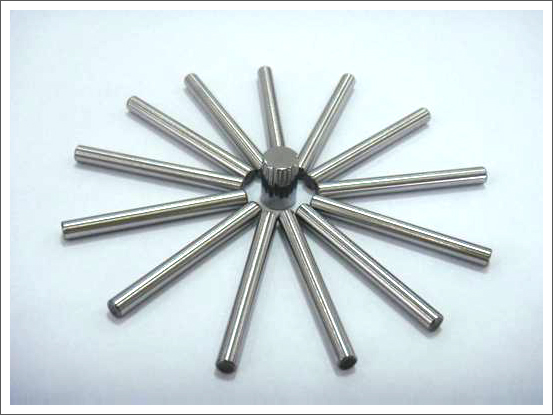
Source high-precision bearing rollers in bulk from vetted manufacturers and wholesale suppliers. Designed for importers, industrial distributors, and OEM brands, our network delivers reliable rolling elements for demanding power transmission applications, ensuring strict dimensional tolerances and consistent batch quality.
Bearing rollers are the critical load-bearing elements that define the lifespan and performance of industrial, automotive, and aerospace bearings. When sourcing these components in volume, the primary challenge is not finding a factory that can produce a single precise roller. The true test is identifying a manufacturer capable of maintaining exact dimensional consistency, proper logarithmic profiling, and flawless metallurgical integrity across millions of units in a single production run.
Inconsistent heat treatment or poor sorting practices will lead to premature bearing failure, edge loading, and severe reputational damage for your brand. Navigating the supplier landscape requires a deep understanding of precision grades, material standards, and factory-level quality control.
Critical Specifications for Bulk Orders
To avoid misunderstandings with manufacturers, your RFQ must clearly define the technical parameters of the rollers. Relying on generic descriptions will result in commercial-grade components unsuitable for high-load applications.
- Material Composition: The industry standard is high-carbon chromium bearing steel (GCr15 / AISI 52100 / 100Cr6). For highly corrosive environments, specify martensitic stainless steel (AISI 440C). For high-speed or insulated applications, silicon nitride (Si3N4) ceramic rollers are required.
- Precision Grade: Roller grades (e.g., G1, G2, G3, G5) dictate the allowable variations in diameter and length. A lower number indicates tighter tolerances.
- Profile Geometry: Straight cylindrical rollers often suffer from edge loading under heavy stress. Specify a logarithmic or crowned profile to distribute stress evenly across the roller's contact length.
- Hardness: Standard chrome steel rollers must achieve a uniform hardness of HRC 60 to 65.
| Parameter | Grade G2 | Grade G5 |
|---|---|---|
| Diameter Variation (VDw) | Max 2 microns | Max 5 microns |
| Length Variation (VLw) | Max 5 microns | Max 10 microns |
| Surface Roughness (Ra) | Max 0.1 microns | Max 0.2 microns |
Manufacturing Process & Factory Floor Vulnerabilities
Understanding how bearing rollers are manufactured helps you identify where quality is won or lost during production. When auditing a potential partner, pay close attention to their grinding and heat treatment capabilities.
Cold Heading & Wire Cutting
Raw steel wire is cut and cold-headed into rough cylindrical shapes. Poor tooling here creates deep surface defects that subsequent grinding cannot fully remove.
Heat Treatment
The rough rollers are quenched and tempered to achieve required hardness. Uneven furnace temperatures lead to soft spots or excessive brittleness.
Grinding & Superfinishing
Centerless grinding machines refine the diameter and apply the required profile. The final superfinishing stage achieves the mirror-like surface roughness (Ra) necessary for low-friction operation.
Automated Sorting
Rollers are optically and mechanically sorted into exact dimensional groups. Mixing groups in a single bearing assembly will cause catastrophic failure.
Need to verify a factory's sorting and grading accuracy? We conduct rigorous supplier vetting and on-site capability assessments to ensure your production meets exacting standards.
Talk to our teamQuality Control Imperatives
You cannot inspect quality into a bearing roller after it has been shipped; it must be controlled at the source. Implementing robust Quality Control & Inspection protocols at the factory level is non-negotiable for high-precision rolling elements.
Pre-Shipment Inspection Focus Areas
- Verify dimensional grouping and sorting accuracy (no mixed tolerance bands).
- Conduct micro-structure analysis to confirm proper martensitic transformation.
- Perform magnetic particle inspection (MPI) or eddy current testing to detect micro-cracks.
- Measure surface roughness (Ra) and roundness using specialized profilometers.
- Check packaging integrity to ensure anti-rust oil application and vapor barrier sealing.
Pricing, MOQs, and Lead Time Realities
The cost of bearing rollers is heavily influenced by the precision grade, raw material market fluctuations, and the complexity of the profile. Standard straight cylindrical rollers are highly commoditized, while custom-profiled or ceramic rollers command significant premiums.
Manufacturers generally quote based on weight (per kilogram) for smaller standard rollers, or per piece for large-diameter or highly specialized variants. When negotiating, be aware that pushing for rock-bottom prices often results in the factory skipping the final superfinishing step or blending lower-grade steel into the batch. Engaging professional Product Sourcing support can help you secure competitive pricing without compromising the metallurgical or dimensional integrity of your components.
Struggling to balance precision requirements with target pricing? Let us manage the negotiation and factory coordination for your next bulk order.
Get a free consultationSourcing bearing rollers requires a zero-tolerance approach to dimensional and metallurgical defects. Success depends entirely on the capabilities of the factory floor and the strictness of their automated sorting processes. Conducting thorough Factory Audits before placing your first volume order is the most effective way to secure a reliable, long-term supply chain for your precision components.
Get Sourcing Help for Bearing Rollers
Tell us your requirements and our experts will connect you with verified manufacturers.