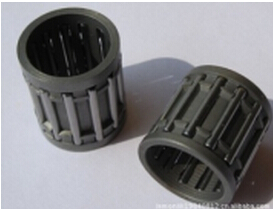
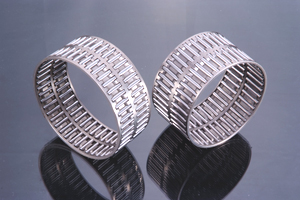
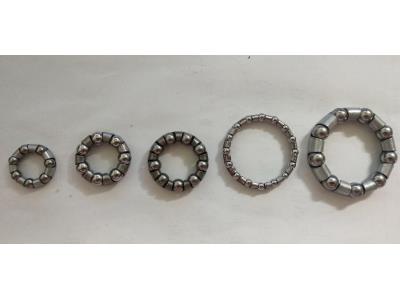
Bearing Cages
Source premium bearing cages from vetted suppliers and manufacturers across Asia. Designed for industrial importers, distributors, and brands requiring bulk wholesale or OEM production, our network delivers precision-engineered retainers in steel, brass, and advanced polymers to meet your rigorous performance specifications.
Bearing cages—often referred to as bearing retainers—are critical to the lifespan and performance of any rolling element bearing. They separate the rolling elements, maintain symmetrical spacing, and guide the elements in the unloaded zone. Sourcing these components in bulk requires strict attention to dimensional stability, material purity, and manufacturing precision. A cage failure inevitably leads to a catastrophic bearing failure, making supplier selection and quality oversight paramount.
Material Selection and Manufacturing Processes
The choice of material dictates the manufacturing process, tooling costs, and the ultimate application of the bearing. Buyers must specify exact material grades rather than generic terms, as substitution is a common factory floor issue that degrades performance.
| Material Type | Typical Application | Manufacturing Process | Relative Cost |
|---|---|---|---|
| Carbon / Stainless Steel (e.g., SPCC, SUS304) | General industrial, high temperature | Sheet stamping and pressing | Low to Medium |
| Machined Brass (e.g., H62, H59) | High speed, heavy shock/vibration | CNC machining / turning | High |
| Polymers (e.g., PA66, PEEK) | Low friction, corrosive environments | Injection molding | Medium |
Stamped Steel Cages
Stamped cages offer high strength at a lower weight and are the standard for deep groove ball bearings and spherical roller bearings. The primary challenge here is tooling wear. As stamping dies degrade, the precision of the cage pockets drops, leading to excessive clearance or binding.
Machined Brass Cages
Used in heavy-duty applications like railway bearings or large industrial gearboxes, brass cages are highly resistant to shock loads. Because they are machined rather than stamped, they do not require expensive stamping dies, making them viable for lower volume production runs. However, verifying the exact copper-to-zinc ratio is essential to ensure the brass has the required tensile strength.
Need reliable sourcing for precision bearing components? We vet manufacturers to ensure your tolerances and material specs are met on every production run.
Talk to our teamQuality Control and Defect Prevention
When buying bearing cages in bulk, catching defects before assembly is critical. Poorly finished cages increase friction, generate heat, and accelerate lubricant degradation. Implementing rigorous Quality Control & Inspection protocols at the factory level is the only way to ensure consistency across large batches.
Critical Inspection Points for Bearing Cages
- Pocket geometry and dimensional accuracy (ensuring proper clearance for rolling elements).
- Surface finish and absence of burrs (especially critical in stamped steel cages).
- Concentricity and runout tolerances.
- Material verification (spectrometer testing for brass, grade verification for steel).
- Absence of flash in injection-molded polymer cages.
Tooling, Customization, and OEM Production
If you are developing proprietary bearing designs, you will need custom cages. This involves significant upfront tooling investments. For stamped steel, progressive dies can be expensive but yield a very low per-unit cost. For polymers, injection molds dictate the initial capital outlay.
When utilizing OEM/ODM Services, ensure the tooling contract explicitly states mold ownership, maintenance responsibilities, and guaranteed shot lifespans. Factories with in-house tooling capabilities generally offer faster iteration times and tighter control over die wear compared to those who outsource their mold making.
Typical Pricing, MOQs, and Lead Times
Volume expectations and lead times vary heavily based on the manufacturing method. Conducting thorough Factory Audits helps verify whether a supplier has the actual machine capacity to meet your lead times without subcontracting to unverified secondary workshops.
Struggling with inconsistent cage quality or rising tooling costs? Let us evaluate your supply chain and connect you with top-tier bearing accessory plants.
Get a free consultationFrequently Asked Questions
Sourcing bearing cages requires a deep understanding of manufacturing processes and material science. Success depends not just on negotiating unit prices, but on managing tooling lifecycles and enforcing strict dimensional tolerances on the factory floor.
Get Sourcing Help for Bearing Cages
Tell us your requirements and our experts will connect you with verified manufacturers.