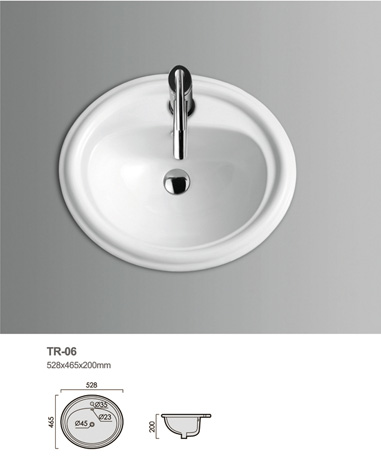
Bathroom Sinks
Source premium bathroom sinks from vetted manufacturers and wholesale suppliers across Asia. Designed for importers, distributors, and brands seeking reliable OEM and private-label production, our network delivers bulk volume with strict quality control.
Sourcing bathroom sinks in commercial volumes requires navigating a highly fragmented manufacturing landscape. Whether you are importing standard ceramic basins or developing custom solid surface fixtures, profitability hinges on controlling defect rates at the factory level. Surface finish, dimensional stability, and firing consistency dictate yield rates, making rigorous supplier qualification critical to a successful procurement strategy.
Material Specifications and Manufacturing Standards
The vast majority of wholesale bathroom sinks are manufactured from vitreous china, though solid surface (resin/acrylic) and stainless steel are increasingly common for specific architectural applications. For ceramic sinks, the critical performance metrics are determined in the kiln.
Vitreous china must be fired at temperatures over 1200°C to achieve vitrification, the process where the clay body becomes non-porous. If a factory cuts costs by rushing the firing cycle or lowering temperatures, the resulting basin will have higher water absorption rates, leading to crazing (micro-cracks in the glaze) and structural failure over time.
Struggling with inconsistent ceramic quality? Let us connect you with pre-vetted, export-ready manufacturers.
Talk to our teamControlling Defect Rates on the Factory Floor
High defect rates are the primary hidden cost when importing bathroom sinks. Because ceramic shrinks by 10 to 15 percent during the drying and firing phases, maintaining dimensional accuracy is a major challenge. This is especially critical for undermount sinks, where warped rims will fail to seal properly against countertops.
Implementing robust Quality Control & Inspection protocols before shipment is essential.
Critical Factory Inspection Points
- Dimensional Tolerance: Check for rim warping using a perfectly flat surface plate.
- Glaze Integrity: Inspect under high-lumen lighting for pinholes, black spots, or uneven application.
- Drain Hole Sizing: Verify standard 1.75-inch diameters; undersized holes prevent proper waste installation.
- Overflow Functionality: Ensure internal overflow channels are clear of casting debris and function correctly.
- Acoustic Testing: Tap the basin to check for a clear ringing sound; a dull thud indicates internal cracking.
OEM Development and Custom Tooling
For brands looking to differentiate, custom basin designs require bespoke tooling. In ceramic manufacturing, this means creating plaster of Paris molds for slip casting. Plaster molds degrade over time, typically lasting only 80 to 100 casting cycles before losing their sharp details.
Factories must factor mold replacement into their production planning. When utilizing OEM/ODM Services, ensure your contract clearly defines who owns the master mold and the acceptable dimensional tolerances as production molds wear down.
| Material | Tooling Cost | Production Speed | Design Flexibility |
|---|---|---|---|
| Vitreous China | Low to Medium | Slow (requires drying/firing) | Moderate (limited by shrinkage) |
| Solid Surface | High | Fast (chemical curing) | High (sharp angles possible) |
| Stainless Steel | Very High | Very Fast (stamping) | Moderate (radius limitations) |
Procurement Economics: MOQs, Pricing, and Lead Times
Factory pricing for bathroom sinks is heavily influenced by energy costs (kiln operation), raw material purity, and the specific glaze formulations used.
Typical Minimum Order Quantities (MOQs) for standard ceramic sinks range from 50 to 150 pieces per SKU, often with a requirement to fill at least a 20ft container (roughly 300 to 500 mixed units depending on packaging). Custom OEM designs may require higher initial MOQs to justify the master tooling setup.
Standard production lead times span 30 to 45 days. However, capacity can bottleneck during peak seasons if a factory has limited kiln space. Conducting thorough Factory Audits before placing large orders ensures the supplier has the actual firing capacity to meet your lead times, rather than subcontracting your order to a less reliable facility.
Ready to optimize your supply chain and negotiate better terms directly with manufacturers?
Get a free consultationFrequently Asked Questions
Successfully importing bathroom sinks requires looking past the showroom sample and understanding the factory's underlying production controls. By prioritizing suppliers with consistent firing processes and strict dimensional tolerances, you can eliminate the costly defect rates that erode margins. Professional oversight on the ground ensures your shipments meet the exact specifications your market demands.
Get Sourcing Help for Bathroom Sinks
Tell us your requirements and our experts will connect you with verified manufacturers.