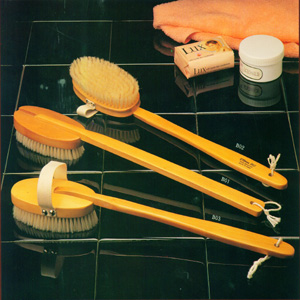
Bath Brushes, Sponges & Scrubbers
Source premium bath brushes, sponges, and scrubbers from vetted suppliers and manufacturers across Asia. Designed for importers, wholesalers, distributors, and brands seeking reliable OEM and private-label production, our bulk sourcing solutions ensure consistent quality, competitive pricing, and strict compliance for personal care tools.
Sourcing bath brushes, sponges, and scrubbers at scale requires balancing tactile quality with manufacturing consistency. Because these products operate in high-moisture environments and come into direct contact with skin, material selection, structural integrity, and anti-microbial treatments are critical. A slight variation in bristle density or wood moisture content can lead to mass product failure, returns, and brand damage.
Material Specifications & Manufacturing Variables
The core cost and quality drivers in bath accessories lie in the raw materials and the assembly methods used on the factory floor.
Bristle and Sponge Materials
For brushes, bristle selection dictates the exfoliation grade and product lifespan. Natural bristles (boar, horsehair, sisal) require rigorous sterilization to meet import standards, while synthetic options (nylon, PP) offer better uniformity and lower costs. For sponges and scrubbers, the primary metric is density (measured in grams for PE mesh poufs) or pore size (for PU and cellulose sponges).
| Material Type | Primary Application | Manufacturing Challenges |
|---|---|---|
| Natural Boar Bristle | Premium exfoliation brushes | Requires strict fumigation/sterilization; prone to shedding if poorly anchored. |
| Nylon (PA6/PA66) | Standard bath brushes | Heat resistance during injection molding; requires precise crimping. |
| PE Mesh (Poufs) | Mass-market body scrubbers | Gram weight consistency; knot tying strength to prevent unraveling. |
| Cellulose / Konjac | Facial and sensitive skin sponges | Moisture control during shipping; high risk of mold if improperly dried. |
Handle Construction and Treatments
Wooden handles (commonly lotus, beech, or bamboo) are highly susceptible to splitting and mold when exposed to bathroom humidity. Factories must control the wood's moisture content (typically dried to under 12 percent) and apply appropriate nitrocellulose (NC) or polyurethane (PU) clear coats. Plastic handles (PP, PS, or ABS) avoid moisture issues but require precise injection molding to avoid flash (sharp plastic edges) that can scratch the skin.
Struggling with inconsistent bristle retention or moldy shipments? Let our sourcing engineers audit your supply chain and standardize your material specs.
Discuss your specificationsQuality Control & Compliance
Catching defects before shipment is paramount. Visual inspections are insufficient; functional testing must be integrated into your Quality Control & Inspection protocols.
Critical QC Checks for Bath Accessories
- Bristle Pull-Out Force: Test the tension required to dislodge bristle tufts (usually measured in Newtons).
- Wood Moisture Content: Use moisture meters to ensure handles register below 12 percent before sealing.
- Coating Adhesion: Perform cross-hatch tape tests on painted or varnished wooden handles.
- Mesh Knot Integrity: Drop tests and stretch tests on PE bath poufs to ensure the central binding holds.
- Odor & Sterilization: Check natural materials (sisal, boar) for residual animal or chemical odors.
Furthermore, if you are importing into the EU or US, ensure your supplier can pass relevant REACH or Proposition 65 testing, particularly regarding phthalates in plastics and heavy metals in varnishes. Integrating Compliance & Testing early in the sourcing phase prevents costly customs rejections.
Pricing Drivers, MOQs, and Lead Times
Pricing in this category is highly elastic, driven by raw material grades, tooling for custom shapes, and packaging requirements.
- Minimum Order Quantities (MOQs): Standard off-the-shelf designs typically require MOQs of 3,000 to 5,000 pieces. For custom handle molds or custom-dyed bristles and sponges, factories often demand 10,000 pieces or more to justify setup costs.
- Lead Times: Expect 30 to 45 days for standard production. Natural materials like bamboo or specialized woods may add 15 days due to curing and drying processes.
- Tooling Costs: If you are utilizing OEM/ODM Services for a proprietary handle design, plastic injection molds typically range from $1,500 to $4,000 depending on complexity and cavities.
Ready to scale your private-label bath accessories? We negotiate favorable MOQs and manage the entire production schedule for you.
Talk to our teamFrequently Asked Questions
Successfully sourcing bath brushes, sponges, and scrubbers means looking past attractive unit prices to scrutinize the factory's material handling and quality management systems. By locking in strict technical specifications for moisture content, bristle retention, and material density, buyers can ensure a reliable, high-margin product line.
Get Sourcing Help for Bath Brushes, Sponges & Scrubbers
Tell us your requirements and our experts will connect you with verified manufacturers.