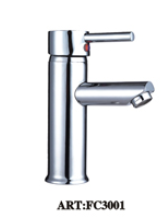
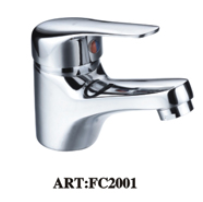
Basin Faucets
Source premium basin faucets from vetted manufacturers and suppliers in China and across Asia. Designed for importers, wholesalers, and brands seeking reliable OEM/ODM production, our factory-direct network ensures you secure high-quality fixtures at competitive wholesale prices with full compliance support.
Sourcing commercial or residential basin faucets at scale requires balancing aesthetic demands with rigorous mechanical reliability. The core procurement challenge lies beneath the surface finish: ensuring the alloy composition, cartridge lifespan, and casting methods meet the regulatory and performance standards of your target market without eroding your margins.
Core Material and Component Specifications
The longevity and compliance of a basin faucet depend entirely on its raw materials and internal components. While outward appearances can be identical, the underlying bill of materials dictates the product's lifespan and legal viability in regulated markets.
Main Body Alloys
- Brass (H59 / H62): The industry standard for premium faucets. For North American markets, you must specify "lead-free" brass (containing under 0.25 percent lead) to comply with AB1953 and NSF 61.
- Stainless Steel (SUS304 / SUS316): Highly resistant to corrosion and naturally lead-free. It requires advanced machining capabilities, which can limit complex design geometries compared to brass.
- Zinc Alloy: Often used for handles or budget faucet bodies. While cost-effective, zinc is highly susceptible to corrosion if the internal water pathways are not adequately isolated or if the plating fails.
Critical Internal Components
A faucet body is only as reliable as its internal mechanics. When specifying your order, mandate top-tier components for the cartridge and aerator. Ceramic disc cartridges should be rated for a minimum of 500,000 cycles. While Sedal (Spain) and Citec are premium industry standards, many Chinese manufacturers offer reliable domestic equivalents if properly vetted.
| Material | Durability | Cost Profile | Best Application |
|---|---|---|---|
| H59/H62 Brass | High | Premium | High-end residential & commercial |
| Lead-Free Brass | High | Premium (+15%) | North American compliance |
| SUS304 Stainless | Very High | Moderate-High | Industrial & modern minimalist |
| Zinc Alloy | Low-Moderate | Economy | Budget multi-family & temporary |
Struggling to verify if a factory's "lead-free" brass actually meets NSF 61 standards? We can handle the supplier vetting and material verification for you.
Talk to our teamManufacturing Tolerances and Quality Control
The manufacturing process is where quality is won or lost. High-end brass faucets require gravity casting rather than traditional sand casting. Gravity casting ensures a denser metal structure, eliminating microscopic air bubbles (porosity) that cause internal leaks and surface plating blisters over time.
After casting, CNC machining must be precise to ensure the cartridge seats perfectly. Even a fraction of a millimeter of deviation will cause the faucet to leak under pressure. Finally, the polishing phase must achieve a mirror finish before electroplating; any surface imperfection will be magnified once the chrome or PVD finish is applied.
To prevent defects from reaching your warehouse, implement rigorous Quality Control & Inspection protocols at the factory level.
Critical Factory-Level QC Checks for Basin Faucets
- Material composition analysis (spectrometer testing for lead and zinc content).
- Air and water pressure testing (typically at 1.6 MPa) for 100 percent of assembled units.
- Salt spray testing (e.g., 24-hour ASSS or 96-hour NSS) to verify plating adhesion and corrosion resistance.
- Cartridge torque testing to ensure smooth handle operation.
- Dimensional inspection of mounting threads to ensure compatibility with standard plumbing fittings.
Certifications and Compliance
Depending on your market, compliance is non-negotiable. Ensure your supplier holds valid, verifiable certifications rather than just claiming compliance. Key standards include cUPC and NSF 61 (North America), WaterMark (Australia), and CE/EN 817 (Europe). If you are adapting a factory's existing mold for your brand, Compliance & Testing services can help ensure the modified product still meets these regional requirements.
MOQs, Lead Times, and Pricing Dynamics
Basin faucet pricing is heavily indexed to the global commodities market (copper and zinc), the complexity of the casting, and the surface finish. Chrome plating is the baseline, while finishes like brushed nickel, matte black (powder coated or electroplated), and PVD (Physical Vapor Deposition) brushed gold will increase the unit cost and often require higher minimums.
When engaging in OEM/ODM Services for custom designs, factor in an additional 20 to 30 days for mold opening and initial sample testing. Always negotiate tooling ownership upfront if you are paying for the custom mold.
Ready to scale your faucet procurement or develop a custom product line? Let us manage the factory negotiations, quality control, and logistics.
Get a free consultationFrequently Asked Questions
Successful procurement in the plumbing fixtures category requires looking past the showroom polish to audit the factory's casting machinery, machining tolerances, and internal quality management systems. By partnering with capable manufacturers and enforcing strict material standards, you can secure reliable, high-margin products that protect your brand's reputation.
Get Sourcing Help for Basin Faucets
Tell us your requirements and our experts will connect you with verified manufacturers.