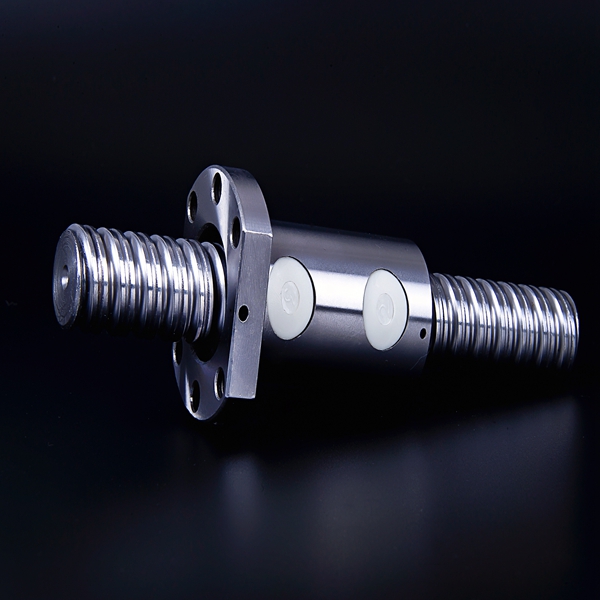
Ball Screws
Source precision ball screws from vetted manufacturers and wholesale suppliers across Asia. Designed for industrial importers, distributors, and equipment brands seeking reliable OEM production in volume. Secure competitive bulk pricing with stringent quality control for your high-volume linear motion requirements.
Sourcing ball screws at scale requires balancing strict precision requirements with unit cost. The difference between a supplier capable of consistently delivering C3 ground screws and one limited to C7 rolled screws is vast. For bulk buyers, identifying a factory with the right machining capabilities, heat treatment facilities, and testing equipment is critical to avoiding catastrophic failures in your end-users' automated machinery.
Rolled vs. Ground Ball Screws
The primary driver of cost, lead time, and supplier selection is the manufacturing method. You must align your factory's core competency with your application's accuracy requirements.
| Specification | Rolled Ball Screws | Ground Ball Screws |
|---|---|---|
| Manufacturing Method | Cold rolled through dies | Precision ground with abrasive wheels |
| Typical Accuracy Grades | C7 to C10 | C0 to C5 |
| Cost Profile | Economical for high volume | Premium, lower volume |
| Best Application | General automation, packaging | CNC machinery, aerospace, metrology |
Need help identifying a factory with the right capabilities for your required accuracy grade?
Talk to our teamCritical Specifications for Bulk Orders
When communicating with manufacturers, vague specifications lead to unacceptable runout and backlash. Ensure your RFQs clearly define the following parameters:
- Accuracy Grade (JIS Standard): Specify the exact C-grade. C7 is standard for rolled screws (travel variation of 50 micrometers per 300mm). C3 or C5 is required for precision positioning.
- Preload Levels: Specify P0 (no preload), P1 (light), or P2 (medium/heavy) depending on the rigidity required. Improper preload causes premature wear or excessive backlash.
- Nut Design: Define whether you need a single nut, double nut (for adjustable preload), or a flanged nut (DIN standard vs. JIS standard).
- End Machining: Standardized end machining saves assembly time, but requires the factory to have precise secondary CNC operations. If you require OEM production for custom end machining, verify the supplier's capability to hold tight tolerances on the bearing journals.
Where Quality is Won or Lost
The factory floor is where a ball screw's longevity is determined. Poorly controlled processes result in localized wear, binding, or excessive noise.
Key Manufacturing Control Points
- Induction Hardening: Ensure the raceways achieve HRC 58-62 without making the core brittle.
- Straightness Testing: Shafts must be straightened post-heat treatment to prevent radial runout.
- Nut Assembly Match-Fitting: High-precision suppliers match oversize balls to the nut and shaft to achieve exact preload.
- Surface Finish: Ground screws require strict surface roughness controls (Ra 0.2 or better) to minimize friction.
If you are buying in volume, implementing rigorous quality control is non-negotiable. Pre-shipment inspections should include dynamic drag torque testing and laser lead accuracy verification, not just dimensional checks.
Pricing, MOQs, and Lead Times
Ball screw pricing is highly volatile, driven by raw material costs (bearing steel like S55C or SCM415), accuracy grades, and the complexity of the nut assembly.
Before committing to a large order, especially for custom or high-precision ground screws, conducting thorough factory audits is essential. You need to verify their grinding machinery (e.g., thread grinders) and inspection equipment (e.g., laser interferometers) actually exist and are calibrated.
Ready to streamline your supply chain and negotiate better terms with vetted linear motion manufacturers?
Get a free consultationBuyer FAQ
Procuring ball screws in bulk requires a deep understanding of manufacturing capabilities and stringent quality oversight. By aligning your application's true requirements with the right factory's core strengths, you can optimize your unit costs while maintaining the reliability your machinery demands.
Get Sourcing Help for Ball Screws
Tell us your requirements and our experts will connect you with verified manufacturers.