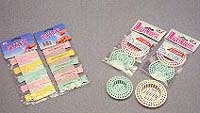
Bag Clips
Source high-quality bag clips in bulk directly from vetted manufacturers and suppliers. Designed for importers, wholesalers, and home organization brands, our supplier network offers extensive OEM and private-label production capabilities. Secure competitive wholesale pricing and reliable manufacturing for your next product line.
Sourcing bag clips at scale requires balancing aggressive unit costs with reliable mechanical performance. While they are simple, low-cost items, a clip that snaps under pressure, rusts in the refrigerator, or loses spring tension quickly damages brand reputation. For professional volume buyers, successful procurement hinges on specifying the right material grades, verifying spring durability, and maintaining strict assembly tolerances on the factory floor.
Material Specifications & Mechanical Design
The core of a bag clip's performance lies in the plastic polymer and the internal spring mechanism. Most production in manufacturing hubs like Zhejiang and Guangdong utilizes injection molding, but the choice of raw materials dictates both the price and the product's lifespan.
| Material Profile | Impact Resistance | Unit Cost | Typical Application |
|---|---|---|---|
| Polypropylene (PP) | Moderate | Low | Standard promotional or basic pantry clips |
| ABS Plastic | High | Medium | Premium retail kitchen clips |
| Stainless Steel (Body) | Very High | High | Heavy-duty or industrial use |
The Spring Mechanism
The most common point of failure is the spring. Standard carbon steel springs are cheap but will rust quickly in humid kitchen environments. For any food-storage application, specify 304 stainless steel springs. The tension should be calibrated so the clip opens easily with one hand but maintains enough clamping force to create an airtight seal on standard poly or foil bags.
Quality Control & Defect Prevention
Because bag clips are produced in massive volumes, defects often occur in batches. Flash (excess plastic at the mold seams), weak hinges, and misaligned jaw grips are common when injection molds degrade or cooling times are rushed. Implementing rigorous Quality Control & Inspection during the production run is critical to catch these issues before container loading.
Critical QC Checkpoints for Bag Clips
- Cycle testing: Verify the spring maintains tension after 1,000+ open/close cycles.
- Salt spray testing: Ensure stainless steel springs resist corrosion (typically 24 to 48 hours).
- Grip alignment: Check that TPE/silicone inner grips meet perfectly without gaps.
- Mold flash inspection: Ensure all edges are smooth to prevent user injury or bag tearing.
Struggling with inconsistent batch quality from your current supplier?
Talk to our teamCustomization and OEM/ODM Production
For brands looking to differentiate, custom bag clips offer excellent margins. Modifying an existing mold to add a debossed logo is cost-effective, but developing entirely new shapes requires custom tooling. Utilizing professional OEM/ODM Services ensures your intellectual property is protected and the mold design is optimized for fast cycle times.
Design & 3D Modeling
Finalize the CAD design, paying special attention to the hinge and spring housing tolerances.
Tooling & Mold Creation
Cut the steel injection molds. Single-cavity molds are cheaper, but multi-cavity molds drastically reduce unit costs for high volumes.
T1 Sampling
First off-tool samples are produced to check for shrinkage, sink marks, and mechanical function.
Mass Production
Once approved, automated injection molding and assembly begin.
Furthermore, retail success often comes down to presentation. Coordinating with a Branding & Design service can help you develop retail-ready blister cards, magnetic display boxes, or sustainable kraft packaging directly at the factory level.
Buying Mechanics: MOQs, Lead Times, and Pricing
Bag clips are high-volume, low-margin commodities at the factory level. Manufacturers rely on continuous machine operation to remain profitable, which heavily influences order requirements.
Unit pricing is driven primarily by raw material weight, the inclusion of secondary materials (like soft-grip TPR inserts or magnetic backings), and packaging. High-cavity molds reduce injection time per unit, lowering labor and energy costs on orders exceeding 100,000 units.
Ready to negotiate better pricing and lower MOQs for your next order?
Get a free consultationFrequently Asked Questions
Securing a reliable supply chain for bag clips means looking past the lowest quoted unit price. By focusing on material specifications, tooling quality, and factory capabilities, you can build a highly profitable, defect-free product line that performs consistently in the market.
Get Sourcing Help for Bag Clips
Tell us your requirements and our experts will connect you with verified manufacturers.