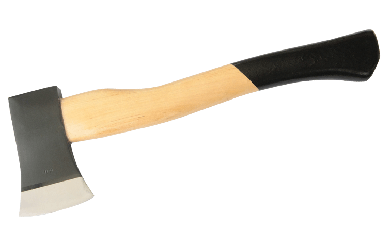
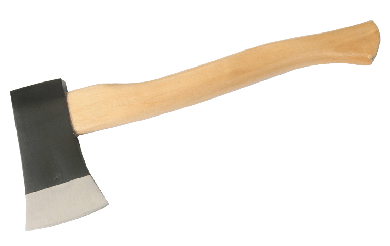
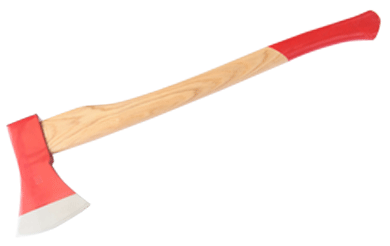
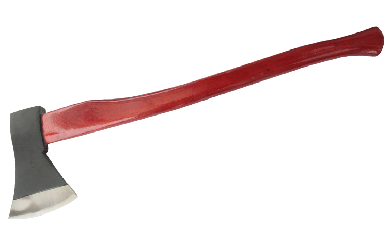
Axes
Source professional-grade axes from vetted suppliers and manufacturers across Asia. Designed for hardware importers, distributors, and brands seeking reliable OEM and private-label production. Secure competitive bulk pricing on high-performance hand tools built to exact metallurgical and safety standards.
Sourcing axes in high volumes requires balancing metallurgical integrity with unit cost. For professional hand tools, the difference between a durable product and a dangerous failure lies entirely in the factory's forging, heat treatment, and head-to-handle assembly processes. When importing in bulk, verifying a supplier’s manufacturing capabilities is critical to ensuring the final product meets international safety and performance standards.
Axe Head Metallurgy and Forging
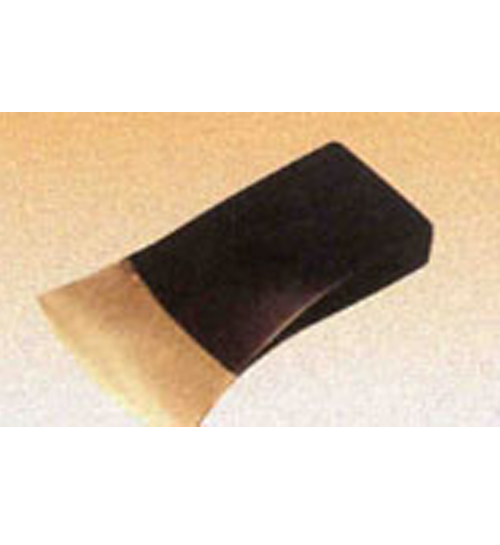
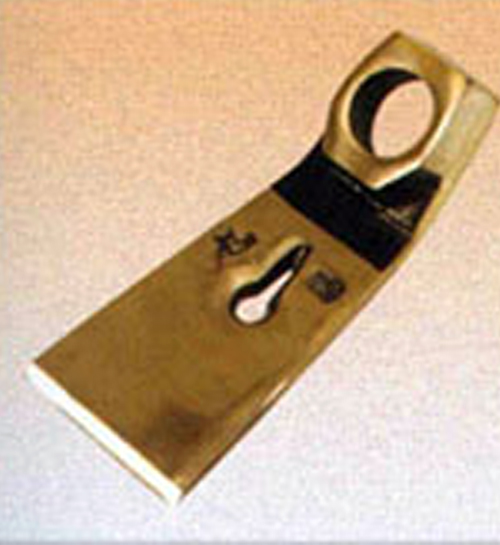
The core of any axe is its head. Professional-grade axes must be drop-forged; cast iron or poorly cast steel heads are prone to catastrophic failure upon impact and should be avoided entirely.
Most reliable manufacturers utilize medium to high-carbon steel, typically 1045, 1055, or 1060 grades. The critical factor is differential heat treatment. The cutting edge must be hardened (typically HRC 48 to 55) to hold a sharp edge, while the eye (the hole where the handle is inserted) must remain softer (around HRC 30 to 40) to absorb impact shock without cracking. If a factory batch-quenches the entire head uniformly, the tool will either be too brittle or unable to hold an edge.
Need help verifying factory forging and heat-treatment capabilities before placing a volume order?
Talk to our teamHandle Materials and Assembly
Handle selection dictates the tool's ergonomics, lifespan, and price point. Furthermore, the method used to secure the head to the handle is the most scrutinized point during safety testing.
| Handle Material | Primary Application | Cost Profile | Shock Absorption |
|---|---|---|---|
| American Hickory | Professional / Premium | High | Excellent |
| European Ash | Standard / Mid-range | Medium | Good |
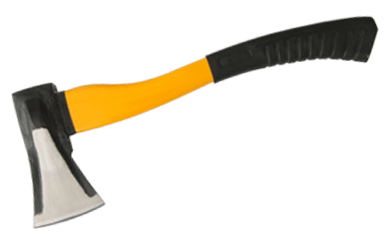
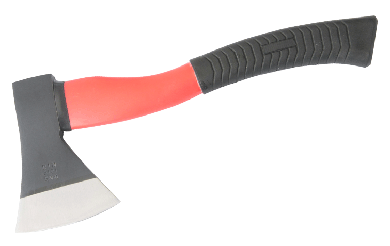
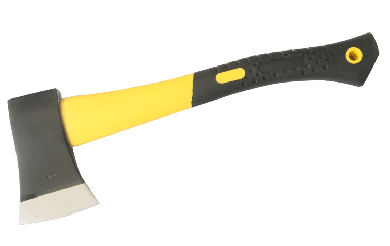
| Fiberglass (TPR/PP Grip) | Heavy-duty / General | Low to Medium | Fair |
| Tubular Steel | Camp / Utility | Medium | Poor |
The Head-to-Handle Bond
A loose axe head is a severe safety liability. Factories use different methods depending on the handle material:
- Wooden Handles: The traditional and most secure method involves driving a wooden wedge into the eye, followed by one or two steel ring wedges. The eye should be tapered to prevent the head from slipping off.
- Fiberglass/Composite Handles: These rely on a high-strength epoxy resin pour. The resin must cure in a temperature-controlled environment; improper curing times or cheap resin mixtures will lead to eventual separation.
Quality Control and Compliance Standards
Reputable manufacturers align their production with international standards, such as DIN 7287 (European standard for axes) or ASME B107.400 (North American standard for striking tools). Implementing strict Quality Control & Inspection protocols is essential before shipment.
Critical Pre-Shipment Inspection Points
- Pull-off force testing (verifying the head withstands minimum tensile loads without separation)
- Impact and drop testing to check for head fracture or handle splintering
- Rockwell hardness (HRC) testing at both the cutting edge and the eye
- Visual inspection of the epoxy fill (no voids or bubbles) on fiberglass models
- Grain orientation check on wooden handles (grain should run parallel to the axe head)
Relying solely on a supplier's internal QC reports carries risk. Conducting comprehensive Factory Audits ensures the facility actually possesses the testing equipment they claim to use.
Pricing, MOQ, and Production Realities
Tooling, material costs, and handle types drive the unit price. While standard models are readily available, brands looking for custom head shapes, specific weight distributions, or proprietary handle grips will need to engage in OEM/ODM Services.
When negotiating with suppliers, clarify whether the quoted price includes standard packaging (like blade guards or blister cards) and ensure the steel grade is explicitly stated in the purchase contract.
Optimize your striking tool supply chain with expert sourcing, negotiation, and QC management.
Get a free consultationBuyer FAQ
Sourcing axes successfully means looking past the surface finish to the underlying metallurgy and assembly techniques. By setting strict material specifications and enforcing rigorous pre-shipment testing, you can protect your brand from costly product failures and liability.
Get Sourcing Help for Axes
Tell us your requirements and our experts will connect you with verified manufacturers.