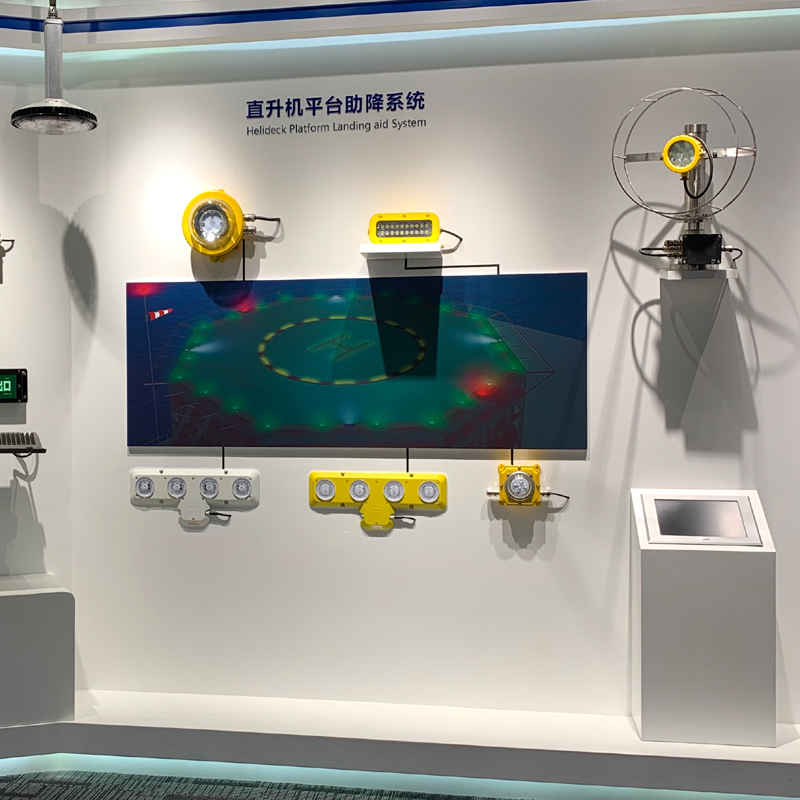
Aviation Obstruction Lights
Source reliable aviation obstruction lights from vetted manufacturers and suppliers across Asia. Designed for commercial importers, wholesalers, and procurement managers buying in bulk, our network provides compliant lighting solutions for infrastructure projects, including full OEM and private-label production.
Sourcing aviation obstruction lights requires balancing strict international regulatory compliance with extreme environmental durability. Whether you are procuring lighting for telecommunication towers, wind turbines, high-rise buildings, or crane operations, the core challenge is ensuring the manufacturer’s product actually meets stated photometric requirements and can survive years of continuous exposure without degrading.
Defining Specifications and Compliance Standards
Aviation obstruction lighting is heavily regulated. Buyers must specify exact photometric performance and operational modes based on the project's regulatory environment. You cannot rely on a factory's generic "aviation light" label; you must define the standard.
- Luminous Intensity (Candela): Specify exact candela (cd) outputs. Low-intensity lights typically range from 10 cd to 32 cd. Medium-intensity units require 2,000 cd to 20,000 cd, while high-intensity units must output up to 270,000 cd for daytime visibility.
- Regulatory Frameworks: Specify whether the lights must adhere to ICAO (Annex 14) standards (e.g., Low Intensity Type A/B, Medium Intensity Type B/C) or FAA standards (e.g., L-810, L-864, L-865).
- Flash Rates & Synchronization: Define the required flashes per minute (fpm). For multi-light installations, specify GPS synchronization capabilities to ensure simultaneous flashing across a structure.
| Standard | Intensity Level | Typical Application | Output Requirement |
|---|---|---|---|
| ICAO Low Intensity Type B | Low | Structures under 45m | 32 cd (Red, Steady) |
| FAA L-864 | Medium | Structures 45m to 150m | 2,000 cd (Red, Flashing) |
| FAA L-865 | Medium | Structures 45m to 150m | 20,000 cd (White, Flashing) |
Photometric Testing
Many lower-tier suppliers use standard LED drivers that fail to maintain required candela output over time. Ensure the factory provides verifiable third-party photometric reports, or utilize professional Compliance & Testing services to verify optical performance before volume production.
Manufacturing Quality and Common Failure Points
The lifespan of an obstruction light is dictated by its housing integrity and thermal management. Because these units are installed in hard-to-reach locations, premature failure results in massive replacement costs for your end-users.
Critical Quality Control Checks
- Lens Material: Must be UV-stabilized polycarbonate or borosilicate glass to prevent yellowing and light transmission loss.
- Housing Integrity: Die-cast aluminum bases must have marine-grade powder coating to resist salt fog and corrosion.
- Ingress Protection: Minimum IP65 is standard, but IP67 or IP68 is required for offshore or extreme weather environments.
- Thermal Management: High and medium-intensity LEDs require substantial heat sinks to prevent thermal degradation of the diodes.
- Solar Battery Quality: For solar-powered units, verify the use of deep-cycle LiFePO4 batteries rather than standard lithium-ion for extreme temperature tolerance.
Need to verify a supplier's production capabilities? We can evaluate their testing facilities and quality management systems.
Talk to our teamTo mitigate risks, rigorous Quality Control & Inspection is non-negotiable. Pre-shipment inspections must include water immersion tests, vibration testing (crucial for wind turbine applications), and extended aging tests (burn-in) to catch early diode or driver failures.
Sourcing Realities: Pricing, MOQ, and Lead Times
Procurement managers should expect highly variable pricing based on intensity requirements, power sources (grid vs. solar), and certification levels.
- Low-Intensity Units: Standard grid-powered low-intensity lights typically cost between $15 and $50 per unit. MOQs usually range from 50 to 200 units.
- Medium to High-Intensity Units: These require complex optics, heavy-duty thermal management, and robust drivers. Prices range from $150 to over $800 per unit. MOQs are often lower, typically 10 to 50 units.
- Solar-Powered Variants: Adding high-efficiency solar panels and LiFePO4 battery management systems increases unit costs by 40% to 80% compared to grid-powered equivalents.
- Lead Times: Standard configurations usually require 25 to 35 days. Custom OEM designs or orders requiring specific GPS synchronization modules may extend lead times to 45 to 60 days.
When evaluating suppliers, conducting thorough Factory Audits is essential. A reliable manufacturer must possess in-house integrating spheres for optical testing and environmental chambers for temperature and humidity stress testing.
Struggling to negotiate pricing or verify certifications with overseas manufacturers? Let our sourcing experts manage the process.
Get a free consultationFrequently Asked Questions
Successfully importing aviation obstruction lights requires looking past the spec sheet and verifying the manufacturer's actual engineering and testing capabilities. By ensuring strict adherence to photometric standards and utilizing robust quality control protocols, you can deliver reliable, compliant lighting solutions that protect both structures and aircraft.
Get Sourcing Help for Aviation Obstruction Lights
Tell us your requirements and our experts will connect you with verified manufacturers.