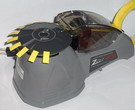
Auxiliary Packaging Machines
Source high-performance auxiliary packaging machines from vetted manufacturers and wholesale suppliers. Designed for importers, distributors, and procurement managers, this category covers the essential end-of-line and feeding equipment needed to complete industrial packaging lines. Explore bulk pricing and OEM production options.
Auxiliary packaging machinery bridges the gap between primary filling or sealing stations and final dispatch. Whether you are sourcing feeding systems, coding machines, checkweighers, or case handlers, the primary challenge is rarely the standalone function of the machine—it is seamless integration. A misaligned feed rate or incompatible PLC protocol on a single auxiliary unit can bottleneck an entire production line.
When sourcing this equipment in volume from Asian manufacturers, specifying the right core components and validating assembly standards is critical to ensuring long-term reliability.
Component Specifications and Line Integration
Chinese manufacturers offer a wide spectrum of component tiers. Failing to explicitly specify your requirements will often result in the factory defaulting to domestic-tier parts to lower their quote and win the bid. For industrial applications, you must define the brands and standards for your PLCs, pneumatics, and sensors.
| System Component | Standard (Domestic Tier) | Premium (Export Tier) |
|---|---|---|
| PLC & HMI | Kinco, Xinje, Delta | Siemens, Allen-Bradley, Mitsubishi |
| Pneumatics | AirTAC (or unbranded clones) | SMC, Festo |
| Sensors & Optics | Omron (domestic market), CHNT | Sick, Keyence, Banner |
| Motors | Standard AC / Stepper | Servo (Panasonic, Yaskawa) |
If your auxiliary machine needs to communicate with a primary European or American packaging line, you must verify the communication protocol (Modbus, Profibus, EtherCAT) and ensure the PLC architecture is compatible.
Integrating auxiliary machines with existing lines requires precise technical vetting. Let us help you verify supplier engineering capabilities and component authenticity.
Talk to our teamManufacturing Standards and Factory Vetting
The manufacturing hubs for packaging machinery in China are heavily concentrated in Guangdong (Guangzhou, Dongguan) and Zhejiang (Wenzhou, Ruian). While the external sheet metal fabrication might look identical across different suppliers, the internal wiring, welding quality, and assembly precision dictate the machine's longevity.
Conducting proper factory audits before placing a volume order is essential to ensure the supplier actually machines their own critical parts rather than just assembling cheap, outsourced components.
Key Focus Areas During Supplier Vetting
- Electrical Cabinet Standards: Are wires organized, labeled, and compliant with CE/UL standards, or is the routing chaotic?
- Material Verification: Verify SUS304 or SUS316 stainless steel using chemical spectrometers, especially for food and pharma applications.
- Motor Sizing: Check if stepper or servo motors are adequately sized for peak operational load, rather than just nominal idle load.
- Welding Quality: Look for continuous, ground, and polished welds on structural frames to prevent bacterial buildup in washdown environments.
Quality Control and Pre-Shipment Testing
Auxiliary machines must be tested under load. Running a conveyor or labeler empty does not simulate factory floor conditions. Implementing strict quality control & inspection protocols before the equipment leaves the factory prevents costly retrofitting on your client's floor.
Factory Acceptance Testing (FAT)
Always mandate a video-documented FAT using your actual product samples (or exact dimensional dummies). Do not accept FATs run with the factory's generic test materials, as friction coefficients and weight distributions will differ.
Buying Mechanics: MOQs, Lead Times, and Pricing
Auxiliary equipment is highly modular. MOQs are generally low, allowing buyers to mix different units in a single container, but lead times depend heavily on the level of customization required.
Pricing is driven primarily by steel costs, component brands, and IP ratings. For example, washdown-ready IP69K machines designed for meat processing will cost significantly more than standard IP54 units due to sealed bearings and specialized enclosures.
Once production is complete, coordinating shipping & freight for heavy, awkwardly shaped machinery requires proper crating (fumigated wood) and container optimization to prevent transit damage.
Managing machinery logistics, container loading, and customs clearance is complex. We handle the end-to-end supply chain to ensure your equipment arrives safely and on schedule.
Get a free consultationFrequently Asked Questions
Sourcing auxiliary packaging machines is ultimately about protecting the efficiency of the primary production line. A cheap, unreliable feeder or coder will throttle the output and ROI of your entire operation. By rigorously defining your component specifications and holding factories accountable during assembly, you can secure industrial-grade equipment at highly competitive price points.
Get Sourcing Help for Auxiliary Packaging Machines
Tell us your requirements and our experts will connect you with verified manufacturers.