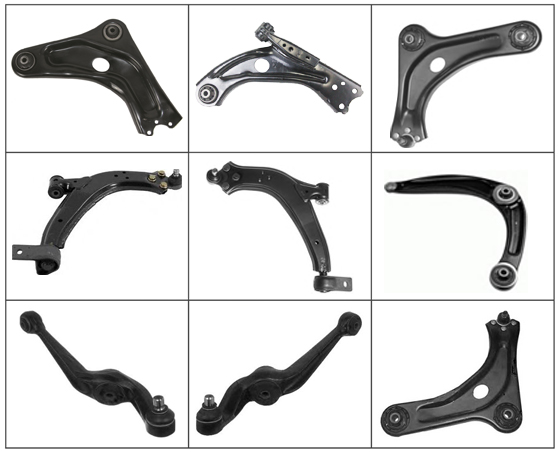
Automobile Chassis
Source high-quality Automobile Chassis components from vetted suppliers and manufacturers. Built for automotive parts importers, distributors, and brands requiring reliable OEM production, our manufacturing network delivers structural integrity, precision engineering, and scalable bulk fulfillment.
Sourcing automobile chassis components in volume requires balancing strict structural integrity requirements with aggressive cost targets. Because the chassis dictates vehicle safety, suspension geometry, and NVH (noise, vibration, and harshness) performance, the margin for error in manufacturing is zero. Procuring these structural parts from overseas manufacturers demands rigorous oversight of metallurgy, tooling precision, and automated welding processes.
Material Specifications and Manufacturing Processes
The shift toward lightweighting, particularly for EV platforms, has diversified chassis material requirements. When developing or sourcing structural components, specifying the exact material grade and forming process is critical to ensuring the final part meets crash-test and durability standards.
| Material Profile | Primary Forming Process | Weight vs. Strength | Typical Automotive Application |
|---|---|---|---|
| Advanced High-Strength Steel (AHSS) | Hot Stamping / Roll Forming | High strength, heavier baseline | Standard passenger & commercial subframes |
| Aluminum Alloy (6000/7000 Series) | High-Pressure Die Casting / Extrusion | Excellent strength-to-weight | EV battery enclosures & performance crossmembers |
| Tubular Steel (DOM) | Hydroforming / CNC Bending | High torsional rigidity | Space frames & specialized off-road chassis |
Stamping, Welding, and Surface Treatment
Modern chassis production relies heavily on automated progressive stamping and robotic MIG/TIG welding. Inconsistent heat-affected zones (HAZ) during welding can lead to structural failure under dynamic loads. Furthermore, surface treatment is non-negotiable for corrosion resistance. Electrophoretic coating (e-coating) is the industry standard, ensuring uniform thickness and penetration into complex geometries, often followed by a powder-coated top layer for parts exposed to severe underbody debris.
Navigating custom chassis tooling and IATF 16949 compliance? Let us connect you with audited, automotive-grade manufacturers.
Talk to our teamQuality Assurance and IATF 16949 Compliance
In the automotive sector, ISO 9001 is insufficient. Serious chassis manufacturers must hold IATF 16949 certification, which mandates defect prevention and reduction of variation in the supply chain. Before committing to a production run, conducting thorough Factory Audits is essential to verify the supplier's Quality Management System (QMS) and their ability to execute Advanced Product Quality Planning (APQP).
Critical Inspection Checkpoints
A robust Quality Control & Inspection protocol for chassis components should include:
Chassis Quality Control Protocol
- Dimensional accuracy verification using Coordinate Measuring Machines (CMM) and custom checking fixtures.
- Non-Destructive Testing (NDT) on weld seams, including ultrasonic or X-ray inspection for porosity.
- Salt spray testing (minimum 500 hours) to validate e-coating and corrosion resistance.
- Metallurgical analysis to confirm material yield strength and tensile properties match the specified grade.
- Verification of PPAP (Production Part Approval Process) Level 3 documentation prior to mass production.
Tooling, MOQs, and Production Economics
Sourcing chassis parts—whether standard aftermarket replacements or custom OEM/ODM Services—involves significant upfront capital for tooling. Stamping dies, welding jigs, and checking fixtures must be amortized over the production run.
Because of the physical size of chassis components and the setup time required for heavy-tonnage presses, manufacturers typically enforce strict Minimum Order Quantities (MOQs).
When negotiating with suppliers, ensure that tooling ownership rights are clearly defined in the contract and that routine die maintenance is factored into the unit cost.
Need to optimize tooling costs or manage complex automotive supply chains? We can help structure your sourcing strategy.
Get a free consultationFrequently Asked Questions
Sourcing automobile chassis components at scale requires a deep understanding of metallurgy, stringent quality frameworks, and complex tooling economics. By partnering with manufacturers who possess the right certifications and engineering capabilities, you can secure structural components that meet uncompromising safety standards while maintaining supply chain efficiency.
Get Sourcing Help for Automobile Chassis
Tell us your requirements and our experts will connect you with verified manufacturers.