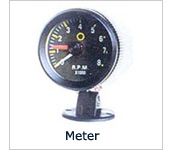
Auto Meters
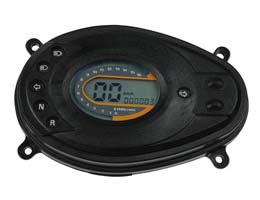
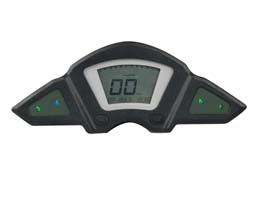
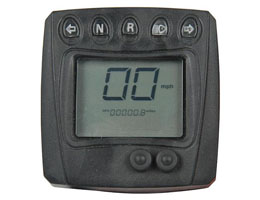
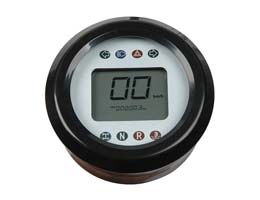
Source high-performance auto meters in bulk from vetted manufacturers and suppliers. Designed for automotive importers, wholesale distributors, and brands seeking reliable OEM/ODM production, our catalog features precision instrument clusters and gauges. Ensure compliance and stable supply for your auto electrical systems.
Sourcing auto meters at scale requires balancing precision electronics with rugged mechanical durability. Whether you are procuring traditional stepper-motor gauges or fully digital TFT LCD instrument clusters, the core challenge remains the same: ensuring the factory can deliver consistent calibration, robust environmental sealing, and seamless integration with vehicle communication protocols.
Specifying Auto Meters for Commercial Sourcing
When evaluating suppliers, the technical specifications dictate both the component cost and the factory's required engineering capability. Buyers must define the exact operating parameters to avoid receiving consumer-grade electronics masquerading as automotive-grade parts.
- Operating Voltage & Transients: Standard passenger vehicles require 12V systems, while commercial trucks and heavy machinery demand 24V compatibility. Ensure the PCB design includes over-voltage and reverse-polarity protection to handle alternator load dumps.
- Signal Input & Protocols: Legacy and aftermarket gauges often rely on analog pulse or resistance signals. Modern replacements and OEM-style clusters must interface directly with the vehicle's ECU via CAN bus (SAE J1939 for heavy duty, OBD2 for passenger).
- Environmental Tolerances: Automotive cabins experience extreme temperature swings. Specify an operating temperature range of -40°C to 85°C. For off-road, marine, or motorcycle crossover applications, front-panel sealing must meet IP67 standards to prevent moisture ingress and lens fogging.
| Meter Category | Core Mechanism | Signal Integration | Primary Sourcing Region |
|---|---|---|---|
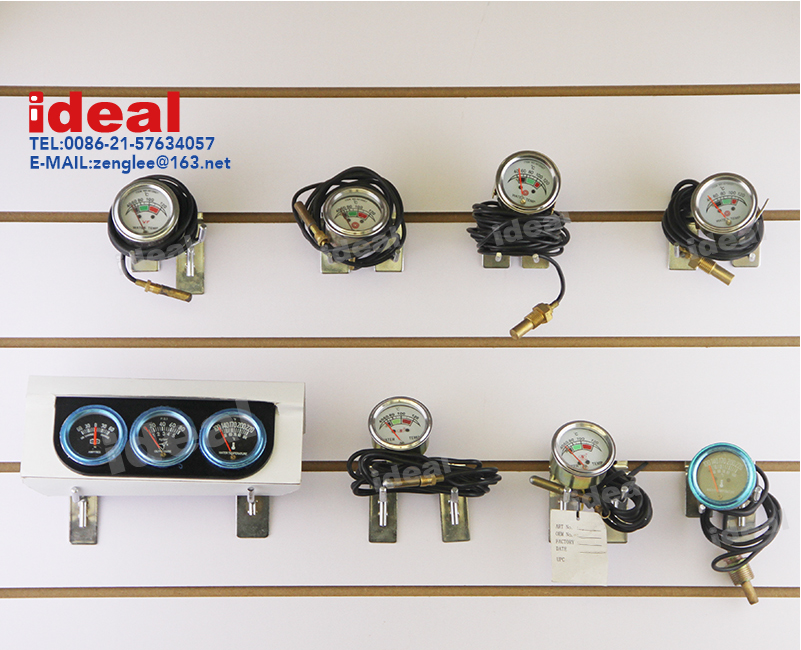
| Traditional Analog Gauges | Stepper Motor | Analog / Resistance | Zhejiang (Ruian) |
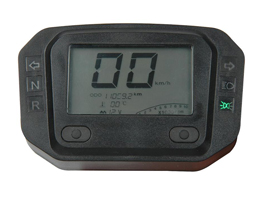
| Digital Displays (HUD/OBD2) | LED / Segmented LCD | OBD2 / CAN bus | Guangdong (Shenzhen) |
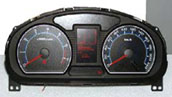
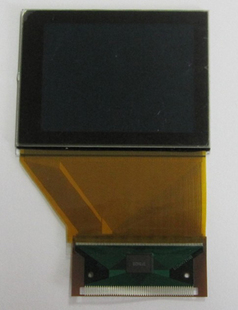
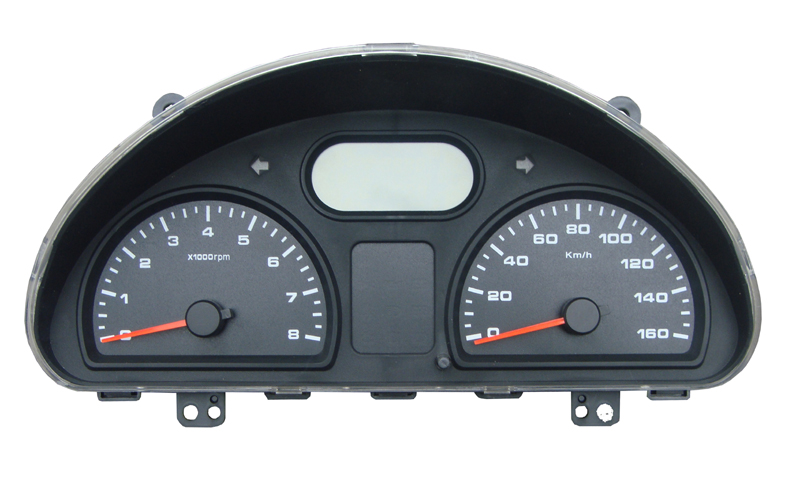
| Full Instrument Clusters | TFT / OLED LCD | CAN bus / LIN bus | Guangdong / Jiangsu |
Manufacturing Red Flags and Quality Control
The reliability of an auto meter is won or lost in the factory's surface-mount technology (SMT) lines and final assembly calibration. A common failure point in lower-tier factories is the use of unbranded stepper motors, resulting in pointer flutter or delayed response times.
When executing Quality Control & Inspection, your pre-shipment protocols must go beyond basic power-on tests.
Critical Factory QC Checkpoints for Auto Meters
- Thermal Shock Testing: Verify LCD screens do not ghost or freeze at extreme low temperatures.
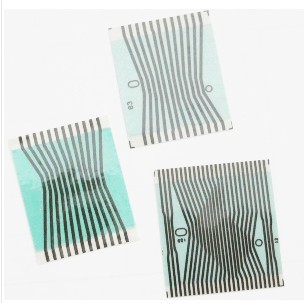
- Vibration Testing: Ensure internal solder joints and ribbon cables withstand sustained multi-axis vibration.
- Calibration Accuracy: Test against a known frequency/voltage generator across the entire sweep of the gauge.
- Illumination Uniformity: Check for LED hot spots or dead zones behind the dial face during low-light conditions.
- Aging Tests: Confirm the factory runs 100% of units on a burn-in rack for at least 24 to 48 hours.
Need to verify a supplier's engineering capabilities? Let our sourcing engineers evaluate their production lines and QC protocols.
Talk to our teamOEM/ODM Customization & Tooling
If you are building a proprietary brand of gauges, OEM/ODM Services allow you to dictate the industrial design and user interface. Customization typically falls into two categories:
- Hardware & Aesthetic Modifications: Custom dial faces (silk-screen printing), proprietary bezel designs (CNC machined aluminum or injection-molded ABS), and specific backlighting colors. Tooling for a new bezel or housing usually takes 25 to 40 days.
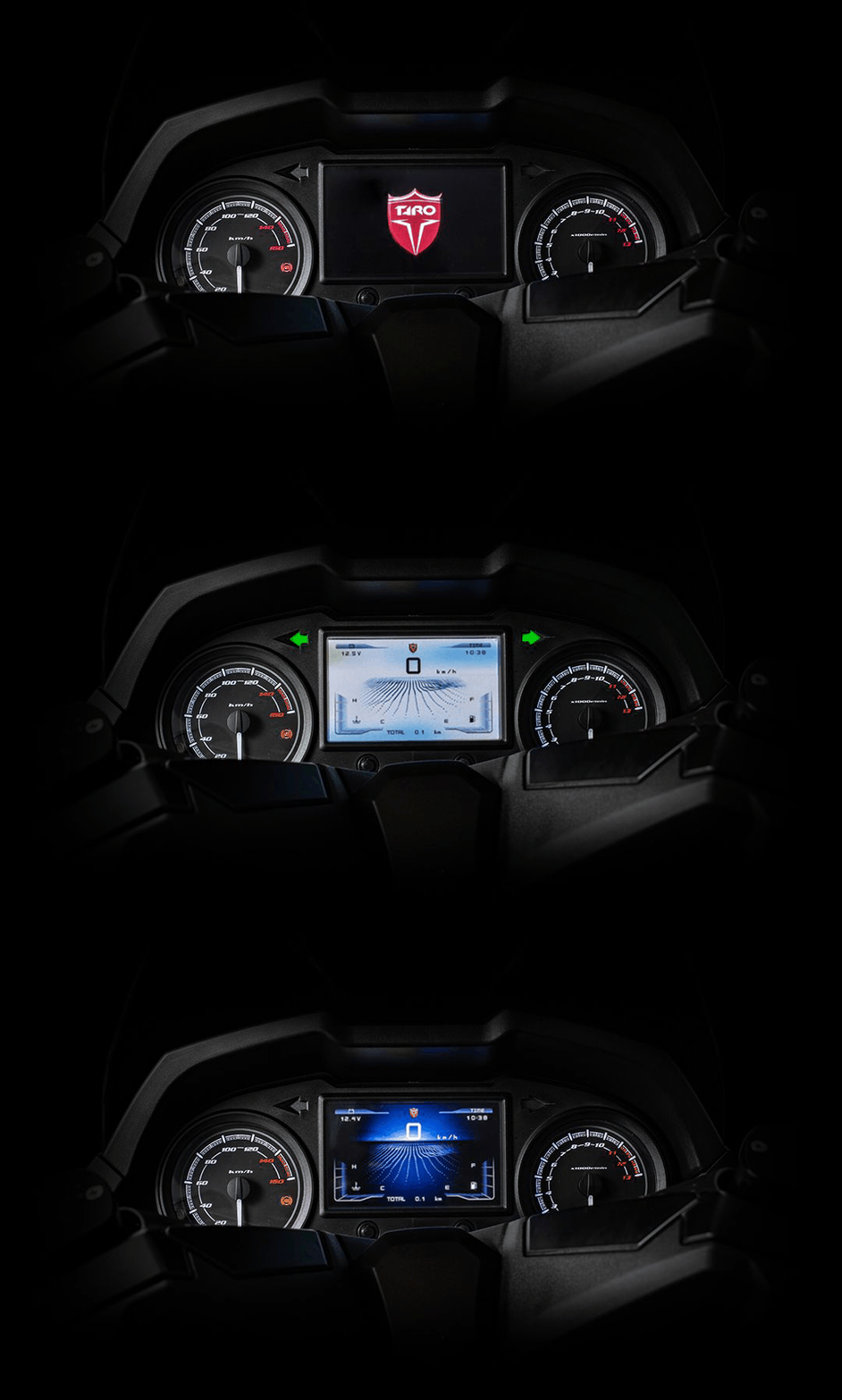
- Software & Firmware: For digital clusters, custom UI/UX design, startup animations, and specific CAN bus PID mapping require a factory with an in-house software engineering team, not just an assembly line.
Validating that a factory actually owns the firmware source code—rather than buying pre-flashed ICs from a third party—is a critical step during Factory Audits. If they do not own the code, resolving bugs or adding custom features later will be nearly impossible.
MOQs, Pricing Drivers, and Lead Times
Pricing in the auto meter category is heavily dependent on the display technology (TFT screens being the highest cost driver), the quality of the microprocessor, and the ICs used for CAN bus communication.
- Standard Gauges: Basic 52mm analog gauges (temp, oil, volt) typically range from $4.00 to $12.00 per unit depending on sensor inclusion and stepper motor quality.
- Digital/OBD2 Displays: Standalone smart displays range from $15.00 to $45.00.
- Full Clusters: Complete digital dashboards can range from $80.00 to over $250.00, driven by screen size, resolution, and automotive-grade processing power.
Struggling with high MOQs or inconsistent pricing? We can help negotiate terms and consolidate your automotive part orders.
Get a free consultationFrequently Asked Questions
Navigating the auto meter supply chain requires a strict focus on electronic reliability and environmental durability. By partnering with factories that possess true engineering capabilities and rigorous aging protocols, you can eliminate the high defect rates that plague lower-tier automotive electronics.
Get Sourcing Help for Auto Meters
Tell us your requirements and our experts will connect you with verified manufacturers.