Auto Bearings
Source high-quality wholesale auto bearings directly from vetted Chinese manufacturers. Designed for automotive parts distributors, importers, and brands requiring reliable OEM and aftermarket production. Secure competitive bulk pricing with rigorous quality assurance and supply chain transparency.
Automotive bearings are a critical failure point in vehicle assemblies. Sourcing them in volume requires balancing cost with non-negotiable standards for load capacity, rotational speed, and longevity. The core challenge in bulk procurement is verifying that a factory's stated material specifications and precision tolerances consistently match the actual production run, order after order.
Critical Specifications for Auto Bearings
When negotiating with bearing manufacturers, specifying the correct technical parameters is essential to avoid premature failure in the field.
Bearing Steel Grades
The material dictates the bearing's load capacity and wear resistance. Never accept generic "bearing steel" on a quotation; demand the exact grade.
| Material Grade | Primary Application | Performance Characteristics |
|---|---|---|
| Carbon Steel | Low-speed, non-critical aftermarket parts | Low cost, poor fatigue life, susceptible to rapid wear. |
| Chrome Steel (GCr15 / 52100) | Standard automotive hubs, alternators, gearboxes | Excellent hardness (HRC 60-65), high contact fatigue strength, industry standard. |
| Stainless Steel (440C) | High-moisture environments, specialized applications | Superior corrosion resistance, slightly lower load capacity than GCr15. |
Precision and Tolerance (ABEC Ratings)
Precision dictates how smoothly and quietly the bearing operates at high speeds. While ABEC 1 is standard for many general automotive applications, alternators and high-speed components often require ABEC 3 or ABEC 5. Higher ABEC ratings require more grinding passes and stricter quality control, directly impacting the unit price.
Seals and Lubrication
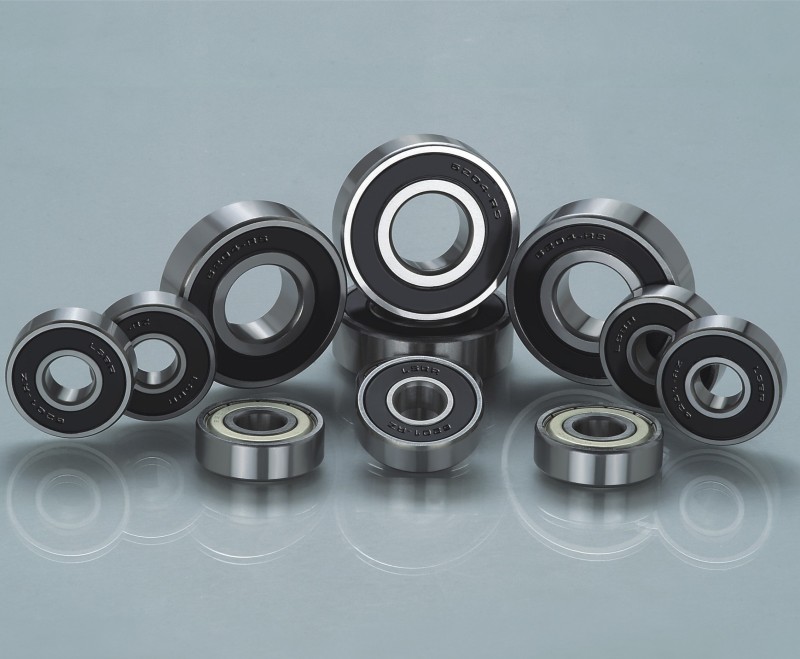
For automotive applications, contamination is a primary cause of failure. Specify whether you need metal shields (ZZ) for high-speed, low-friction environments or rubber seals (2RS) for superior protection against dust and water. The grease fill rate should typically be between 25 percent and 35 percent of the internal free space; overfilling causes overheating, while underfilling leads to rapid wear.
Need to verify a supplier's technical capabilities before placing a bulk order? Our sourcing engineers can evaluate factory specifications and production standards.
Talk to our teamManufacturing Quality Control
The difference between a reliable bearing and a defective one is often invisible to the naked eye. It comes down to process control on the factory floor.
Key Factory Controls to Verify
- Heat Treatment: Verify the factory uses continuous mesh belt furnaces with strict temperature controls to prevent micro-cracking and ensure uniform hardness.
- Raceway Grinding: Ensure automated CNC grinding machines are used to achieve the required surface finish and raceway curvature.
- Noise & Vibration Testing: Bearings should be 100 percent tested on automated lines (Z1 to Z4 vibration classes) before packaging.
- Automated Assembly: Manual assembly increases the risk of contamination and improper clearance matching.
To ensure these standards are met, professional buyers rely on comprehensive Factory Audits prior to finalizing supplier agreements. For automotive components, prioritizing factories with IATF 16949 certification is highly recommended, as it demonstrates a commitment to automotive-specific quality management systems.
OEM Customization and Private Labeling
For brands looking to establish their own aftermarket product lines, bearing manufacturers offer extensive customization. This typically includes laser engraving your brand and part number on the outer ring, customizing the color and branding on the rubber seals, and designing retail-ready unit packaging.
Executing these details flawlessly across large volumes requires tight coordination. Utilizing dedicated OEM/ODM Services ensures your brand guidelines are strictly adhered to during mass production.
Pricing, MOQs, and Lead Times
Automotive bearing pricing is highly sensitive to raw material costs (specifically chrome steel) and exchange rates.
- Minimum Order Quantities (MOQs): For standard sizes, factories typically require an MOQ of 1,000 to 3,000 pieces per SKU. For custom sizes or specialized seal designs, MOQs can exceed 5,000 pieces.
- Lead Times: Standard production runs take 30 to 45 days. However, if custom tooling or non-standard grease is required, expect lead times to extend to 60 days.
- Pricing Drivers: Upgrading from ABEC 1 to ABEC 3, specifying premium synthetic grease (e.g., Kyodo Yushi or Klüber), or demanding tighter internal clearances (C3 instead of CN) will incrementally increase the unit cost.
Protect your investment with rigorous in-line and pre-shipment inspections tailored to automotive tolerances.
Get a free consultationImplementing strict Quality Control & Inspection protocols before the goods leave the factory is the only way to ensure the batch meets your agreed-upon specifications.
Sourcing auto bearings at scale is an exercise in risk management. Success depends not just on finding a competitive price, but on strictly controlling the material grades, machining precision, and assembly environments on the factory floor. Partnering with experienced sourcing professionals ensures your supply chain remains stable and your product quality remains uncompromising.
Get Sourcing Help for Auto Bearings
Tell us your requirements and our experts will connect you with verified manufacturers.