Assembly Lines
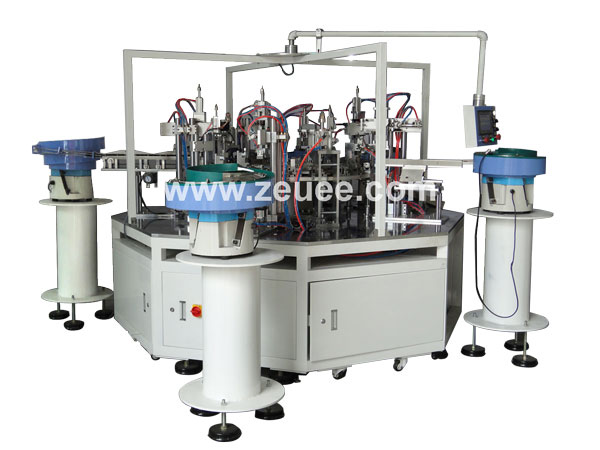
Source custom and modular assembly lines from vetted manufacturers and suppliers in Asia. Designed for industrial procurement managers, factory operators, and production engineers scaling manufacturing capacity, our network delivers reliable, high-throughput systems configured to your exact production requirements.
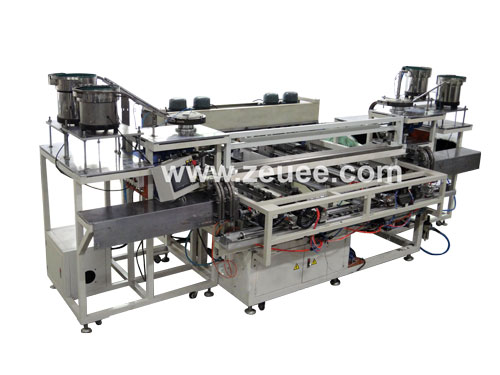
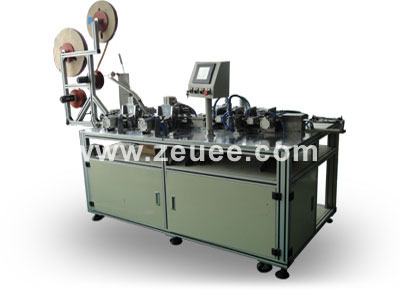
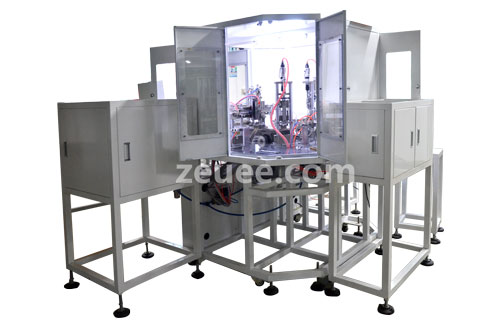
Sourcing an industrial assembly line is a high-stakes capital expenditure. Unlike off-the-shelf machinery, an assembly line requires seamless integration of mechanical conveyors, pneumatic actuators, sensors, and programmable logic controllers (PLCs). Success relies on aligning your takt time requirements and payload constraints with a manufacturer capable of precise systems integration and rigorous testing before shipment.
Defining Your System Architecture
The most common failure point in overseas machinery procurement is a poorly defined Technical Requirement Document (TRD). Chinese automation builders are highly capable, but they will build exactly what you specify. If you do not dictate the brands of critical wear components or control systems, factories will default to domestic equivalents to lower their bid.
Critical Specifications for Your TRD
- Takt Time & Throughput: Define the required cycle time per station and overall units per hour (UPH).
- Payload & Dimensions: Specify the maximum weight, center of gravity, and dimensions of the work-in-progress (WIP) at each stage.
- Control Systems (PLCs): Dictate acceptable brands (e.g., Siemens, Allen-Bradley, Mitsubishi, Omron) to ensure compatibility with your existing factory network.
- Pneumatics & Drives: Specify trusted international brands for motors, servos, and pneumatic cylinders (e.g., Festo, SMC, SEW-Eurodrive).
- Power & Compliance: Detail your facility's voltage, phase, and frequency, alongside required electrical safety standards (CE, UL, or CSA).
When evaluating potential partners, it is vital to verify their engineering capabilities, not just their assembly floor. Conducting thorough Factory Audits ensures the supplier has an in-house engineering team capable of programming PLCs and designing custom end-of-arm tooling, rather than outsourcing the intellectual core of your machine.
| Architecture | CapEx Profile | Throughput Consistency | Changeover Flexibility |
|---|---|---|---|
| Semi-Automated | Lower initial investment | Variable (operator dependent) | High (rapid manual reconfiguration) |
| Fully Automated | High initial investment | Highly consistent | Low (requires reprogramming/tooling changes) |
| Modular / Cell-Based | Moderate to High | Consistent per cell | Very High (cells can be added or bypassed) |
Need to vet automation builders for an upcoming CAPEX project? Let our engineers evaluate supplier capabilities on the ground.
Get a free consultationQuality Assurance: The Factory Acceptance Test (FAT)
You cannot afford to discover integration issues after the machinery arrives at your facility. The Factory Acceptance Test (FAT) is the most critical milestone in your procurement timeline. During the FAT, the line is fully assembled on the supplier's floor and run using your actual product samples.
A proper FAT requires rigorous Quality Control & Inspection protocols. You must verify that safety interlocks function, emergency stops cut power instantaneously, and the system consistently meets the specified takt time without excessive vibration or motor overheating. Only after a successful FAT, documented with video evidence and a signed off punch-list, should you authorize the final balance payment and allow the machine to be dismantled for crating.
Sample Provision for FAT
Always ship exact, production-grade components to the manufacturer for the FAT. Using mock-ups or 3D-printed stand-ins for testing often masks gripping, feeding, or alignment issues that will immediately halt production once the real materials are introduced.
Lead Times, MOQs, and Payment Structures
Assembly lines are custom-engineered projects. The MOQ is naturally one system, but the commercial terms differ significantly from standard wholesale goods.
Managing Logistics for Heavy Machinery
Shipping an entire production line is rarely as simple as loading standard pallets into a 40HQ container. Conveyor sections, robotic cells, and large control panels often require specialized crating to prevent moisture damage and torsional stress during transit. Oversized modules may necessitate Open Top or Flat Rack containers (Out of Gauge shipping). Coordinating this requires experienced Shipping & Freight management to ensure the machinery clears customs smoothly and arrives at your facility without structural damage.
Navigating custom machinery procurement, FAT protocols, and heavy freight requires dedicated project management. We can help you execute seamlessly.
Talk to our teamFrequently Asked Questions
Procuring an assembly line from overseas offers immense cost advantages for scaling production, provided the technical specifications are ironclad and the testing phases are rigorously enforced. Success depends entirely on treating the purchase as a collaborative engineering project rather than a simple transactional import.
Get Sourcing Help for Assembly Lines
Tell us your requirements and our experts will connect you with verified manufacturers.