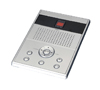
Answering Machines
Source bulk answering machines directly from vetted manufacturers and suppliers in China and Asia. Designed for telecommunications distributors, wholesale importers, and brands seeking reliable OEM or private-label production. Secure competitive pricing and reliable hardware for both consumer and enterprise telecom markets.
While unified communications have largely shifted to the cloud, standalone digital answering machines and integrated base stations remain a steady requirement for specific enterprise, hospitality, and specialized consumer telecom applications. Sourcing these units at scale requires navigating a mature but highly consolidated manufacturing base in Asia. The primary challenge for volume buyers is no longer cutting-edge innovation, but rather ensuring consistent component supply—specifically DSP (Digital Signal Processing) chips and flash memory—while maintaining strict compliance with regional telecom network standards.
Core Specifications for Sourcing
When evaluating factory capabilities, the internal architecture of the answering machine dictates both its unit cost and its longevity in the field. Buyers must specify exact requirements for memory, line compatibility, and audio processing to avoid receiving units built with substandard, high-degradation components.
| Specification Focus | SOHO / Consumer Grade | Hospitality / Enterprise Grade |
|---|---|---|
| Recording Capacity | 15 to 30 minutes (Standard Flash) | 60 to 120+ minutes (High-cycle Flash) |
| Line Architecture | Single analog (PSTN) | Multi-line, PBX/SIP compatible |
| Audio Processing | Basic ADPCM compression | Advanced DSP with active noise reduction |
| Power & Backup | DC adapter, no battery backup | PoE support or integrated battery backup |
Component Selection and Flash Memory
The most common point of failure in modern digital answering machines is the flash memory used for message storage. Low-tier suppliers often utilize lower-grade NAND flash with limited write cycles, leading to device failure after a few years of heavy use. Specify industrial-grade or high-endurance flash memory if the product is intended for high-traffic environments like medical offices or hotel front desks.
Struggling to verify component quality with your current telecom supplier? Let us evaluate their bill of materials and manufacturing standards.
Talk to our teamManufacturing Standards and Defect Prevention
Producing telecom equipment requires strict adherence to regional network standards. A machine that works perfectly on a test bench in Shenzhen may suffer from line noise, clipping, or failure to answer when connected to legacy copper lines in North America or Europe due to improper line impedance matching.
To mitigate this, robust quality control during the assembly process is non-negotiable.
Critical Factory Inspection Points
- Line impedance matching and regional PSTN compatibility testing.
- Acoustic testing for playback distortion (ensuring Total Harmonic Distortion is under 5 percent).
- Verification of RJ11 port durability and power surge protection circuitry.
- Write-cycle validation on flash memory batches prior to PCB soldering.
- Display clarity and contrast testing for LCD/LED status panels.
Furthermore, telecom devices must pass specific regulatory hurdles before import. Ensuring your supplier has the capability to meet FCC Part 68 (for the US), CE (for Europe), and RoHS standards is critical. Engaging a partner for proper compliance testing early in the production run prevents costly customs seizures or network provider bans.
Pricing, MOQs, and Lead Times
The manufacturing ecosystem for standalone answering machines is concentrated, meaning pricing is heavily dependent on raw material costs (silicon, plastics) and order volume. Because this is a mature product category, factories operate on thin margins and require volume to justify production runs.
For brands looking to establish their own product lines, utilizing OEM/ODM services allows for customization of firmware (such as localized voice prompts or specific PBX integration features) and customized outer housing.
Pricing drivers include:
- Display type: Simple LED segment displays are highly cost-effective; full dot-matrix or backlit LCDs increase costs.
- Memory capacity: Expanding from 15 minutes to 60 minutes of solid-state storage adds direct component cost.
- Ancillary features: Integrated cordless handset bases (DECT technology), Bluetooth link-to-cell capabilities, or dual-line support significantly increase the Bill of Materials (BOM).
Ready to negotiate better terms or develop a custom telecom product? We manage the factory communication, pricing, and production schedule for you.
Get a free consultationFrequently Asked Questions
Successful procurement in the telecom accessories space requires balancing legacy technology requirements with modern manufacturing quality controls. By focusing on component endurance and strict regional compliance, buyers can secure reliable margins and field-ready hardware without the headaches of high return rates.
Get Sourcing Help for Answering Machines
Tell us your requirements and our experts will connect you with verified manufacturers.