Anesthesia Equipment & Accessories
Source professional-grade Anesthesia Equipment & Accessories from vetted manufacturers and suppliers in China and Asia. Designed for medical distributors, healthcare procurement managers, and brands seeking OEM production, our bulk sourcing solutions ensure strict regulatory compliance, competitive wholesale pricing, and reliable manufacturing quality.
Sourcing anesthesia equipment and accessories at scale requires balancing cost-efficiency with a zero-margin-for-error approach to quality. Because these are life-critical clinical devices, the sourcing process demands manufacturing partners with impeccable quality management systems and the engineering capability to meet strict global regulatory standards. Whether you are procuring complex capital equipment or high-volume disposable accessories, success depends on rigorous supplier vetting and precise specification management.
Material Specifications and Manufacturing Precision
The reliability of anesthesia apparatus begins with raw material selection and manufacturing precision. Buyers must clearly define material requirements in their technical files to prevent unauthorized substitutions on the factory floor.
For consumable accessories like breathing circuits, masks, and endotracheal tubes, biocompatibility is non-negotiable. Medical-grade silicone and thermoplastic elastomers (TPE) are preferred for reusable components due to their durability and autoclavability. Disposable variants typically utilize medical-grade PVC, which must be specified as DEHP-free to meet modern safety standards.
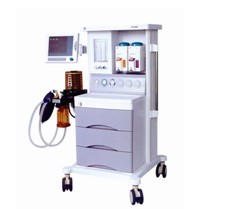
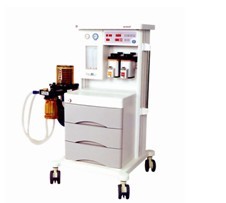
Capital equipment, such as anesthesia machines and precision vaporizers, involves complex electromechanical assembly and precision machining. Vaporizers require high-grade aluminum and brass alloys machined to exacting tolerances to ensure accurate anesthetic agent delivery under varying temperature and pressure conditions.
| Component Type | Typical Materials | Key Manufacturing Requirement |
|---|---|---|
| Breathing Circuits | Medical-grade PVC, EVA, PE | Corrugated/expandable extrusion, leak-free joints |
| Anesthesia Masks | Silicone, PVC, PC | Biocompatibility, atraumatic cushion sealing |
| Vaporizers | Machined Aluminum, Brass | High-precision calibration, temperature compensation |
| Machine Chassis | Stainless Steel, ABS Plastics | Anti-corrosion coating, stable structural integrity |
Quality Control and Regulatory Compliance
Medical device sourcing lives and dies by compliance. Importing anesthesia equipment into major markets requires the manufacturer to hold valid ISO 13485 certification, alongside product-specific clearances such as FDA 510(k) for the US or CE marking under the Medical Device Regulation (MDR) for Europe.
Relying solely on a supplier's provided certificates is a high-risk strategy. Professional buyers utilize rigorous factory audits to verify that the manufacturer's quality management system is actively implemented, not just documented.
Sterilization Validation
If sourcing sterile accessories, verify the factory's Ethylene Oxide (EO) sterilization capabilities. Ensure they provide validated degassing reports, as residual EO levels must remain strictly below regulatory thresholds.
During production, robust quality control protocols must be enforced. End-of-line testing should never be left to chance.
Critical Inspection Points for Anesthesia Accessories
- Pneumatic leak testing under standardized pressure parameters
- Tensile strength testing of bonded connectors and tubing joints
- Verification of standard 15mm and 22mm conical connector dimensions (ISO 5356-1)
- Biocompatibility and cytotoxicity testing reports validation
- Packaging integrity checks for sterile barrier systems
Need to verify a medical device manufacturer? Let our on-the-ground experts audit their facilities and quality systems before you place an order.
Talk to our teamSourcing Mechanics: MOQs, Lead Times, and OEM Production
The anesthesia category spans both high-volume consumables and low-volume capital equipment, meaning sourcing mechanics vary drastically.
For disposable accessories, manufacturers operate on high-speed extrusion and injection molding lines. Consequently, Minimum Order Quantities (MOQs) for items like breathing circuits or disposable masks typically range from 5,000 to 10,000 pieces per SKU. Lead times for standard runs usually span 30 to 45 days, though initial orders requiring custom packaging or private labeling may take up to 60 days.
For capital equipment like anesthesia workstations, MOQs are highly flexible, often starting at 1 to 5 units. However, production times are longer (45 to 90 days) due to the complex assembly, rigorous calibration, and extensive burn-in testing required.
Brands looking to differentiate their product lines frequently utilize OEM/ODM services to develop custom circuit configurations, proprietary mask designs, or branded equipment interfaces. When developing custom molds for plastic components, budget between $3,000 and $15,000 per tool, depending on complexity and cavitation.
Looking to manufacture custom medical accessories or negotiate better terms with your current suppliers? Merhein can manage your entire procurement process.
Get a free consultationFrequently Asked Questions
Sourcing life-critical medical devices requires technical fluency, aggressive quality oversight, and an uncompromising approach to compliance. Partnering with a professional sourcing team ensures your supply chain remains resilient, compliant, and cost-effective, allowing you to focus on distribution and market growth.
Get Sourcing Help for Anesthesia Equipment & Accessories
Tell us your requirements and our experts will connect you with verified manufacturers.