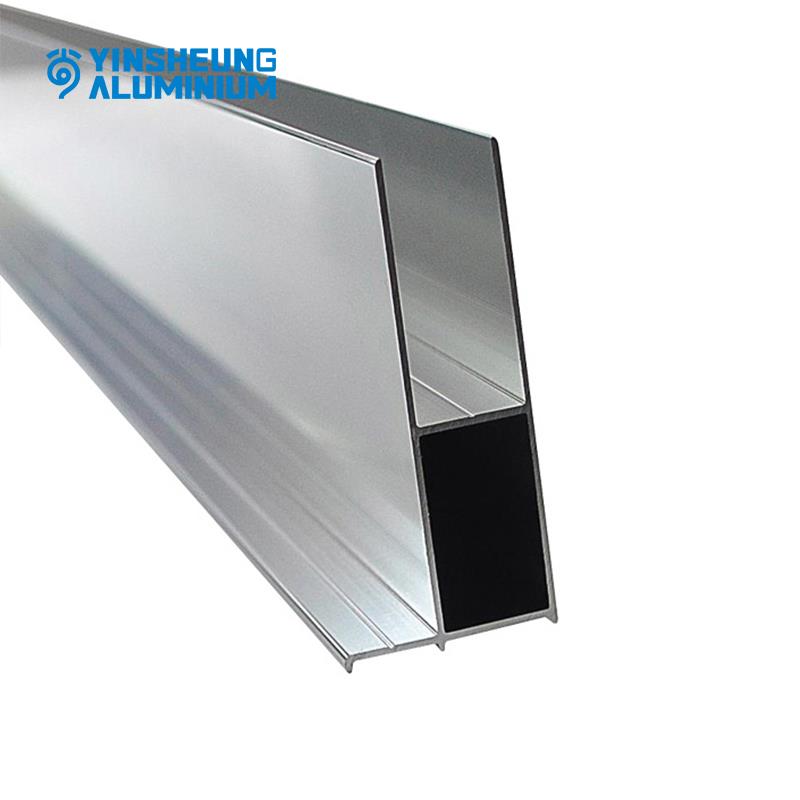
Aluminum Profiles
Source premium aluminum profiles directly from vetted manufacturers and suppliers. Designed for importers, wholesalers, and brands requiring reliable OEM and custom extrusion production, our network delivers precision-engineered profiles for architectural, industrial, and structural applications in bulk.
Bulk sourcing aluminum profiles requires balancing precise dimensional tolerances with surface finish durability and raw material integrity. The primary sourcing challenge lies in ensuring consistency across multiple production batches, where even minor thermal variations during extrusion or chemical imbalances during anodizing can compromise structural integrity or aesthetic uniformity.
Specifying Alloys and Tempers
The foundation of any extrusion project is the alloy and temper designation. While Chinese manufacturers can produce a vast range of specifications, the 6000-series remains the standard for most commercial and industrial applications due to its excellent extrudability and finishing characteristics.
When ordering, you must specify both the alloy grade and the thermal treatment (temper), as this dictates the final mechanical properties.
| Alloy & Temper | Primary Applications | Key Characteristics |
|---|---|---|
| 6063-T5 | Architectural framing, windows, heatsinks | Excellent surface finish, highly extrudable, standard strength. |
| 6063-T6 | Structural architectural elements | Higher tensile strength than T5, slightly lower ductility. |
| 6061-T6 | Industrial structures, transport, scaffolding | High strength, excellent corrosion resistance, harder to extrude into complex shapes. |
Developing custom profiles? We help you navigate die creation and secure reliable OEM/ODM Services with factories equipped for your specific alloy requirements.
Talk to our teamSurface Finishing and Processing
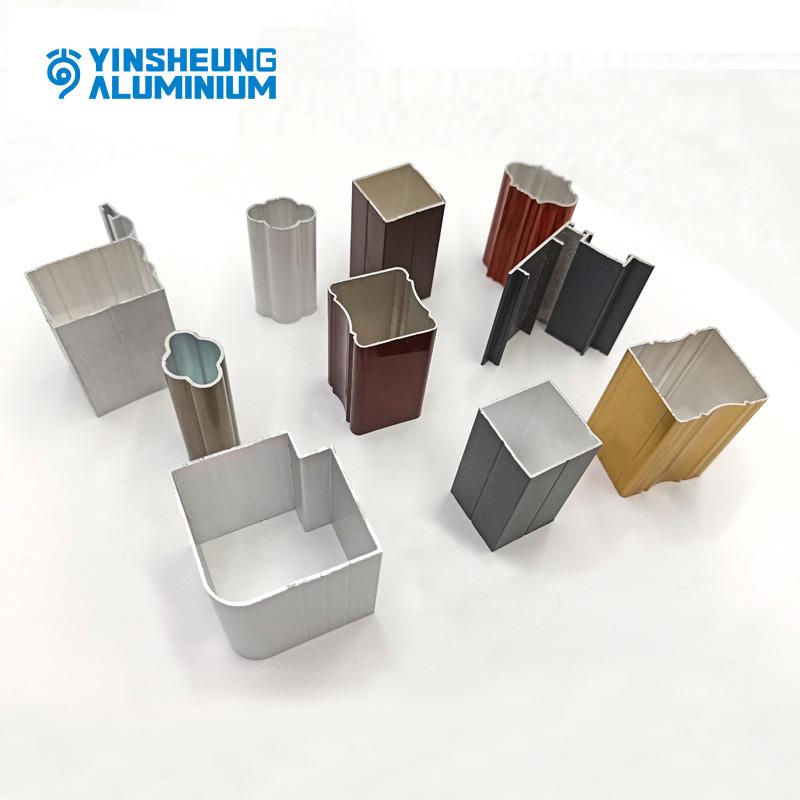
The extrusion process is only half the manufacturing equation. The surface finish dictates the profile's lifespan, corrosion resistance, and market appeal. Inconsistent finishing is the leading cause of rejected shipments.
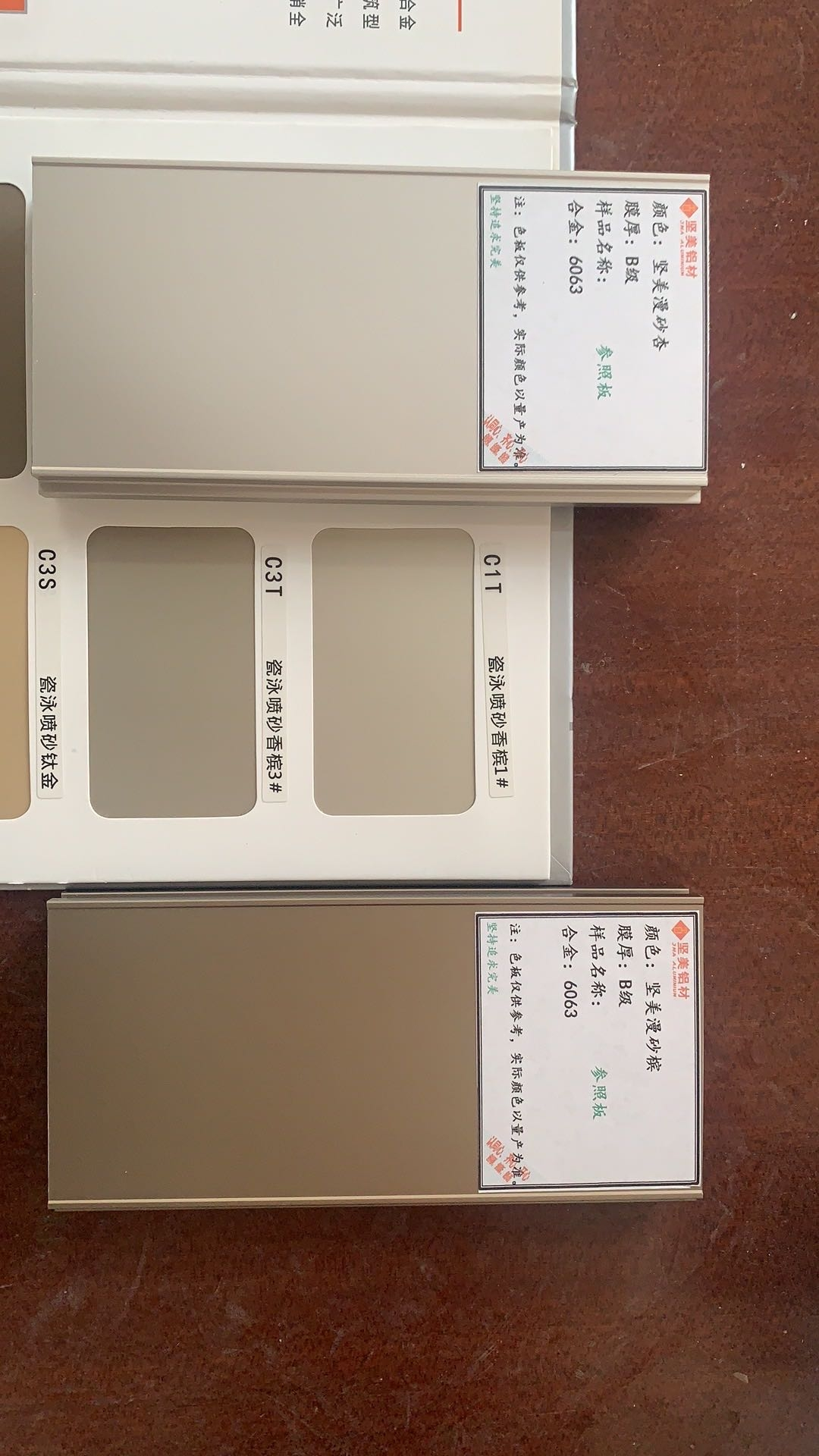
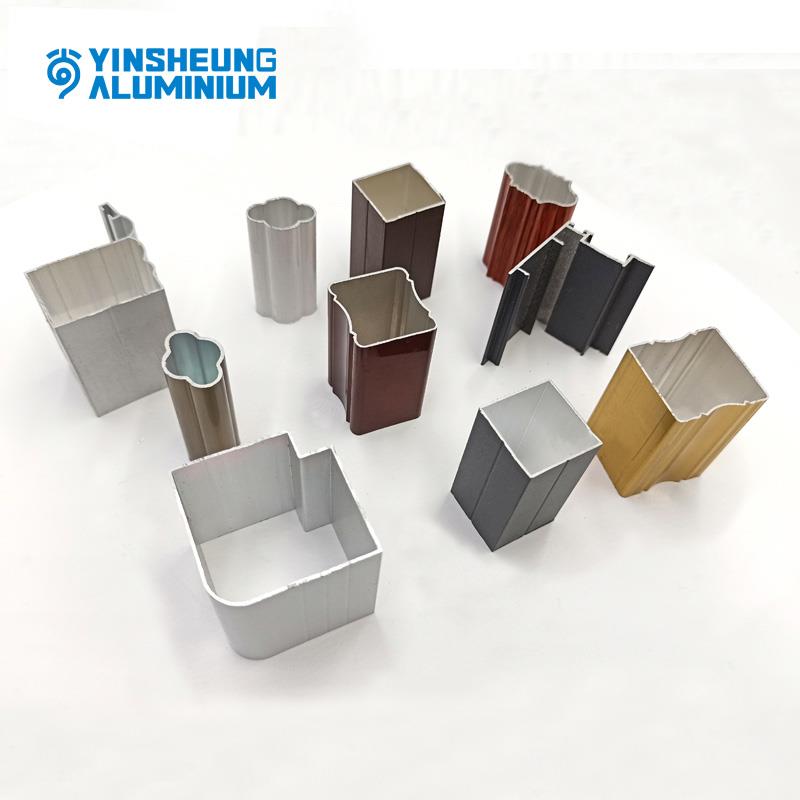
- Mill Finish: Bare aluminum as it comes from the extrusion die. Prone to natural oxidation. Used when the profile will be hidden or finished post-assembly.
- Anodizing: An electrochemical process that thickens the natural oxide layer. Standard architectural anodizing typically requires a thickness of 10 to 25 microns. Anything under 10 microns is generally only suitable for interior use.
- Powder Coating: Offers a wide range of RAL colors. Quality depends heavily on pre-treatment (cleaning and chromating/chrome-free conversion) to ensure adhesion. Standard coating thickness ranges from 60 to 80 microns.
- Electrophoresis: Provides a highly uniform, durable, and slightly glossy finish, often applied over an anodized base for premium architectural applications.
Managing Quality at the Factory Level
Extrusion defects are often irreversible. Catching them requires robust Quality Control & Inspection before the profiles undergo surface finishing, and again before final packing.
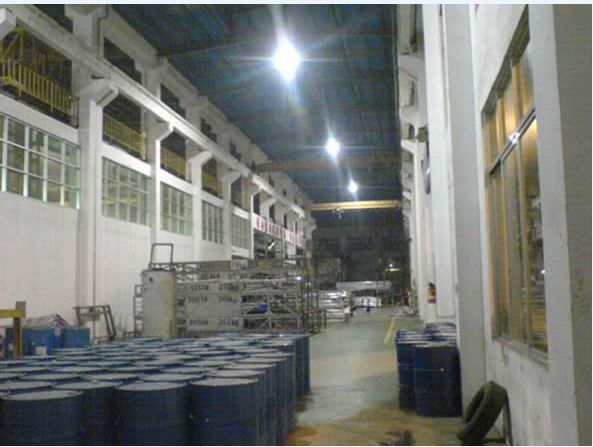
Assessing a factory's capability means looking at their extrusion press tonnage (which dictates the maximum profile width they can handle) and their die maintenance protocols. Conducting thorough Factory Audits ensures you are partnering with a manufacturer who controls the entire process in-house, rather than subcontracting the finishing steps where quality control often breaks down.
Critical Inspection Points for Aluminum Profiles
- Dimensional tolerances: Verify against EN 755-9, GB/T 5237, or your specific CAD drawings.
- Die lines and scoring: Check for excessive longitudinal lines indicating worn extrusion dies.
- Surface inclusions: Inspect for blistering or dark spots caused by impurities in the aluminum billet.
- Coating adhesion: Perform cross-hatch testing on powder-coated batches.
- Straightness and twist: Ensure profiles meet strict flatness tolerances, especially for interlocking systems.
Pricing Structures, MOQs, and Lead Times
Pricing for bulk aluminum profiles is highly transparent and formulaic. It is calculated based on the daily aluminum ingot price (often pegged to the Shanghai Metals Market or LME) plus a processing fee.
The processing fee covers extrusion, thermal treatment, finishing, and packaging. Because the raw material cost fluctuates daily, quotes are typically only valid for 3 to 7 days.
Tooling Costs
For custom shapes, buyers must pay a die fee. This is generally inexpensive in China compared to Western markets. Most manufacturers will refund or amortize the die cost once your cumulative order volume for that specific profile reaches a certain threshold (typically 3 to 5 metric tons).
Need to lock in pricing and manage complex production schedules? We handle supplier negotiation and end-to-end execution for bulk buyers.
Get a free consultationWhen sourcing aluminum profiles, the cheapest processing fee often signals compromises in die maintenance, billet purity, or chemical pre-treatments. Success in this category requires treating your supplier as a technical partner, establishing rigid tolerance standards upfront, and maintaining strict oversight over the finishing lines.
Get Sourcing Help for Aluminum Profiles
Tell us your requirements and our experts will connect you with verified manufacturers.