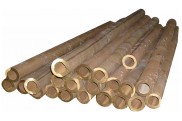
Aluminum Pipes
Source high-quality aluminum pipes directly from vetted manufacturers and suppliers in Asia. Designed for importers, wholesalers, and industrial distributors buying in bulk, our network offers reliable extrusion, custom OEM production, and competitive wholesale pricing.
Aluminum pipes are foundational to industries ranging from aerospace and automotive to construction and HVAC. When sourcing these in volume, the primary challenge is not simply finding a supplier—it is finding an extrusion facility that consistently controls alloy purity, temper, and dimensional tolerances across multi-ton runs.
For professional buyers, securing a reliable supply chain requires looking past the base material price and evaluating the factory's extrusion press tonnage, die maintenance protocols, and quality management systems.
Specifying Aluminum Alloys and Temper
The first step in any bulk order is defining the precise metallurgy. The 6000-series alloys are the most commonly extruded due to their balance of strength, weldability, and corrosion resistance, but specific applications demand strict adherence to grade and temper (heat treatment) specifications.
| Alloy Grade | Primary Characteristics | Typical Applications |
|---|---|---|
| 6061-T6 | High strength, excellent corrosion resistance, highly weldable | Structural framing, high-pressure systems, marine components |
| 6063-T5/T6 | High extrudability, superior surface finish, good conductivity | Architectural applications, furniture, heat sinks, irrigation |
| 7075-T6 | Exceptional strength-to-weight ratio, lower corrosion resistance | Aerospace, precision engineering, high-stress parts |
When requesting quotes, buyers must specify the Outer Diameter (OD), Wall Thickness (WT), and standard length (typically 3 to 6 meters for shipping efficiency). It is critical to establish the acceptable dimensional tolerances upfront, as loose tolerances can lead to assembly failures or excess weight in the final product.
Manufacturing Methods: Seamless vs. Structural Extrusion
The extrusion method directly impacts the pipe's pressure rating and structural integrity.
- Structural (Porthole) Extrusion: The aluminum billet is forced through a porthole die, splitting the metal and re-welding it inside the die chamber. This leaves microscopic weld seams. It is highly cost-effective and perfectly suited for handrails, tent frames, and general architecture.
- Seamless (Mandrel) Extrusion: The billet is pierced and extruded over a mandrel, creating a true seamless pipe with no weld lines. This is mandatory for high-pressure hydraulics, gas lines, and critical aerospace applications.
Need reliable extrusion partners? Let us match your technical requirements with vetted manufacturers.
Talk to our teamCritical Factory-Level Quality Checks
Whether you are buying standard profiles or utilizing OEM/ODM services for custom cross-sections, strict factory oversight is non-negotiable. Substandard temperature control during extrusion or quenching can ruin the temper.
Pre-Shipment Inspection Focus Areas
- Concentricity: Ensure wall thickness remains uniform across the entire circumference.
- Straightness and Runout: Verify the pipe does not bow or twist over its length (typically measured in mm per meter).
- Surface Finish: Check for excessive die lines, scoring, or blistering from overheated billets.
- Mechanical Properties: Request yield strength and tensile strength testing certificates for the specific batch.
Implementing rigorous quality control and inspection before the containers are loaded is the only way to prevent receiving tons of out-of-spec scrap metal.
Pricing Structures, MOQs, and Lead Times
Aluminum pipe pricing is highly commoditized and transparent, heavily tied to global raw material markets.
Suppliers quote based on the current LME (London Metal Exchange) or SHFE (Shanghai Futures Exchange) price for aluminum ingots, plus a "processing fee" or "fabrication cost" per ton. This processing fee covers extrusion, heat treatment, surface finishing, and packaging.
When evaluating suppliers, unusually low processing fees are a red flag. They often indicate the use of high percentages of recycled aluminum scrap rather than primary ingots, which introduces impurities and weakens the final product. Conducting comprehensive factory audits helps verify the source of the raw billets and the exact tonnage of the facility's extrusion presses.
Protect your margins with transparent pricing models and verified factory capabilities.
Get a free consultationBuyer FAQ
A reliable supply chain for aluminum pipes requires balancing raw material volatility with strict fabrication tolerances. By validating factory capabilities upfront and enforcing rigorous pre-shipment checks, you ensure your production lines or distribution channels remain consistently supplied with in-spec materials.
Get Sourcing Help for Aluminum Pipes
Tell us your requirements and our experts will connect you with verified manufacturers.