AGVs
Source industrial-grade AGVs from vetted manufacturers and suppliers. Designed for material handling equipment distributors, warehouse systems integrators, and brands requiring OEM/ODM production, our automated guided vehicles ensure reliable fleet performance. Access bulk pricing and direct factory partnerships.
Sourcing industrial AGVs (Automated Guided Vehicles) at scale requires looking far beyond basic payload capacities and chassis dimensions. The true sourcing challenge lies in verifying sensor reliability, battery management systems (BMS), and ensuring the factory's proprietary Fleet Management System (FMS) offers open API endpoints for seamless integration with your clients' existing WMS or ERP software.
Core Specifications and Navigation Technologies
The primary cost and performance driver for any AGV is its navigation system. When evaluating manufacturers, you must align the navigation technology with the end-user's infrastructure tolerance and flexibility requirements.
| Navigation Type | Infrastructure Needed | Route Flexibility | Cost Profile |
|---|---|---|---|
| Magnetic Tape / QR Code | High (Floor modifications) | Low (Fixed paths) | Baseline / Economical |
| Laser Target (Reflector) | Medium (Wall reflectors) | Medium (Programmable) | Moderate to High |
| LiDAR SLAM (Natural Navigation) | None | High (Dynamic routing) | Premium |
Beyond navigation, procurement specifications must explicitly detail the battery chemistry. Lithium Iron Phosphate (LiFePO4) is the current industrial standard due to its thermal stability and cycle life (typically over 3,000 cycles). Ensure the manufacturer provides documentation on the BMS, specifically detailing overcharge protection, thermal throttling, and cell balancing capabilities.
Evaluating AGV sensor arrays and software compatibility requires deep technical vetting. Let us help you identify factories with proven integration capabilities.
Talk to our teamManufacturing Quality and Factory Vetting
China's manufacturing hubs in Shenzhen, Suzhou, and Hangzhou produce a vast majority of the world's commercial AGVs. However, component quality varies wildly. Tier-1 manufacturers will use imported or high-grade domestic LiDAR sensors (e.g., SICK, Hokuyo, or top-tier domestic equivalents) and industrial-grade servo motors.
When conducting Factory Audits, focus heavily on their software testing environments and quality control protocols.
Critical AGV Factory QC Checkpoints
- LiDAR and sensor calibration testing (obstacle detection at maximum rated speed).
- Safety relay and emergency stop (E-stop) response times (must comply with ISO 3691-4).
- Chassis weld integrity and load-bearing stress tests at 125 percent of rated capacity.
- Continuous run-time testing to verify BMS thermal management under load.
- FMS (Fleet Management System) stress testing with multiple simulated node connections.
Catching integration or sensor faults after shipment is disastrous. Rigorous Quality Control & Inspection prior to container loading—including live functional testing of the exact units being shipped—is mandatory.
OEM/ODM Customization and Compliance
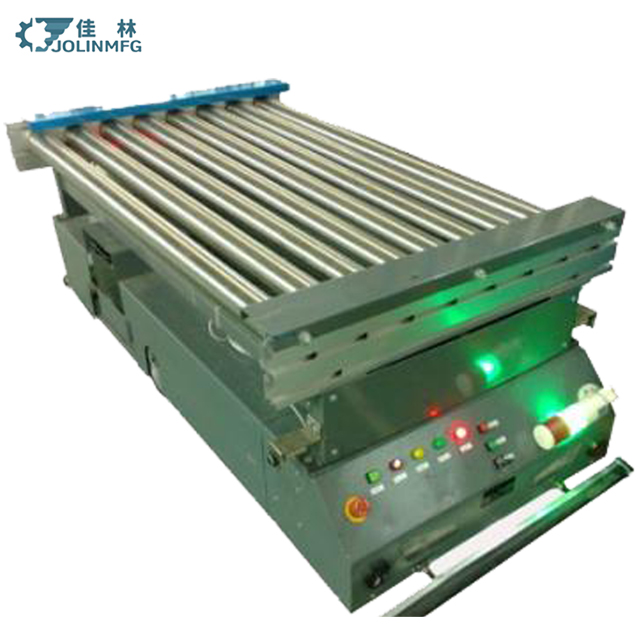
For brands looking to market their own line of AGVs, OEM/ODM Services allow for significant customization. This ranges from simple color and branding modifications to entirely custom chassis designs tailored for specific load profiles (e.g., custom roller conveyors, specialized lifting forks, or robotic arm integration).
Regulatory Compliance
Do not assume CE or UL marks are valid simply because they are printed on the spec sheet. AGVs are heavily regulated industrial machinery. You must verify ISO 3691-4 (Safety of driverless industrial trucks) compliance and ensure the battery packs have passed UN38.3 testing for safe transport. Engaging professional Compliance & Testing services early prevents customs seizures.
Pricing, MOQs, and Lead Times
Unlike consumer goods, AGVs are capital equipment. MOQs are highly negotiable, but production lead times are dictated by component availability and customization depth.
Pricing is heavily influenced by payload capacity and sensor arrays. A basic 500kg magnetic-tape AGV will command a fraction of the price of a 2-ton SLAM-guided automated forklift. When negotiating bulk pricing, ensure the quote clearly outlines software licensing fees—some manufacturers charge a recurring fee for their FMS, while others include a perpetual license.
Need realistic pricing models and lead times for your next AGV deployment? Connect with our sourcing specialists.
Get a free consultationFrequently Asked Questions
Securing a reliable supply of AGVs requires balancing hardware durability with software sophistication. The total cost of ownership is determined not by the unit price, but by the reliability of the sensors and the ease of fleet integration. Partnering with a team that understands the technical nuances of automated material handling ensures your deployment succeeds from day one.
Get Sourcing Help for AGVs
Tell us your requirements and our experts will connect you with verified manufacturers.