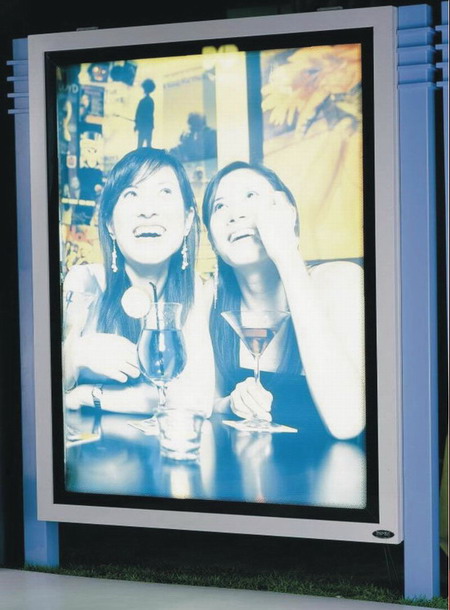
Advertising Light Boxes
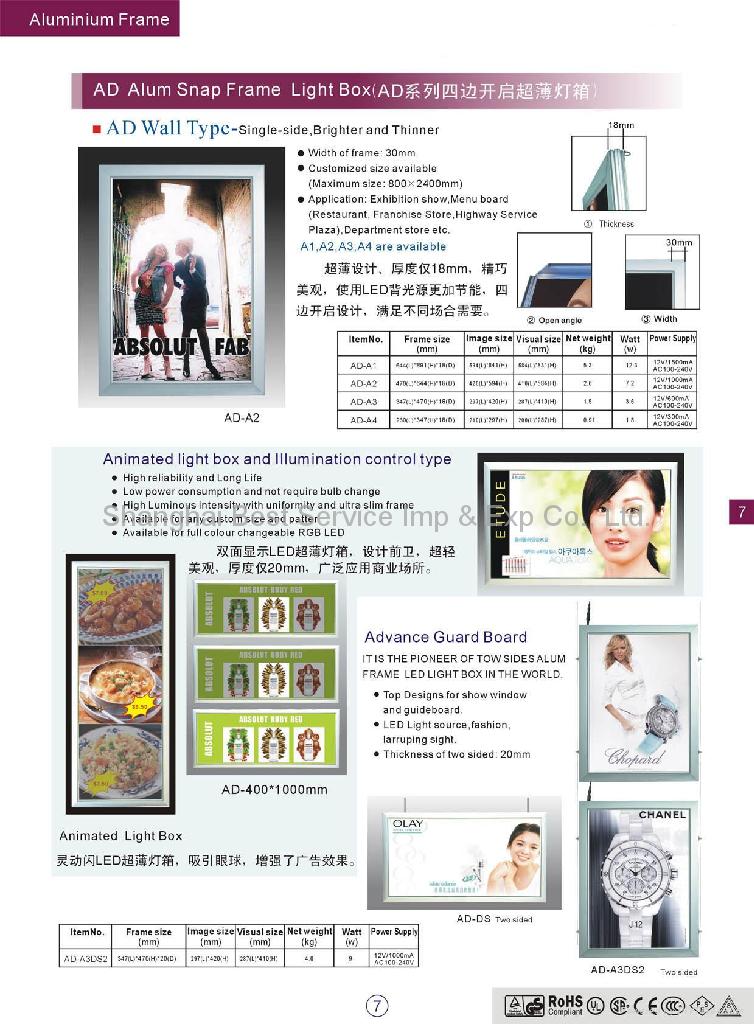
Source commercial-grade advertising light boxes from vetted manufacturers and suppliers in China and across Asia. Designed for importers, wholesalers, and brands seeking reliable OEM production, our network delivers high-volume, custom-engineered illuminated displays built for demanding retail and outdoor environments.
Sourcing commercial advertising light boxes at scale requires balancing illumination uniformity, thermal management, and structural durability. Whether you are procuring ultra-thin snap frames for indoor retail or heavy-duty outdoor enclosures, success depends on specifying the right internal components and ensuring the factory has the precision machinery to execute consistently across a high-volume run.
Core Component Specifications
The visual performance of a light box relies heavily on the synergy between the LED modules and the Light Guide Plate (LGP). Specifying the wrong materials here leads to hotspots, dark corners, and premature degradation.
Light Guide Plate (LGP) Materials
The LGP distributes light from edge-lit LEDs across the face of the display. Factories typically offer two primary materials, and the choice drastically impacts longevity.
| Material | Lifespan & Yellowing | Light Transmission | Cost Profile |
|---|---|---|---|
| Acrylic (PMMA) | 5 to 7+ years (UV resistant) | Over 92% | Premium |
| Polystyrene (PS) | 1 to 2 years (Prone to yellowing) | Around 85% | Economy |
LED Specifications & Thermal Management
Commercial buyers should dictate the specific LED chip packages used. SMD 2835 and SMD 3030 are standard for edge-lit applications due to their high lumen output and excellent heat dissipation.
Ensure your supplier mounts the LED strips directly to the aluminum extrusion frame rather than relying solely on adhesive tape. The aluminum acts as a necessary heat sink; poor thermal management will cause the LEDs to shift in color temperature and fail prematurely.
Manufacturing Process and Defect Control
The primary challenge in manufacturing light boxes is achieving perfectly even illumination. Premium suppliers use laser-engraved LGPs, where a precise matrix of micro-dots is etched into the acrylic to refract light outward. Lower-tier factories often use silk-screen printing for the dot matrix, which is cheaper but can degrade over time and often produces visible banding.
When setting up your production run, integrating rigorous quality control & inspection protocols is non-negotiable.
Critical Pre-Shipment Inspection Points
- Illumination uniformity test (checking for edge hotspots or central shadows).
- Color temperature consistency across multiple units in the same batch.
- Frame miter joint alignment (tolerances should be under 0.5mm).
- Power supply load testing (ensuring drivers are rated 20% above the actual LED draw).
- IP rating verification for outdoor models (water ingress testing).
Struggling with inconsistent illumination or high defect rates from your current supplier? Let our engineers help you establish strict production standards and vet capable factories.
Talk to our teamCustomization and OEM Production
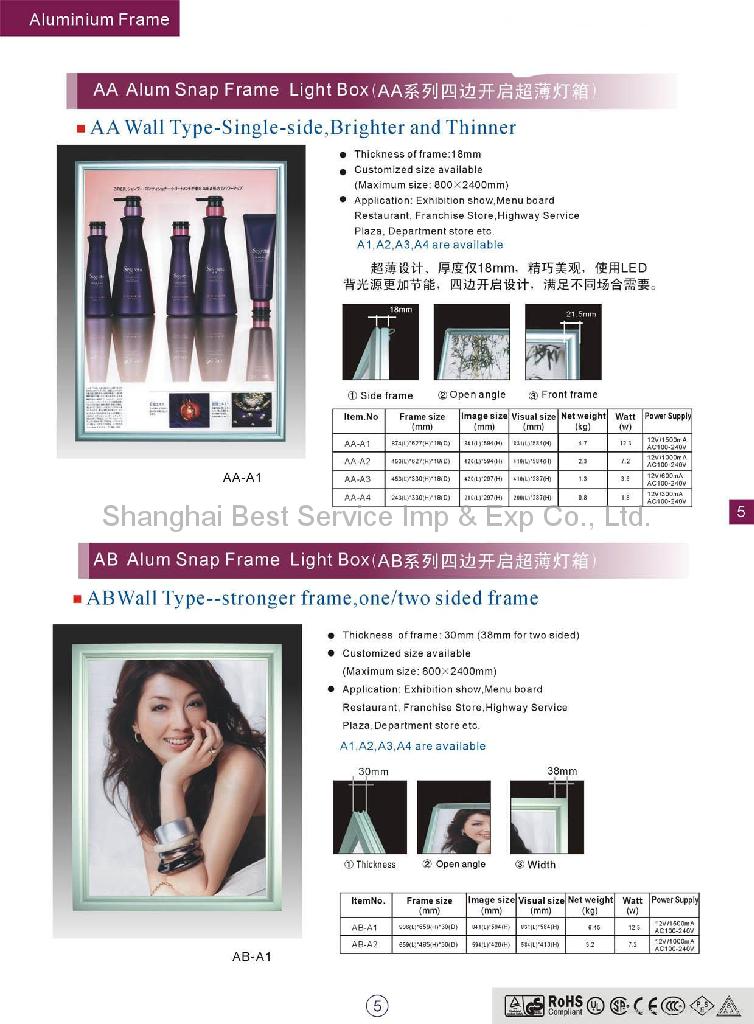
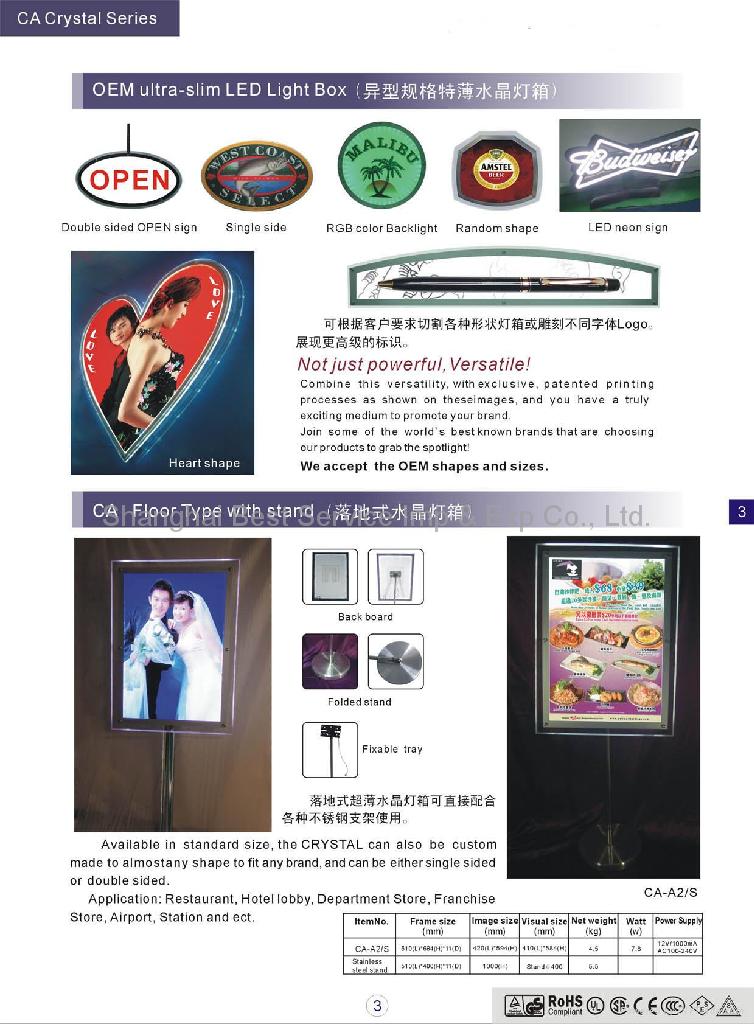
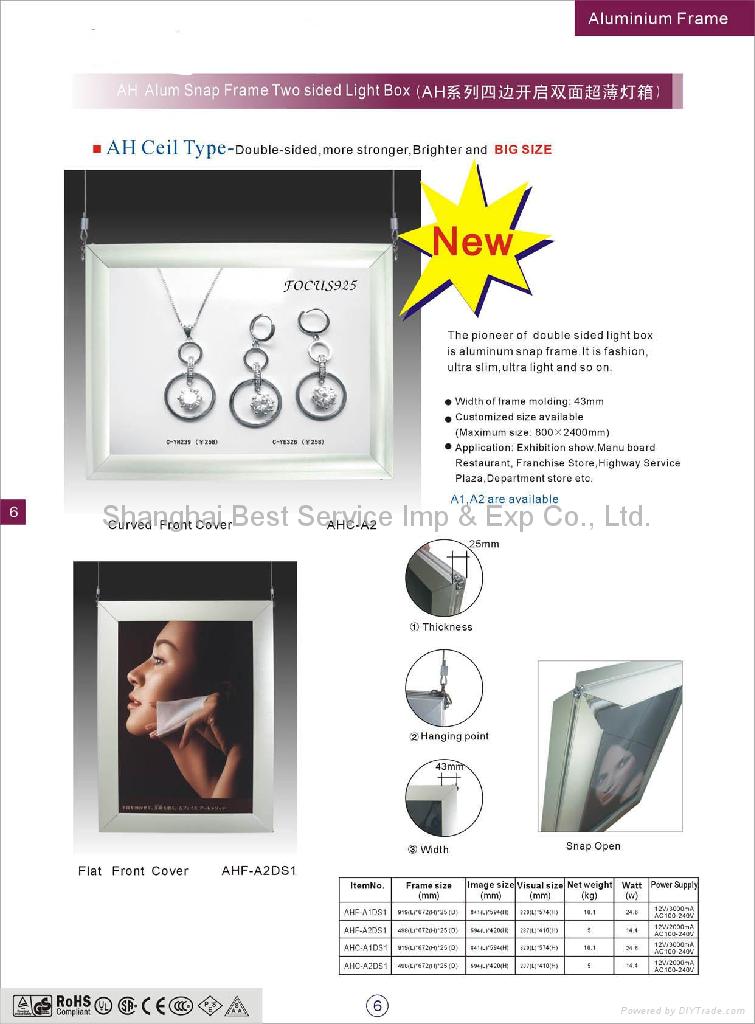
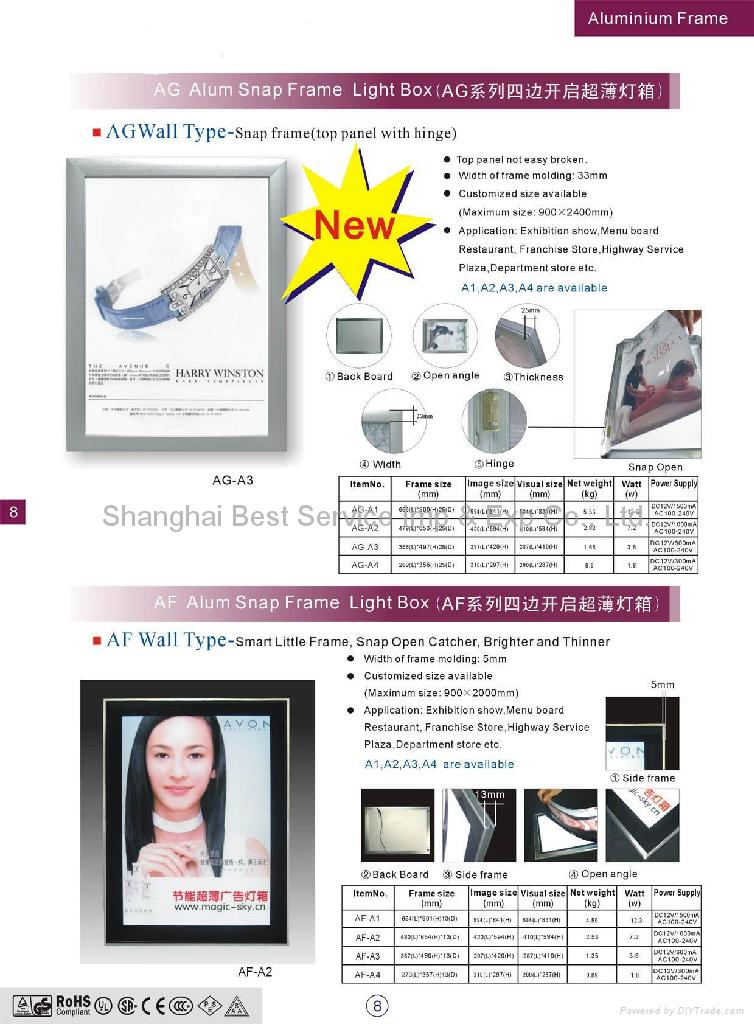
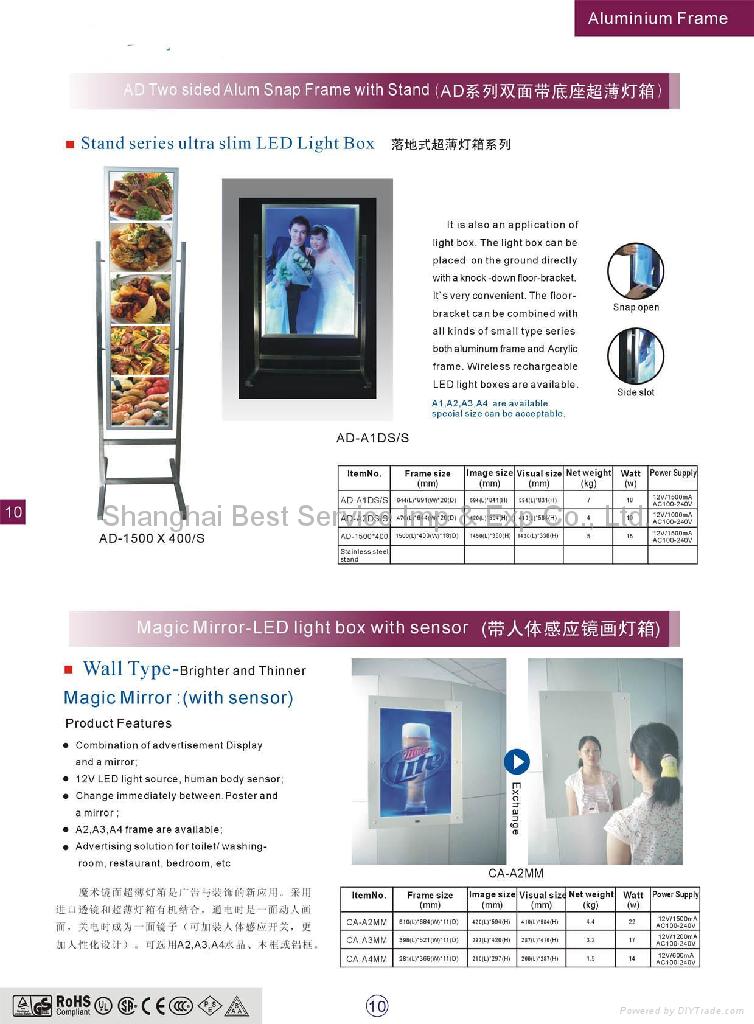
For brands requiring proprietary display systems, factories offer extensive OEM/ODM services. This typically involves extruding custom aluminum profiles to achieve specific depths (e.g., ultra-thin 15mm profiles for elevators, or 120mm deep profiles for double-sided fabric tension displays).
When developing custom profiles, you will need to account for tooling costs for the extrusion dies. Furthermore, any custom electrical configurations must align with destination market regulations. Partnering with a sourcing team that understands compliance & testing ensures your custom light boxes meet UL, CE, or RoHS standards before they leave the factory.
Pricing, MOQs, and Lead Times
Light box pricing is highly variable, driven primarily by dimensions, LGP material (PMMA vs. PS), LED chip brand (e.g., Epistar, Osram), and the quality of the LED driver (e.g., MeanWell vs. generic).
- Minimum Order Quantities (MOQs): Standard sizes (like A4 to A0 snap frames) often have MOQs of 50 to 100 units. Custom aluminum extrusions usually require higher MOQs (300 to 500 units) or a minimum raw aluminum tonnage.
- Lead Times: A standard production run takes 20 to 30 days. Custom tooling adds 10 to 15 days to the initial order.
- Tooling Costs: New aluminum extrusion dies typically cost between $300 and $800, depending on the complexity and weight of the profile.
Because the barrier to entry for assembling light boxes is low, the market is flooded with small workshops masquerading as large manufacturers. Conducting thorough factory audits is essential to verify that the supplier actually owns laser-engraving machinery and automated cutting saws, rather than just outsourcing components for manual assembly.
Ready to negotiate better terms for your volume orders? We manage supplier vetting, price negotiations, and quality control on the ground in Asia.
Get a free consultationFrequently Asked Questions
Securing a reliable supply chain for advertising light boxes means looking past the polished Alibaba storefronts and understanding the factory's actual production capabilities. By specifying the exact LGP materials, LED bins, and driver brands upfront, you protect your margins and your brand's reputation from the pitfalls of budget-driven manufacturing.
Get Sourcing Help for Advertising Light Boxes
Tell us your requirements and our experts will connect you with verified manufacturers.