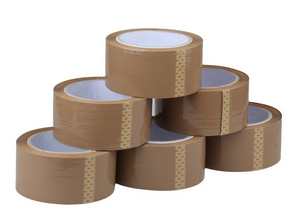
Adhesive Tapes
Source industrial and commercial adhesive tapes directly from vetted manufacturers and suppliers. This catalog is designed for importers, distributors, and brands requiring reliable bulk supply, custom formulations, or private-label OEM production. Negotiate factory-direct pricing for high-volume packaging operations.
Adhesive tapes are a high-volume consumable where minor deviations in carrier thickness or adhesive formulation compound into significant application failures. Sourcing effectively at scale means moving beyond basic dimensions to balance the right carrier and adhesive chemistry with a manufacturer capable of consistent coat weights across millions of square meters.
Core Specifications: Adhesives and Carriers
Specifying tape for bulk manufacturing requires matching the adhesive chemistry to the application environment. The total thickness of a tape is the sum of the carrier (backing) and the adhesive layer, typically measured in microns (μm) or mils. A 50-micron tape might use a 28-micron BOPP carrier with 22 microns of adhesive, or a 30-micron carrier with 20 microns of adhesive. The performance difference between these two is substantial.
| Adhesive Type | Primary Application | Temperature Tolerance | Cost Profile |
|---|---|---|---|
| Water-Based Acrylic | Long-term carton sealing, UV exposure | Wide | Moderate |
| Hot Melt (Synthetic Rubber) | High initial tack, automated packaging lines | Narrow | Low to Moderate |
| Natural Rubber | Heavy-duty, challenging or dusty surfaces | Very Wide | High |
| Solvent-Based Acrylic | Extreme weather, industrial bonding | Very Wide | High |
When negotiating specifications, always require suppliers to break down the thickness by layer. Manufacturers competing strictly on price will often use a thicker, cheaper carrier film and reduce the adhesive coat weight, resulting in a tape that feels substantial but fails to bond.
Struggling with inconsistent tape adhesion across shipments? Let us vet your suppliers and standardize your specifications.
Talk to our teamManufacturing Tolerances and Defect Prevention
The quality of adhesive tape is won or lost on the coating line and during the slitting and rewinding process. Uneven coating leads to dry spots, while improper tension control during rewinding causes structural defects in the finished roll.
The Telescoping Problem
Telescoping occurs when tape layers slide laterally, creating a cone-shaped roll. This is usually caused by incorrect winding tension at the factory or extreme temperature fluctuations during ocean transit. It renders the tape unusable in automated dispensers.
To ensure yield consistency, rigorous quality control protocols must be implemented before the product leaves the factory.
Critical Pre-Shipment Inspection Points
- Coat Weight Consistency: Verifying the ratio of adhesive to carrier across the master roll.
- Initial Tack and Peel Adhesion: Testing against standardized steel panels (e.g., PSTC or ASTM methods).
- Shear Strength: Measuring holding power under a constant load to predict long-term failure.
- Winding Tension: Checking for telescoping, gapping, or bubbling within the slit rolls.
- Release Force: Ensuring the tape unwinds smoothly without tearing or excessive noise.
Conducting proper factory audits before placing large orders is essential. You need to verify that the supplier actually operates coating lines rather than just buying and slitting master rolls from secondary markets, as the latter limits your control over the adhesive formulation.
Pricing Structures and Order Mechanics
Tape pricing is heavily tied to petroleum derivatives (for both BOPP films and synthetic adhesives). Prices are typically quoted by the square meter for master rolls, or per piece for finished, slit rolls.
Custom Printing and OEM Production
For brands requiring custom-printed tape or branded inner cores, OEM/ODM services are widely available. Printing is typically done on the carrier film before the adhesive is applied (under-surface printing) to prevent the ink from rubbing off. Custom printing usually increases the MOQ to offset the setup costs of the printing cylinders.
Need to consolidate your packaging material supply chain? We negotiate factory-direct pricing and manage the logistics.
Get a free consultationFrequently Asked Questions
Sourcing adhesive tapes at scale requires strict adherence to chemical specifications and physical tolerances. By defining your requirements down to the micron and verifying factory coating capabilities, you can eliminate application failures and secure stable, volume-based pricing.
Get Sourcing Help for Adhesive Tapes
Tell us your requirements and our experts will connect you with verified manufacturers.