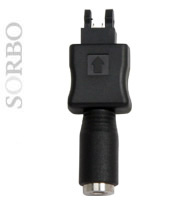
Adapter
Source high-precision machine tool adapters from vetted suppliers and manufacturers in Asia. Designed for importers, wholesalers, distributors, and brands seeking OEM production, this category covers bulk orders of spindle and tool holder adapters. Ensure strict runout tolerances, proper dynamic balancing, and reliable factory pricing.
Machine tool adapters are the critical interface between the machine spindle and the cutting tool holder. Whether stepping down a steep taper, converting between standards (such as BT to HSK), or extending reach, the adapter dictates the rigidity and concentricity of the entire machining setup. Sourcing these components in bulk requires looking past surface finish to verify the manufacturer's grinding capabilities, heat treatment controls, and inspection protocols.
Critical Specifications for Machine Tool Adapters
When procuring adapters, specifying the correct taper standard (BT, CAT, HSK, SK, Morse Taper) is only the baseline. The true quality of a machine tool adapter is defined by its material properties, geometric accuracy, and dynamic balance.
Chinese manufacturers typically use 20CrMnTi alloy steel, a carburizing steel that offers an excellent balance of surface hardness and core toughness. For premium applications, some factories can source equivalents to DIN 15NiCr13.
The two most critical performance metrics you must specify are:
- Runout (TIR - Total Indicator Reading): High runout causes uneven tool wear, poor surface finish, and accelerated spindle bearing wear. Standard adapters typically offer a TIR of under 0.005mm (5 microns) measured at 3xD, while high-precision variants must achieve under 0.003mm.
- Dynamic Balancing: As spindle speeds increase, unbalance creates destructive vibration. Adapters must be dynamically balanced. Standard tooling is often balanced to G6.3 at 15,000 RPM, while high-speed applications require G2.5 at 25,000 RPM or higher.
| Specification | Standard Production | High-Precision / High-Speed |
|---|---|---|
| Runout (TIR) | under 0.005mm | under 0.003mm |
| Dynamic Balancing | G6.3 @ 15,000 RPM | G2.5 @ 25,000 RPM |
| Taper Contact Area | over 80 percent | over 85 to 90 percent |
| Surface Hardness | HRC 54-56 | HRC 56-60 (Case depth 0.8mm) |
Struggling to find a manufacturer that consistently meets high-precision runout tolerances? Let us connect you with vetted factories equipped with the right grinding and inspection technology.
Talk to our teamManufacturing Processes and Quality Control
The precision of an adapter is won or lost during heat treatment and final grinding. Poorly controlled carburizing leads to distortion, making it impossible to achieve concentricity during grinding. Furthermore, the internal and external tapers must ideally be ground in a single setup or using high-precision workholding to ensure absolute concentricity between the machine interface and the tool interface.
When evaluating a manufacturer, you must verify their equipment. High-end suppliers will utilize CNC cylindrical grinders (like Studer or Kellenberger) and dedicated balancing machines (such as Haimer). Relying on Factory Audits is essential to confirm that the supplier actually owns this equipment and doesn't outsource critical grinding operations to lower-tier workshops.
Pre-Shipment Inspection Checklist
Implement strict Quality Control & Inspection protocols before any batch leaves the factory. Your inspection checklist should mandate:
Adapter QC Requirements
- Taper contact area verification using Prussian blue and certified master gauges.
- Runout measurement using a precision test arbor and dial indicator.
- Hardness testing (Rockwell C scale) on both the taper surface and the drive keys.
- Verification of dynamic balance certification for the specific batch.
- Visual inspection for grinding burns, burrs, and proper rust-preventative coating.
Buying Mechanics: MOQs, Lead Times, and Pricing
The machine tool accessory market is highly standardized, meaning standard tapers (like BT40 to MT3) are often produced in large runs. However, if you require specific balancing, tighter tolerances, or custom branding, you will be initiating a new production run.
Pricing is heavily dependent on the grinding time required to hit specific tolerances. Pushing a factory from a 5-micron runout to a 3-micron runout can increase the unit cost by 20 to 30 percent due to increased cycle times and higher scrap rates.
If you are a tool brand looking to expand your catalog, many top-tier factories offer comprehensive OEM/ODM Services, allowing for custom laser etching of your logo, part numbers, and batch codes, as well as customized anti-rust packaging.
Need to negotiate better pricing or consolidate orders across multiple machine tool accessory factories? Speak with our sourcing experts to optimize your supply chain.
Get a free consultationFrequently Asked Questions
Sourcing machine tool adapters requires balancing the cost of precision against the performance demands of your end-users. By focusing on a factory's grinding infrastructure and enforcing strict runout and balancing tolerances, you can secure tooling that rivals legacy European and American brands at a fraction of the cost.
Get Sourcing Help for Adapter
Tell us your requirements and our experts will connect you with verified manufacturers.