Spécifications techniques
Vue d'ensemble
Transmission de puissance haute performance
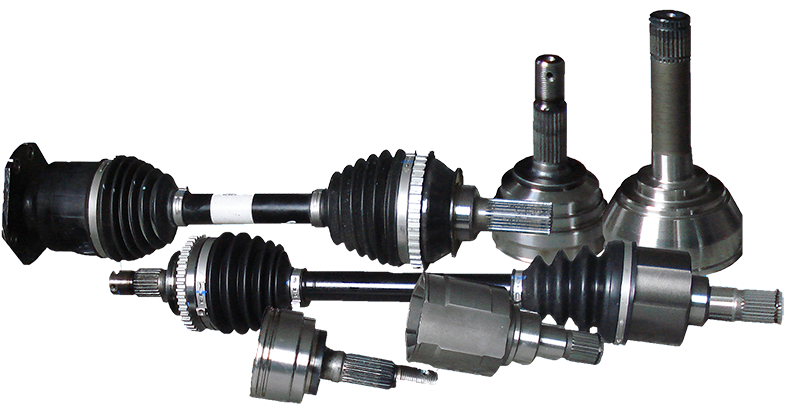
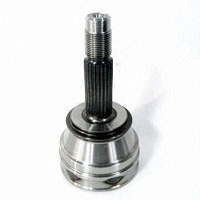
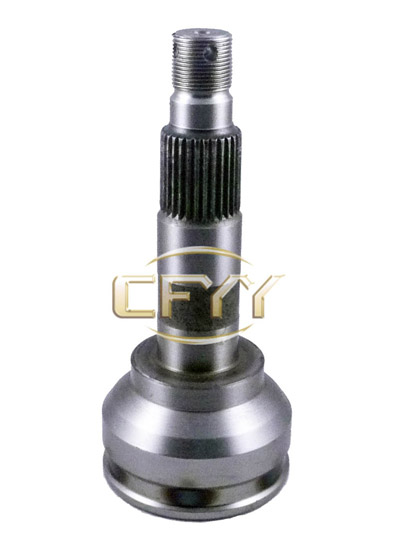
Ces joints homocinétiques (CV) sont conçus pour transmettre la puissance selon des angles variables à une vitesse de rotation constante, assurant un fonctionnement fluide sans pics de friction. Principalement conçus pour les véhicules à traction avant et à suspension arrière indépendante, ils fournissent un couple fiable même lors de l'articulation de la suspension. Chaque unité est protégée par un soufflet en caoutchouc durable pour empêcher toute contamination et conserver la lubrification essentielle pour une longue durée de vie.
Spécifications techniques
- Matériau
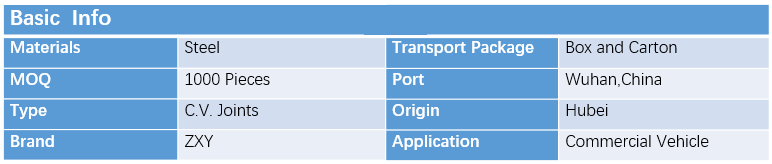
- Acier
- Application
- Véhicules utilitaires
- Type de joint
- HomocinétiqueExtrémité fixeExtrémité coulissante
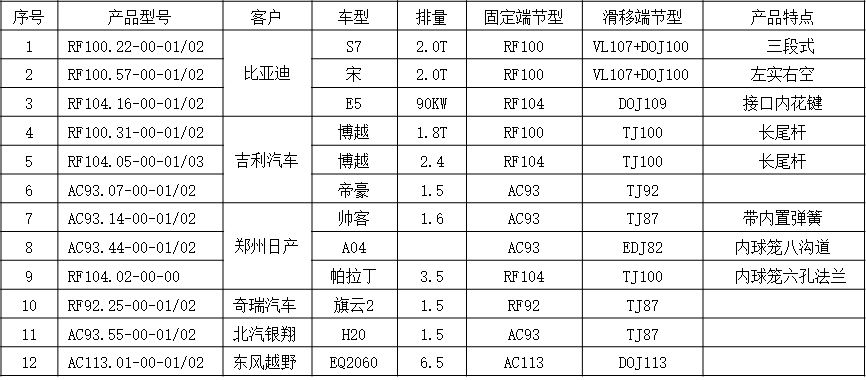
Compatibilité des modèles
Compatibilité véhicule et spécifications modèle
| Numéro de modèle | Cylindrée moteur | Type d'extrémité fixe | Type d'extrémité coulissante | Caractéristiques |
|---|---|---|---|---|
| RF 100.22 | 2.0T | RF 100 | VL107+DOJ100 | Type à trois étages |
| RF 104.16 | 90KW | RF 104 | DOJ109 | Interface à cannelures internes |
| RF 100.31 | 1.8T | RF 100 | TJ100 | Tige à queue longue |
| AC93.14 | 1.6 | AC93 | TJ87 | Ressort intégré |
| AC93.44 | A04 | AC93 | EDJ82 | Cage à billes interne à huit canaux |
| RF 104.02 | 3.5 | RF 104 | TJ100 | Bride à six trous |
| AC113.01 | 6.5 | AC113 | DOJ113 | Application intensive |
Conditions commerciales
Quantité minimale de commande
1 000 Pieces
MOQ
- Emballage de transport
- Boîte et carton
- Port d'expédition
- Wuhan, Chine
Caractéristiques du produit
Avantages clés
- Transmission à vitesse de rotation constante
- Transmission de puissance à angle variable
- Faible friction et jeu minimal
- Soufflet en caoutchouc de protection pour la rétention de graisse
- Résistance à la contamination
Configurations disponibles
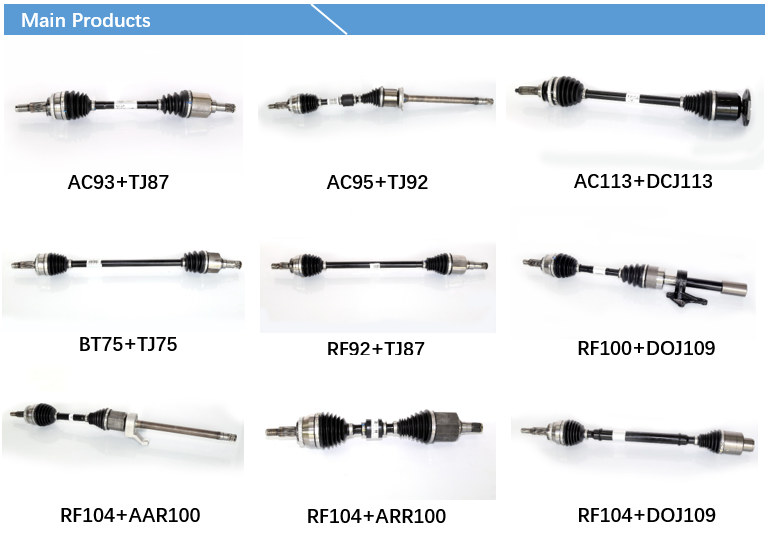
AC93+TJ87AC95+TJ92AC113+DCJ113BT75+TJ75RF92+TJ87RF100+DOJ109RF104+AAR100