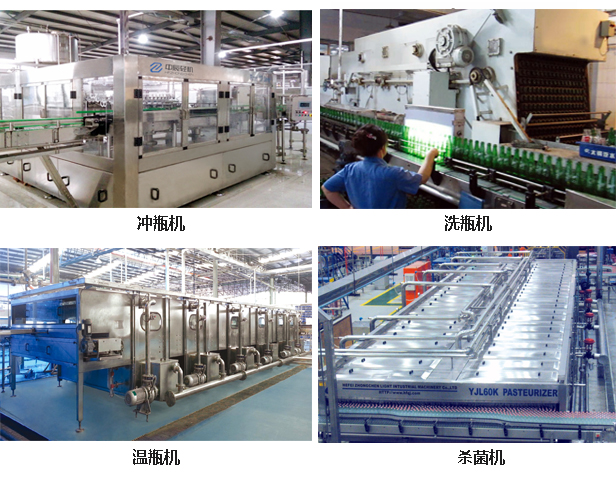
Sterilizers
Source industrial beverage sterilizers from vetted manufacturers and wholesale suppliers. Built for importers, distributors, and processing equipment brands seeking reliable OEM production, our bulk sourcing solutions ensure sanitary compliance, precise thermal control, and seamless integration into food and beverage processing lines.
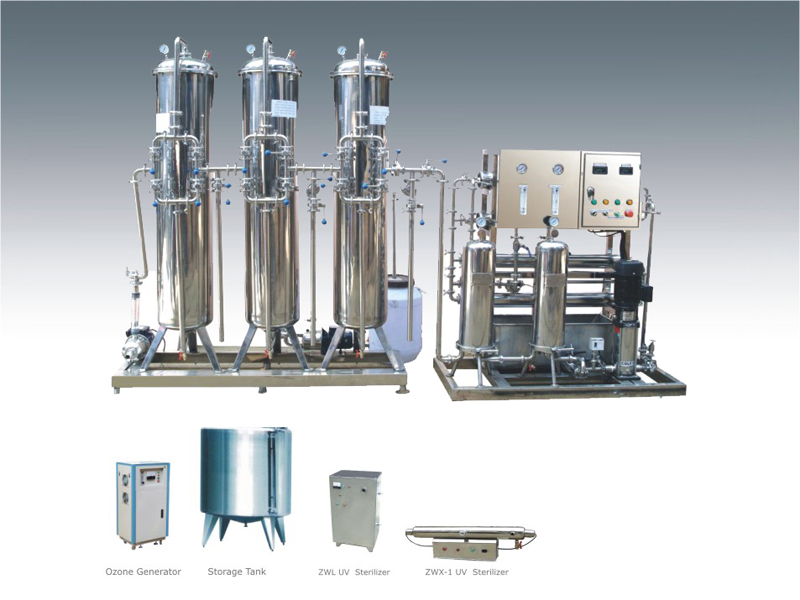
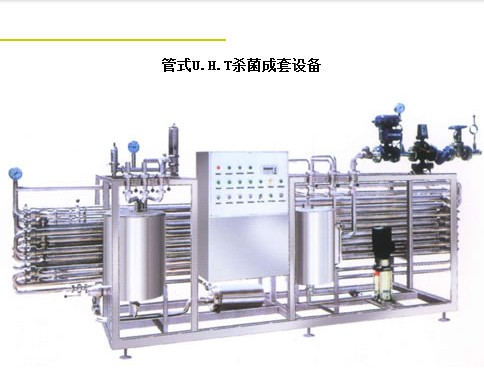
Sourcing industrial beverage sterilizers requires balancing thermal efficiency with strict sanitary compliance. Whether you are procuring plate pasteurizers for craft breweries or UHT (Ultra-High Temperature) tubular sterilizers for dairy and juice lines, the primary sourcing challenge lies in verifying a manufacturer's machining precision, pressure vessel certifications, and the reliability of their automated control systems.
Core Specifications and System Architecture
When engaging factories, your technical requirements must dictate the equipment architecture. Beverage sterilizers are not off-the-shelf commodities; they are engineered to match specific flow rates, viscosity profiles, and thermal degradation limits of the target liquid.
| Sterilizer Type | Ideal Viscosity | Typical Application | Heat Exchange Mechanism |
|---|---|---|---|
| Plate Sterilizers | Low | Beer, Wine, Clear Juices | Corrugated stainless steel plates |
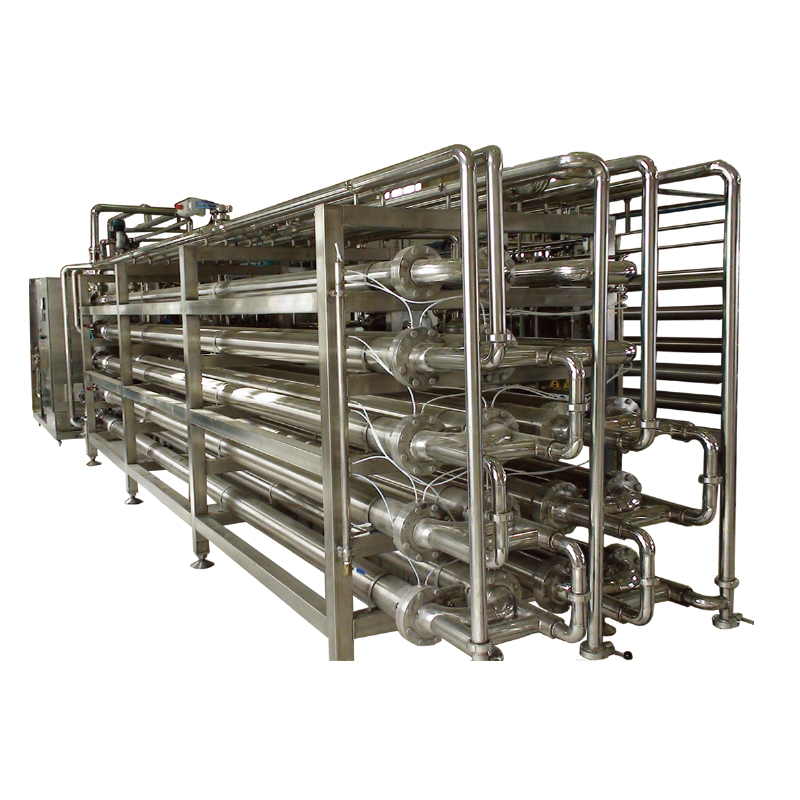
| Tubular Sterilizers | Medium to High | Pulp juices, Dairy, Syrups | Concentric tube-in-tube |
| UHT Systems | Variable | Long-life milk, Plant-based beverages | Direct steam injection or indirect tubular |
Key parameters to define upfront include:
- Processing Capacity: Typically measured in Liters per Hour (L/H). Standard industrial units range from 1,000 L/H to over 20,000 L/H.
- Material Grades: Product-contact surfaces must be SUS316L stainless steel, while the external frame and non-contact piping can be SUS304 to manage costs.
- Holding Time and Temperature: Specify your exact pasteurization Units (PU) or holding time requirements (e.g., 137°C for 4 seconds for UHT).
- Control Systems: Specify preferred PLC and HMI brands (e.g., Siemens, Allen-Bradley, Mitsubishi) to ensure compatibility with the end-user's existing plant architecture.
Need to match specific thermal profiles and flow rates? We help buyers identify and vet machinery manufacturers capable of custom engineering.
Talk to our teamManufacturing Quality and Sanitary Standards
The difference between a reliable sterilizer and a constant maintenance liability is determined on the factory floor. Poor welding or inferior seals will create microscopic harbor points for bacteria, leading to product spoilage and costly recalls.
When evaluating suppliers or conducting factory audits, focus on the following critical manufacturing areas:
Critical Factory Verification Points
- Sanitary Welding: All internal product-contact welds must be argon arc welded, ground flush, and polished to a surface roughness (Ra) of under 0.4 micrometers.
- Pressure Vessel Compliance: Verify valid ASME (US), CE/PED (Europe), or GB (China) certifications for all heat exchangers and holding tubes.
- Component Authenticity: Ensure pneumatic valves, steam traps, and flow meters are genuine components from specified brands (e.g., Spirax Sarco, Alfa Laval, Burkert).
- CIP Integration: Confirm the system is fully compatible with standard Clean-In-Place (CIP) and Sterilize-In-Place (SIP) protocols.
We strongly recommend rigorous quality control and inspection during the Factory Acceptance Test (FAT). The FAT should include hydrostatic pressure testing of the tubular/plate exchangers and a full water-run to verify the PLC's temperature regulation accuracy (which should hold within a variance of 0.5°C).
Pricing, Lead Times, and Logistics
Industrial sterilizers are capital equipment, typically built to order.
Pricing is heavily driven by the degree of automation, the surface area of the heat exchanger, and the origin of the core components. A fully automated UHT sterilizer with European-branded valves and pumps will cost significantly more than a semi-automatic unit utilizing domestic Chinese components, though top-tier Chinese manufacturers can now seamlessly integrate imported components upon request.
Because these units are oversized and require specialized crating to protect sensitive electronics and manifolds during transit, coordinating shipping and freight early in the procurement cycle is essential to avoid port delays and container space issues.
Managing heavy machinery procurement is complex. Let us handle supplier negotiation, FAT inspections, and international freight.
Get a free consultationBuyer FAQ
Procuring industrial sterilizers is an exercise in risk management. Success requires looking past the initial quotation to rigorously verify engineering capabilities, component authenticity, and sanitary compliance before production even begins.
Get Sourcing Help for Sterilizers
Tell us your requirements and our experts will connect you with verified manufacturers.