Solar Production Lines
Source turnkey solar production lines from vetted manufacturers and suppliers in Asia. Designed for energy infrastructure developers, large-scale distributors, and brands establishing OEM PV module assembly facilities. Access competitive pricing on fully automated, high-capacity manufacturing equipment.
Sourcing a solar module production line requires balancing upfront capital expenditure with long-term output efficiency and technological flexibility. Whether you are setting up a 100MW regional assembly plant or a multi-GW fully automated facility, the precise integration of stringers, laminators, and testing equipment dictates your final module quality, yield rate, and cost per watt.
Defining Your Line Specifications
Procuring manufacturing equipment is not a standard catalog purchase. Buyers must define their exact technological roadmap before engaging suppliers. A line built solely for standard PERC modules will quickly become obsolete if it cannot be upgraded to handle n-type TOPCon, HJT, or bifacial architectures.
Key parameters to define in your Request for Quotation (RFQ) include:
- Cell Compatibility: Ensure the tabber stringers and handling robotics can process large-format cells (M10, G12, and rectangular variants) without excessive breakage.
- Module Dimensions: The laminator and framing machines must accommodate the maximum physical size of the panels you intend to produce.
- Throughput (Cycle Time): Measured in seconds per module. The entire line is only as fast as its slowest bottleneck—typically the laminator or the stringer.
Core Equipment and Integration Challenges
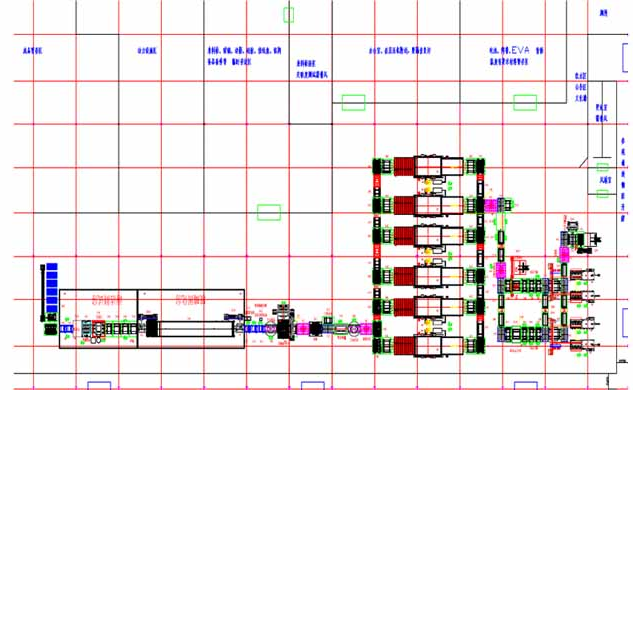
A complete PV module production line consists of dozens of discrete machines. While some manufacturers build the entire line in-house, many act as integrators, assembling best-in-class stringers, laminators, and testers from specialized sub-suppliers.
The critical challenge is software and hardware integration. The Manufacturing Execution System (MES) must track every cell and module through the line, communicating with EL (Electroluminescence) testers and sun simulators to grade the final product.
Need help vetting an equipment manufacturer's integration capabilities and track record?
Discuss your line specificationsBefore committing to a multi-million dollar purchase, rigorous Factory Audits are mandatory. You must verify the supplier's engineering capacity, their history of successful international deployments, and the availability of English-speaking commissioning engineers.
Factory Acceptance Testing (FAT)
Never authorize the final pre-shipment payment without a comprehensive Factory Acceptance Test (FAT). The line should be fully assembled and run with your specific raw materials (cells, glass, EVA/POE, backsheets) on the supplier's floor.
Critical FAT Verification Points
- Continuous run test (minimum 8 to 24 hours) to verify cycle time and throughput.
- Cell breakage rate at the tabber stringer (must be under 0.2%).
- Lamination quality check (no bubbles, delamination, or cell shift).
- EL tester resolution and defect detection accuracy.
- Sun simulator calibration against golden reference modules.
- MES software data logging and traceability verification.
Executing this requires specialized Quality Control & Inspection personnel on the ground in Asia who understand PV manufacturing tolerances.
Logistics, MOQs, and Lead Times
Purchasing heavy industrial machinery involves significant logistical complexity. A 500MW fully automated line can require upwards of 20 to 30 High Cube containers, plus specialized flat racks for oversized laminators. Coordinating this requires robust Shipping & Freight management to ensure all components arrive simultaneously and undamaged.
| Configuration | Typical Lead Time | Space Requirement | Labor Dependency |
|---|---|---|---|
| Semi-Automated (100MW) | 60 - 90 days | 1,500 - 2,500 sq meters | High (Manual bussing/layup) |
| Fully Automated (500MW+) | 120 - 180 days | 4,000 - 6,000+ sq meters | Low (Primarily maintenance/QC) |
Pricing and Payment Terms: Pricing is highly variable based on automation level, capacity, and brand of internal components (e.g., using European vs. domestic Chinese PLC controllers and robotics). Payment terms are almost exclusively milestone-based via T/T. A standard structure is 30% down payment to begin manufacturing, 60% upon successful FAT prior to shipping, and a 10% holdback released only after successful on-site installation and Site Acceptance Testing (SAT).
Looking to structure secure milestone payments and coordinate heavy freight logistics?
Talk to our teamFrequently Asked Questions
Successfully sourcing a solar production line is only half the battle; the true ROI is realized during installation, calibration, and long-term operation. Securing strict FAT protocols and reliable post-sales commissioning support is just as critical as negotiating the initial equipment price.
Get Sourcing Help for Solar Production Lines
Tell us your requirements and our experts will connect you with verified manufacturers.