Sensors
Source commercial-grade lighting sensors from vetted suppliers and manufacturers in China. Designed for electrical wholesalers, distributors, and brands seeking reliable OEM/ODM production, our factory-direct network ensures you secure bulk pricing on high-performance PIR, microwave, and photocell units without compromising on quality.
The Reality of Sourcing Lighting Sensors at Scale
Sourcing lighting sensors in high volumes requires balancing aggressive unit costs with extreme reliability. A sensor failure in the field often means replacing the entire luminaire or sending an electrician back to a site, obliterating any upfront procurement savings. Whether you are integrating daylight harvesting photocells into street lights, adding microwave sensors to high-bay warehouse fixtures, or buying standalone PIR wall switches in bulk, success depends on strict component selection and rigorous factory-level oversight.
To avoid costly field failures, buyers must look beyond the basic specification sheet and understand exactly what is happening inside the housing.
Critical Specifications and Component Selection
The most common point of failure in lighting sensors is not the sensing technology itself, but the relay. LED lighting generates a massive inrush current—often 50 to 100 times the normal operating current for a fraction of a millisecond. If a manufacturer uses a cheap, low-capacity relay, this inrush current will micro-weld the relay contacts shut, causing the light to stay on permanently.
Always specify sensors with zero-cross switching technology or high-inrush (tungsten-rated) relays when pairing them with LED loads.
| Sensor Technology | Primary Application | Physical Penetration | Common False Triggers |
|---|---|---|---|
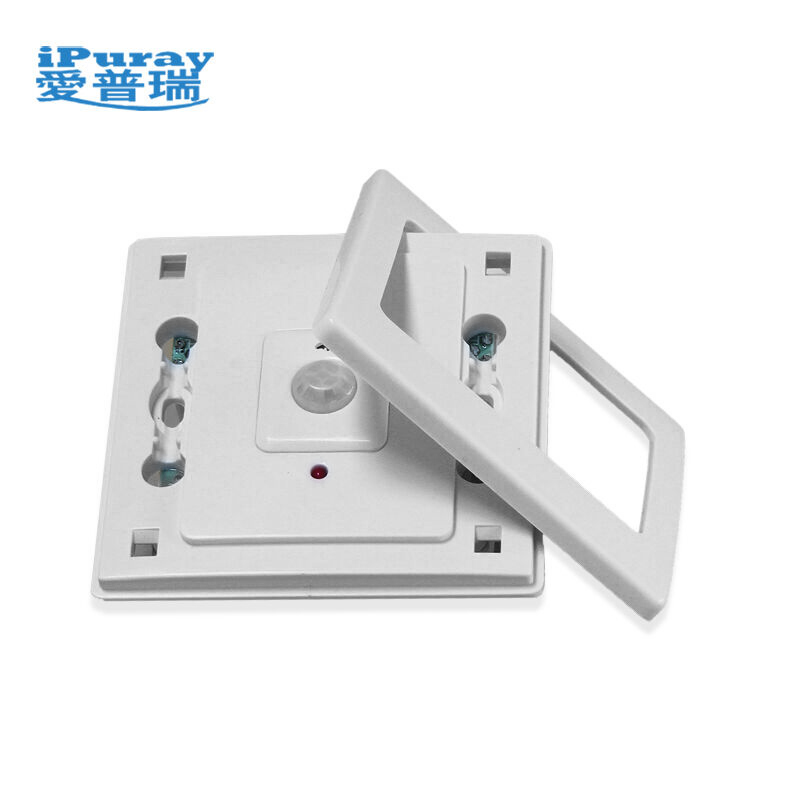
| PIR (Passive Infrared) | Offices, outdoor security, line-of-sight | None (blocked by glass/walls) | HVAC vents, sudden temperature changes |
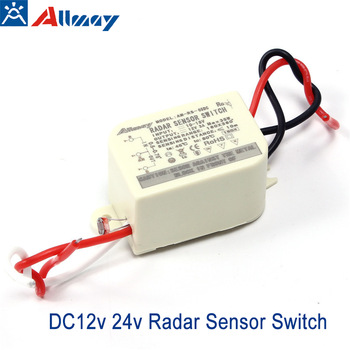
| Microwave (Radar) | Warehouses, corridors, enclosed fixtures | Passes through glass, wood, thin drywall | Moving objects behind thin walls, high winds |
| Photocell (Daylight) | Street lighting, exterior area lighting | N/A | Shadows from growing foliage, dirt buildup |
Beyond the relay, the quality of the sensing components dictates performance. For PIR sensors, the UV resistance of the Fresnel lens is critical; cheap plastics will yellow and turn brittle under sunlight, drastically reducing the detection range. For microwave sensors, the stability of the 5.8GHz radar module determines whether the unit will suffer from erratic false triggering.
Ensure your sensor specifications match your intended application and load requirements.
Talk to our teamManufacturing Oversight and Quality Assurance
China is the global hub for lighting sensor manufacturing, with major clusters in Shenzhen, Wenzhou, and Ningbo. However, factory capabilities vary wildly. Some are highly automated facilities with strict anti-static (ESD) environments and automated optical inspection (AOI) for their PCBs. Others are essentially assembly workshops buying off-the-shelf modules and soldering them by hand.
Executing comprehensive Factory Audits is essential before committing to a new supplier, ensuring they have the technical capability and testing infrastructure to meet commercial standards.
Once production begins, robust Quality Control & Inspection is your primary defense against defective batches.
Essential Quality Control Checks for Sensors
- Inrush Current Testing: Verify the relay can withstand the specified LED load without welding.
- Detection Zone Mapping: Test the actual detection distance and angle against the stated specifications.
- Burn-in Testing: Run continuous on/off cycling at full load for 24 to 48 hours to identify early component mortality.
- IP Rating Verification: Conduct water ingress testing for outdoor (IP65 or higher) sensors.
- Hold-time and Lux Calibration: Ensure DIP switches or dials accurately correspond to the programmed delays and ambient light thresholds.
Sourcing Mechanics: MOQs, Lead Times, and Customization
Standard off-the-shelf sensors generally have accessible Minimum Order Quantities (MOQs), but if you require custom firmware (such as specific dimming profiles, Bluetooth mesh integration, or DALI compatibility), MOQs will rise. Brands looking to develop proprietary housings or integrate specific smart-building protocols should leverage structured OEM/ODM Services to manage the tooling and R&D phases securely.
Pricing is heavily dependent on the relay brand, the complexity of the sensor module, and the required certifications. Be wary of suppliers offering prices significantly below market average; the cost is almost always cut from the relay capacity or the PCB layout, leading to premature failures.
Streamline your procurement process and secure reliable, high-volume sensor production.
Get a free consultationFrequently Asked Questions
Sourcing lighting sensors successfully requires treating them not as simple accessories, but as critical electronic components that dictate the lifespan of the entire lighting system. By focusing on relay quality, rigorous testing, and partnering with verified manufacturers, buyers can eliminate field failures and protect their margins.
Get Sourcing Help for Sensors
Tell us your requirements and our experts will connect you with verified manufacturers.