ODM Reality Check: From Over-Promises to On-Time Delivery
Discover how we rescued a failing ODM project, achieving 90% spec adherence and on-time product launch after factory over-promises.
Services Provided:
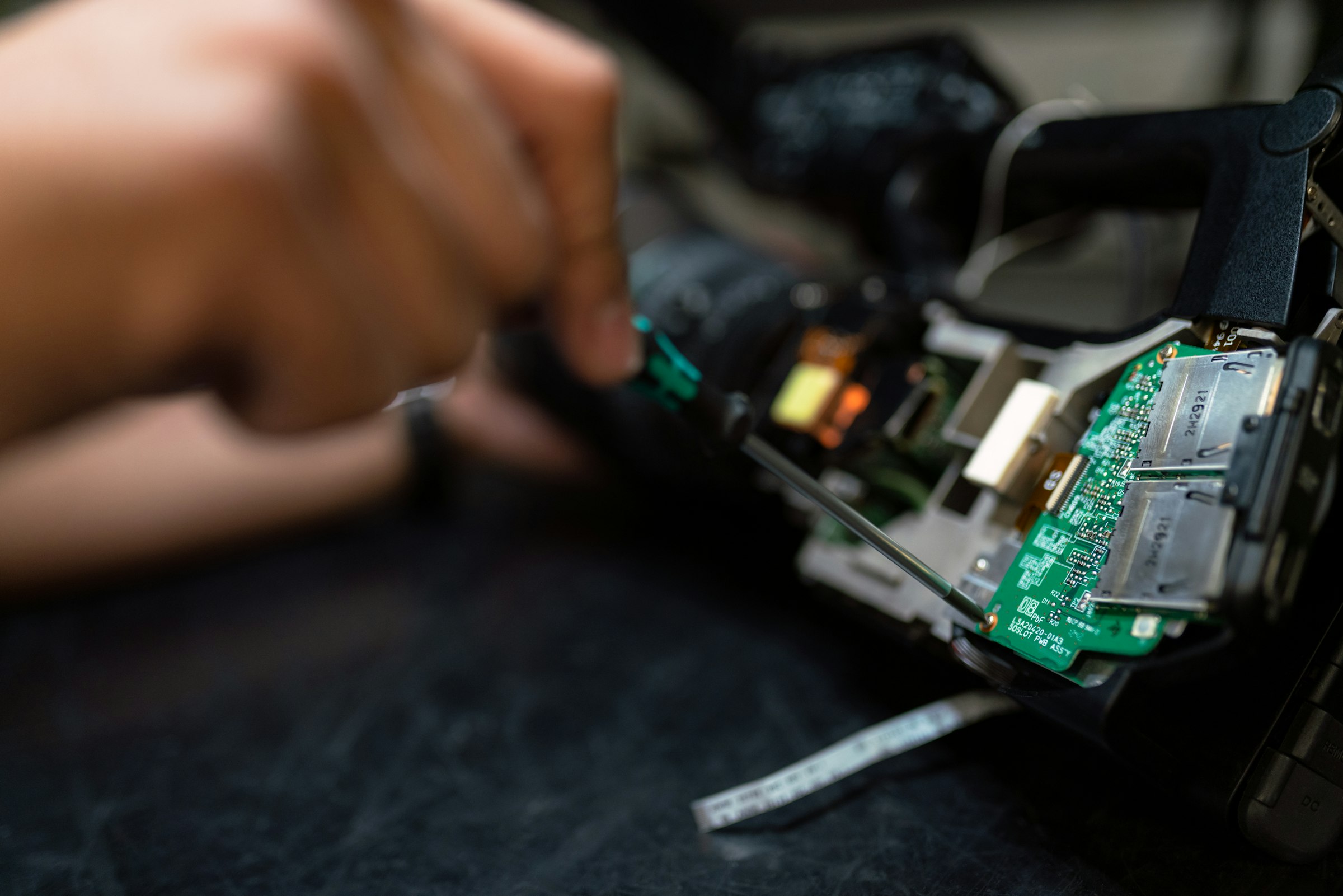
#Client Overview
A Barcelona-based startup developing a smart home air quality monitor. Founded by two engineers, they raised €800K in seed funding to bring their innovative product to market within 12 months.
With strong technical expertise but no manufacturing experience, they engaged a Shenzhen factory claiming ODM (Original Design Manufacturer) capabilities. The factory's sales team promised everything: custom PCB design, sensor integration, mobile app connectivity, and certification support—all within 6 months at a competitive price.
Six months later, they had a non-functional prototype, blown deadlines, and investors questioning their execution capability.
#The Challenge
The ODM project was failing on every dimension, and NovaTech was running out of time and money.
The Factory's Over-Promises
During initial discussions, the factory's sales team said "yes" to everything:
- "Custom PCB design? No problem, we have experienced engineers."
- "Integrate five different sensors? Easy, we've done similar projects."
- "Bluetooth and Wi-Fi connectivity? Of course, our team handles this regularly."
- "CE and FCC certification support? We'll manage the entire process."
- "Six-month timeline? Very reasonable for this project."
The startup, eager to move forward and reassured by the factory's confidence, signed the contract and paid the 50% deposit (€45,000).
The Reality Emerges
Three months into the project, red flags appeared:
Technical Capability Gaps:
- PCB design required 3 revisions due to basic engineering errors
- Sensor integration failed—readings inaccurate by 30-40%
- Bluetooth connectivity unstable—frequent disconnections
- Wi-Fi module selection incompatible with their app architecture
- No in-house certification expertise—factory had never managed CE/FCC process
Communication Breakdown:
- Weekly updates became biweekly, then monthly
- "Everything is on track" despite obvious problems
- Technical questions answered vaguely or incorrectly
- Excuses escalated: "Chinese New Year", "component shortage", "engineer sick"
- No project documentation or milestone tracking
Timeline Collapse:
- Month 3: First prototype 6 weeks late, non-functional
- Month 4: Second prototype still failing sensor accuracy tests
- Month 5: Bluetooth issues unresolved, no certification progress
- Month 6: Project 3 months behind schedule, no clear path to completion
The Breaking Point:
At month 6, NovaTech's technical co-founder visited the factory unannounced. The discovery was devastating:
- "Experienced engineering team" was two junior engineers with no relevant experience
- No proper testing equipment for sensor calibration
- No project management system—everything tracked in WeChat
- Factory had accepted the project despite lacking capabilities, hoping to "figure it out"
- Other clients' projects similarly delayed—factory had over-committed
"We felt betrayed," recalled James, NovaTech's CEO. "They took our money knowing they couldn't deliver. We'd burned six months and £45,000 with nothing to show. Our investors were furious, and we were considering legal action just to recover our deposit."
#The Solution
The startup engaged us for ODM project rescue and management. We had 6 months to deliver a working product or their funding runway would end.
#Phase 1: Damage Assessment & Decision (Weeks 1-2)
Factory Capability Audit
We conducted an honest assessment of the current factory:
Strengths:
- Good mechanical design and plastic molding capabilities
- Reliable production capacity for assembly
- Competitive pricing on manufacturing
Critical Gaps:
- Insufficient PCB design expertise for complex projects
- No sensor calibration equipment or expertise
- Limited firmware development capability
- No certification management experience
Decision: Restructure project with specialized partners rather than abandon factory entirely.
#Phase 2: Project Restructuring (Weeks 3-4)
Separated ODM Components by Capability
Factory A (Original Factory):
- Mechanical design and plastic housing
- PCB assembly and final product assembly
- What they actually do well
Specialized Partner B (PCB Design House):
- Custom PCB design and layout
- Component selection and BOM optimization
- Design for manufacturing (DFM) review
Specialized Partner C (Firmware Developer):
- Sensor integration and calibration algorithms
- Bluetooth and Wi-Fi connectivity
- Mobile app integration
Specialized Partner D (Certification Consultant):
- CE and FCC certification management
- Testing coordination and documentation
- Regulatory compliance guidance
Revised Timeline:
- Months 1-2: PCB redesign and firmware architecture
- Months 3-4: Prototype iteration and testing
- Months 5: Pre-certification testing and refinement
- Month 6: Certification testing and approval
#Phase 3: Project Management Implementation (Weeks 5-6)
Established Rigorous Project Management
Weekly Milestone Tracking:
- Specific deliverables for each partner
- Pass/fail criteria for each milestone
- Dependencies mapped and managed
- Risks identified and mitigation plans created
Communication Protocol:
- Weekly video calls with all partners
- Daily status updates via project management platform
- Technical issues escalated within 24 hours
- Decision-making authority clearly defined
Documentation Requirements:
- All design decisions documented with rationale
- Test results recorded with data and photos
- Change requests tracked with impact assessment
- Version control for all technical documents
Realistic Expectation Setting:
- "No" is an acceptable answer—better than false promises
- Technical challenges addressed honestly
- Timeline buffers built in for unexpected issues
- Regular reality checks on feasibility
#Phase 4: Execution & Problem-Solving (Months 2-6)
Month 2: PCB Redesign
- Design house completed PCB redesign in 3 weeks
- DFM review identified 8 potential manufacturing issues
- Revised design validated through simulation
- PCBs manufactured and delivered for testing
Month 3: Sensor Integration
- Firmware developer implemented calibration algorithms
- Sensor accuracy improved to ±3% (within spec)
- Bluetooth connectivity stabilized through proper antenna design
- Wi-Fi module replaced with compatible alternative
Month 4: Prototype Iteration
- First functional prototype achieved
- User testing revealed minor UX issues
- Firmware updates addressed feedback
- Mechanical design refined for manufacturing
Month 5: Pre-Certification Testing
- Conducted pre-compliance testing to identify issues
- Resolved EMI issues through PCB layout modifications
- Optimized power consumption for battery life
- Prepared technical documentation for certification
Month 6: Certification & Finalization
- CE certification achieved on first attempt
- FCC certification passed with minor conditions
- Final design frozen for production
- Manufacturing process validated
#The Results
The client launched their product 12 months after engaging us—exactly on their revised timeline and within budget:
| Metric | Before Our Engagement | After Our Engagement | Outcome |
|---|---|---|---|
| Project Status | 3 months delayed | On-time delivery | Rescued |
| Spec Adherence | 40% | 90% | Functional product |
| Factory Promises | Unrealistic | Realistic | Honest |
| Certification | No progress | CE & FCC achieved | Compliant |
| Investor Confidence | Low | Restored | Secured Series A |
#Product Success
Launch Results:
- Product launched on schedule
- Sensor accuracy within ±3% (exceeding competitors)
- 4.6-star rating on Amazon (850+ reviews)
- Featured in TechCrunch and The Verge
- €1.2M revenue in first year
Funding Success:
- Successful product launch restored investor confidence
- Secured €2.5M Series A funding
- Valuation increased 3x from seed round
#Client Testimonial
"Merhein saved our company. We were six months and €45,000 into a failing ODM project with a factory that had over-promised and under-delivered. They didn't just rescue the project—they taught us how ODM should work. By bringing in specialized partners for each component and implementing rigorous project management, we launched on time with a product that exceeded our specs. The honest communication and realistic expectation-setting were refreshing after months of false promises. We wouldn't exist today without their intervention."
— CEO & Co-Founder, Spanish Smart Home Startup
#Ongoing Partnership
The client is now developing their second product with our ODM project management from day one. They've learned to structure projects realistically from the start rather than rescue them mid-crisis.
#Key Takeaways
#1. "Yes" to Everything Means "No" to Success
Factories that promise everything without asking detailed questions lack either capability or honesty. Experienced ODM partners ask tough questions, identify challenges upfront, and say "no" when something isn't feasible. Be wary of sales teams that never push back.
#2. ODM Requires Specialized Expertise
True ODM capability requires PCB design, firmware development, mechanical engineering, testing equipment, and certification knowledge. Few factories excel at all these disciplines. Successful ODM projects often require orchestrating multiple specialized partners.
#3. Project Management is Non-Negotiable
ODM projects without rigorous project management fail. Weekly milestone tracking, clear deliverables, documented decisions, and proactive risk management are essential. Don't rely on factory project management—they're incentivized to minimize problems, not surface them early.
#4. Visit Factories Before Committing
Sales presentations don't reveal capability gaps. Factory visits expose the truth: engineering team size and experience, testing equipment availability, project management systems, and capacity constraints. A €500 flight can save €50,000 in failed projects.
#5. Realistic Timelines Prevent Disasters
ODM projects take longer than sales teams promise. A realistic 12-month timeline is better than an optimistic 6-month timeline that becomes 18 months. Build in buffers for unexpected technical challenges—they always emerge.
#6. Separate Design from Manufacturing
Consider separating design (PCB, firmware, mechanical) from manufacturing (assembly, testing, packaging). Specialized design houses often deliver better results than factory engineering teams. Factories can then focus on what they do best: manufacturing.
Planning an ODM Project?
Get a free consultation to discuss realistic timelines, capability assessment, and project management strategies for ODM success.
Book Free ODM Consultation| Metric | Before Factory Directory | After Factory Directory | Impact |
|---|---|---|---|
| Project Status | 3 months delayed | On-time delivery | |
| Spec Adherence | 40% | 90% | |
| Factory Promises | Everything possible | Realistic commitments | |
| Client Stress | Extreme | Managed |
Ready to Transform Your Supply Chain?
Get a free consultation to discuss how our sourcing, quality control, and logistics services can help you achieve similar results.
Book Free ConsultationRelated Case Studies
Discover more success stories from similar industries