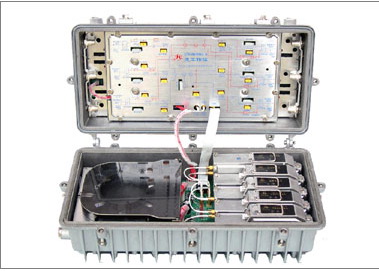
Wireless Infrastructure Equipment
Source commercial-grade Wireless Infrastructure Equipment from vetted manufacturers and wholesale suppliers. Designed for telecommunications distributors, network integrators, and brands requiring reliable OEM and ODM production, our catalog connects you directly with top-tier Asian factories for scalable, high-performance deployments.
Sourcing wireless infrastructure equipment demands strict adherence to RF performance standards, environmental durability, and regulatory compliance. The challenge isn't merely finding a facility that can assemble printed circuit boards; it is identifying a manufacturer capable of precise impedance matching, rigorous thermal management, and consistent component sourcing. For enterprise and carrier-grade deployments, a single substituted capacitor or poorly shielded enclosure can degrade network performance and lead to costly field failures.
Engineering and Specifying Your Hardware
When vetting potential suppliers, their engineering capabilities are just as critical as their production capacity. High-frequency wireless equipment requires specialized PCB layouts—often utilizing advanced substrates like Rogers or Teflon—to minimize signal loss. You must clearly define your technical requirements before engaging a factory, as vague specifications will result in off-the-shelf consumer-grade hardware being pitched as enterprise-ready.
Critical Specifications to Define for Suppliers
- Frequency Bands & Protocols: Specify exact operating frequencies (e.g., Sub-6GHz, mmWave) and supported standards (Wi-Fi 6/6E/7, 4G LTE, 5G NR).
- Transmit Power (Tx) & Receiver Sensitivity: Define acceptable dBm ranges and required signal-to-noise ratios.
- Antenna Gain & MIMO Configuration: Specify dBi requirements and antenna arrays (e.g., 2x2, 4x4, 8x8 MIMO).
- Environmental Protection: For outdoor infrastructure, mandate IP67 or IP68 ratings, UV-resistant enclosures, and specific operating temperature ranges (e.g., -40 to 85 Celsius).
- Power Delivery: Specify PoE (Power over Ethernet) standards (802.3af/at/bt) or DC input requirements.
Need to verify a factory's RF engineering and production capabilities before placing an order?
Talk to our teamManufacturing Tolerances and Quality Control
The manufacturing floor is where wireless infrastructure either meets carrier-grade standards or falls short. Poor soldering, inadequate shielding, or improper antenna alignment can introduce severe performance issues like high VSWR (Voltage Standing Wave Ratio) or unacceptable PIM (Passive Intermodulation).
Professional buyers must ensure the factory employs rigorous Quality Control & Inspection protocols. This includes automated optical inspection (AOI) for PCBA, X-ray inspection for BGA components, and dedicated RF testing chambers on the assembly line.
The Risk of Unauthorized Component Substitution
In the current semiconductor market, factories may quietly substitute RF transceivers, power amplifiers, or even passive components to cut costs or avoid lead-time delays. This can instantly void your regulatory certifications. Always lock in your Bill of Materials (BOM) and verify components during pre-shipment inspections.
Regulatory compliance is another non-negotiable factor. Wireless equipment must pass strict emissions and safety testing for its target market. Working with partners who understand Compliance & Testing ensures your hardware meets FCC (US), CE RED (Europe), or IC (Canada) standards without costly redesigns.
Production Timelines, MOQs, and Sourcing Reality
Procuring telecom and networking equipment involves managing complex supply chains, particularly regarding specialized silicon (chipsets from Broadcom, Qualcomm, or MediaTek). If you are utilizing OEM/ODM Services for custom enclosures or proprietary firmware integration, expect longer initial timelines for tooling and software validation.
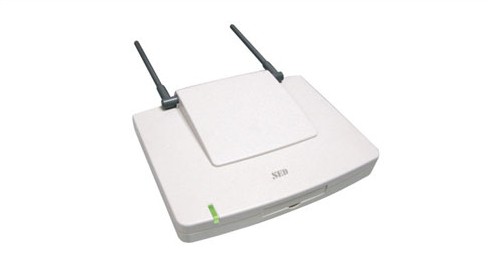
Pricing in this category is driven primarily by the chipset tier, the complexity of the RF front-end (number of power amplifiers and low-noise amplifiers), and the ruggedness of the enclosure. High-grade die-cast aluminum enclosures for outdoor base stations will significantly increase the per-unit cost compared to indoor ABS plastic access points, but are essential for thermal dissipation and weatherproofing.
Optimize your telecom supply chain and negotiate better terms with vetted manufacturers.
Get a free consultationFrequently Asked Questions
Successfully sourcing wireless infrastructure equipment requires bridging the gap between RF engineering and offshore manufacturing realities. By enforcing strict BOM control, demanding rigorous in-line RF testing, and validating regulatory compliance early, you can deploy robust networks while protecting your margins.
Get Sourcing Help for Wireless Infrastructure Equipment
Tell us your requirements and our experts will connect you with verified manufacturers.