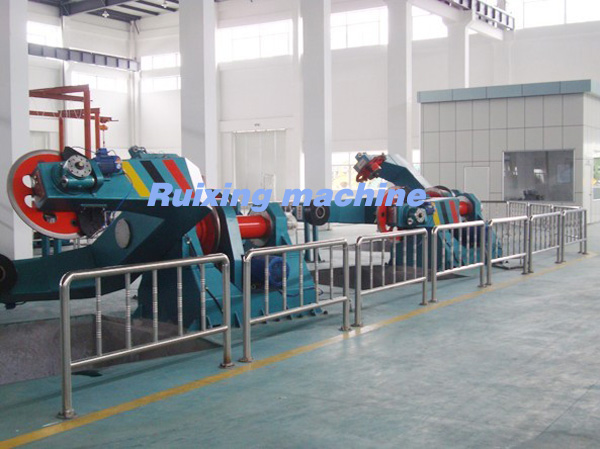
Wire Twisting Machines
Source industrial-grade Wire Twisting Machines from vetted suppliers and manufacturers. Designed for importers, distributors, and procurement managers, this catalog offers high-precision equipment for bulk procurement. Whether upgrading production lines or expanding wholesale inventory, find reliable factory-direct pricing.
Sourcing wire twisting machinery requires matching mechanical precision with the exact demands of your wire harness production. Whether your end-users are processing automotive cables, aerospace harnesses, or high-frequency data lines, the core challenge is maintaining a consistent twist pitch and stable tension without damaging the wire insulation.
Procuring these machines overseas demands strict attention to component quality, software stability, and the manufacturer's assembly standards.
Critical Specifications for Procurement
When evaluating machinery suppliers, the technical specifications must align exactly with the intended production environment. General-purpose machines often fail when applied to specialized tasks like twisting thin Teflon wires or heavy-duty PVC power cables.
Key parameters to define before approaching a manufacturer include:
- Wire Gauge Range: Specify the cross-sectional area (e.g., 0.05 to 2.5 mm²) or AWG equivalent. Machines are typically optimized for either micro-coaxial/fine wires or thicker industrial cables; rarely both.
- Twist Pitch (Length): The distance of one complete twist. For data cables requiring strict EMI reduction, the pitch tolerance must be exceptionally tight.
- Spindle Speed: Measured in RPM. Higher speeds (up to 4000 RPM) increase throughput but require superior vibration dampening and precision bearings.
| Machine Type | Ideal Application | Typical Speed | Tension Control |
|---|---|---|---|
| Semi-Automatic Benchtop | Low-volume, high-mix runs | Up to 1500 RPM | Mechanical / Spring |
| High-Speed Single Spindle | Standard automotive/electronic | 2000 to 3000 RPM | Magnetic / Friction |
| Fully Automatic Servo-Driven | High-volume data cables | 3000 to 4500 RPM | Electronic Servo |
Evaluating Manufacturer Quality on the Factory Floor
The difference between a machine that lasts ten years and one that requires constant maintenance lies in the internal components and the factory's machining tolerances. Many suppliers assemble machines using off-the-shelf parts; true manufacturers machine their own structural components to ensure rigidity.
Conducting thorough Factory Audits is crucial to verify the supplier's CNC capabilities and assembly line standards.
Key Component Quality Checks
- Motor & Drive Brands: Look for recognizable servo motors (e.g., Mitsubishi, Panasonic, Yaskawa) rather than generic stepper motors for reliable pitch control.
- Spindle Concentricity: The twisting spindle must have near-zero runout to prevent wire whipping and insulation damage at high speeds.
- Control Systems: Ensure the PLC and HMI (touchscreen) support multiple languages and allow for recipe storage (saving specific wire parameters for quick changeovers).
- Wire Guides & Rollers: Must be made of polished ceramic or hardened steel to prevent friction buildup and wire scoring.
Need help verifying machinery manufacturers in Asia? We evaluate technical capabilities, component authenticity, and assembly standards before you place an order.
Talk to our teamPricing, MOQs, and Lead Times
Unlike consumer goods, industrial wire processing equipment is sourced with different expectations for volume and customization.
- Minimum Order Quantities (MOQs): The standard MOQ for wire twisting machines is typically 1 unit. However, distributors buying standard benchtop models in bulk (e.g., 5 to 10 units) can negotiate volume discounts of 10 to 15 percent.
- Lead Times: Standard models usually ship within 15 to 25 days. Custom configurations—such as integrating specific safety interlocks, custom voltage requirements, or specialized wire payoff systems—extend lead times to 45 to 60 days.
- Pricing Drivers: The cost of a twisting machine scales dramatically with the level of automation. A basic mechanical benchtop twister may cost under two thousand dollars, while a fully automated, multi-spindle servo-driven machine can exceed fifteen thousand dollars.
- Logistics: These are heavy, vibration-sensitive assets. Proper crating (ISPM 15 compliant wood) and moisture-barrier vacuum packing are non-negotiable. Coordinating Shipping & Freight requires partners experienced in industrial machinery transport to avoid misalignment during transit.
Streamline your industrial machinery procurement. From negotiating factory-direct pricing to managing heavy freight logistics, we handle the end-to-end sourcing process.
Get a free consultationFrequently Asked Questions
Securing reliable wire twisting machinery is about validating the supplier's engineering depth and ensuring the internal components meet international industrial standards. Implementing rigorous Quality Control & Inspection prior to shipment—including running live production samples—is the most effective way to protect your capital investment and ensure immediate integration onto your factory floor.
Get Sourcing Help for Wire Twisting Machines
Tell us your requirements and our experts will connect you with verified manufacturers.