Wheelbarrows
Source high-quality wheelbarrows from vetted suppliers and manufacturers across Asia. Designed for importers, wholesalers, distributors, and brands seeking reliable OEM and private-label production. Secure competitive wholesale pricing on bulk orders with stringent quality control and seamless logistics support.
Sourcing wheelbarrows at volume is an exercise in balancing load capacity, material durability, and shipping efficiency. The difference between a lightweight garden cart and a heavy-duty contractor tool comes down to precise specifications: steel gauge, weld integrity, and component quality. For bulk buyers, successfully navigating the Asian manufacturing landscape requires looking past superficial catalog images to scrutinize the underlying engineering and factory capabilities.
Core Specifications and Material Selection
When defining your product requirements for a factory, vague terms like "heavy-duty" will result in inconsistent quality. You must specify exact dimensions, material grades, and component types.
Tray Materials and Thickness
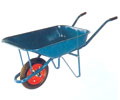
The tray (or bucket) is the primary failure point if under-specced. Manufacturers typically offer two main material pathways, each requiring specific parameters:
- Steel Trays: Specify whether you require galvanized or powder-coated steel. For construction and contractor grades, demand a steel thickness of 1.0mm to 1.2mm or thicker. Retail and light gardening models often use 0.6mm to 0.8mm steel, which is prone to deformation under heavy loads.
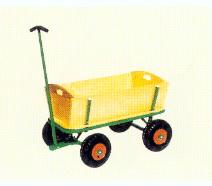
- Poly (PP) Trays: Polypropylene trays are rust-proof and excellent for agriculture or chemical handling. Ensure the factory uses high-density, UV-stabilized PP to prevent the plastic from becoming brittle when exposed to sunlight.
| Application | Recommended Material | Typical Thickness | Key Advantage |
|---|---|---|---|
| Light Garden | Powder-Coated Steel | 0.6mm - 0.8mm | Cost-effective |
| Heavy Construction | Galvanized Steel | 1.0mm - 1.5mm | Impact & rust resistant |
| Agriculture/Livestock | UV-Stabilized Poly | 4.0mm - 6.0mm | Corrosion proof |
If you are developing a proprietary tray shape or require specific branding embossed into the steel, leveraging OEM/ODM Services ensures the factory has the proper tooling and stamping capabilities to execute your design accurately.
Struggling to find a manufacturer capable of meeting your exact steel gauge and load specifications? Let us match you with a vetted factory.
Talk to our teamUndercarriage and Wheel Assemblies
A high-capacity tray is useless on a weak frame. The undercarriage must be specified with equal rigor:
- Frame Construction: One-piece tubular steel frames offer superior rigidity compared to multi-piece bolt-together handles, though they consume more shipping volume. Specify the outer diameter (OD) and wall thickness of the steel tubing (e.g., 32mm OD with 1.2mm wall thickness).
- Wheel Types: Pneumatic tires (typically 13-inch to 16-inch) provide the best shock absorption for uneven terrain. However, polyurethane (PU) solid or "flat-free" tires are increasingly demanded in construction markets to eliminate puncture downtime.
- Bearings: Specify sealed precision bearings over cheap roller bearings to ensure longevity in dusty or muddy environments.
Quality Control on the Factory Floor
Wheelbarrow manufacturing relies heavily on stamping, welding, and surface treatment. Defects in any of these stages compromise the final product. Implementing rigorous Quality Control & Inspection protocols before shipment is critical.
Key Inspection Points for Wheelbarrows
- Weld Integrity: Inspect frame joints for continuous, slag-free welds without porosity.
- Coating Adhesion: Perform cross-hatch adhesion testing on powder-coated trays to ensure rust resistance.
- Load Testing: Apply the maximum rated static load for 24 hours to check for frame deflection or tray buckling.
- Hardware Completeness: Verify that all nuts, bolts, and washers are present and properly threaded for CKD shipments.
- Wheel Alignment: Ensure the axle brackets are welded symmetrically so the wheel tracks straight.
Purchasing Mechanics: MOQ, Pricing, and Logistics
Because wheelbarrows are inherently voluminous, shipping them fully assembled is economically unviable. Almost all wholesale wheelbarrow orders are shipped CKD (Completely Knocked Down).
Shipping and Packaging Efficiency
In a CKD arrangement, trays are nested together in tall stacks, while frames, wheels, and hardware are packed separately in bulk or bundled. This method maximizes container space, allowing you to fit upwards of 1,000 to 1,500 units in a standard 40HQ container, depending on the model. Coordinating this complex packing requires precise Shipping & Freight management to ensure components are not damaged or lost during transit.
Need to optimize your container loading and reduce landed costs? We manage the entire process from factory floor to your warehouse.
Get a free consultationFrequently Asked Questions
Ultimately, a successful wheelbarrow sourcing program relies on tight technical specifications and relentless oversight of the packing process. By controlling the material inputs and optimizing your container loads, you can secure durable products that protect your brand's reputation while maintaining healthy margins.
Get Sourcing Help for Wheelbarrows
Tell us your requirements and our experts will connect you with verified manufacturers.