Wheel Adapters & Spacers
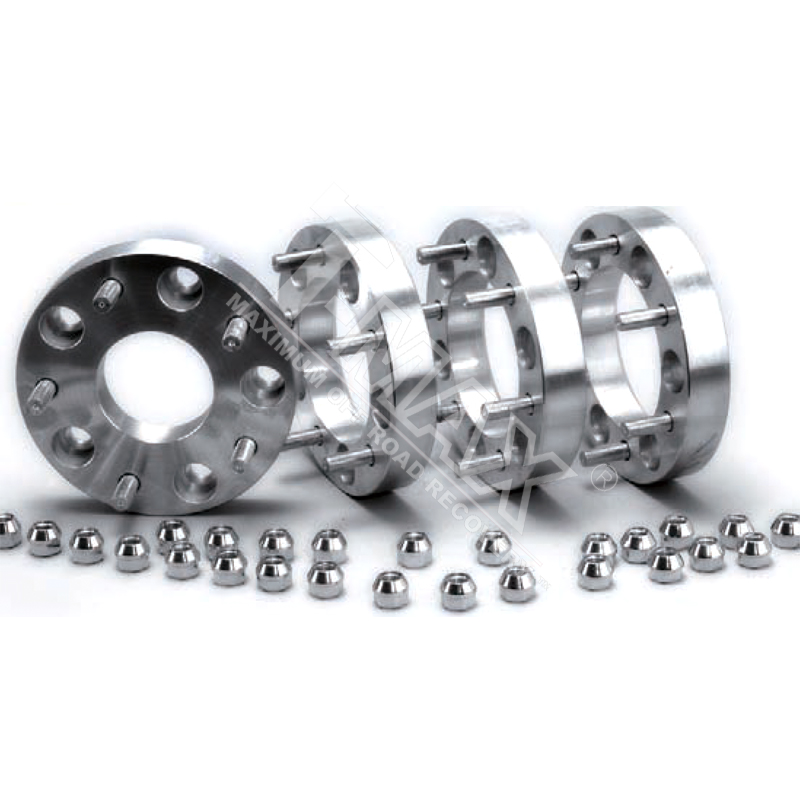
Source high-quality wheel adapters and spacers directly from vetted manufacturers and wholesale suppliers. Designed for automotive parts importers, distributors, and aftermarket brands requiring reliable OEM and private-label production. Secure competitive bulk pricing and consistent manufacturing standards.
Sourcing wheel adapters and spacers in volume requires strict attention to metallurgical integrity and machining precision. Because these components bear the full rotational and lateral loads of the vehicle, a failure is catastrophic. Balancing cost with the required safety margins means your supply chain must consistently deliver exact tolerances, certified alloys, and high-tensile hardware without deviation.
Material Specifications and Machining Tolerances
The foundation of a reliable wheel spacer or adapter is the alloy billet and the precision of the CNC machining. Most aftermarket suppliers utilize aluminum alloys, but the specific grade and temper dictate the component's load capacity and fatigue resistance.
| Specification | 6061-T6 Aluminum | 7075-T6 Aluminum |
|---|---|---|
| Yield Strength | Approx. 276 MPa | Approx. 503 MPa |
| Primary Application | Standard passenger vehicles, light trucks | Heavy-duty trucks, performance/track vehicles |
| Machinability & Cost | Excellent machinability, highly cost-effective | Harder to machine, higher raw material cost |
| Corrosion Resistance | High natural resistance | Moderate (requires robust anodizing) |
Beyond the alloy, dimensional accuracy is paramount. A true hub-centric design requires the center bore of the spacer to perfectly match the vehicle's hub lip, while the spacer's own lip must accurately center the wheel. Machining tolerances should consistently fall within +/- 0.02mm to prevent high-speed vibration and uneven tire wear.
Struggling to find a manufacturer that consistently meets strict CNC tolerances? Let us connect you with vetted production partners.
Talk to our teamHardware Quality: Studs and Lug Nuts
The spacer itself is only half the equation. The pressed-in studs and supplied lug nuts must meet or exceed OEM specifications.
- Grade Requirements: Specify ISO Grade 10.9 or 12.9 steel for all studs. Lower grades are prone to stretching or shearing under heavy torque and lateral force.
- Thread Rolling: Ensure the factory uses rolled threads rather than cut threads for the studs, as rolling significantly increases fatigue strength.
- Corrosion Protection: Hardware should feature Dacromet coating, zinc plating, or black oxide treatments to prevent rust seizing, particularly in regions that salt roads in winter.
Verifying Supplier Capability and Quality Control
The Chinese automotive aftermarket is dense with trading companies posing as manufacturers, as well as lower-tier machine shops that cut corners on raw materials (e.g., using recycled aluminum instead of virgin billet). Conducting thorough factory audits is essential to verify that the supplier actually owns their CNC equipment and maintains strict traceability on their raw materials.
To ensure defect-free shipments, a rigorous quality control protocol must be established before production begins.
Critical Factory QC Checkpoints
- Material composition analysis (spectrometer testing) for incoming aluminum billet.
- Tensile and fatigue testing documentation for pressed-in studs.
- Coordinate Measuring Machine (CMM) verification of bolt circle diameter (PCD) and center bore (CB).
- Salt spray testing on anodized finishes to verify corrosion resistance.
- Runout testing to ensure the mounting surfaces are perfectly parallel.
Customization and OEM/ODM Production
For aftermarket brands, differentiation often comes down to custom dimensions, specific vehicle fitments, and branding. Engaging a factory for OEM/ODM production allows you to specify exact thicknesses, unique bolt pattern conversions (e.g., 5x114.3 to 5x120), and custom hard-anodized colors.
Ensure your manufacturing partner has the engineering capability to calculate the necessary minimum thickness required to safely house the pressed-in studs without compromising the structural integrity of the adapter body.
Pricing, MOQs, and Lead Times
Pricing for wheel spacers and adapters is highly dependent on the current market rate for aluminum billet, the complexity of the CNC machining time, and the volume of the order.
Ready to optimize your supply chain for automotive accessories? We manage the sourcing, negotiation, and logistics end-to-end.
Get a free consultationFrequently Asked Questions
Sourcing wheel adapters and spacers requires a supplier who understands the critical safety implications of their product. By focusing on material certification, hardware grades, and strict CNC tolerances, you can build a reliable product line that protects both the end-user and your brand's reputation. Establishing these standards early in the sourcing process is the most effective way to prevent costly quality fade.
Get Sourcing Help for Wheel Adapters & Spacers
Tell us your requirements and our experts will connect you with verified manufacturers.