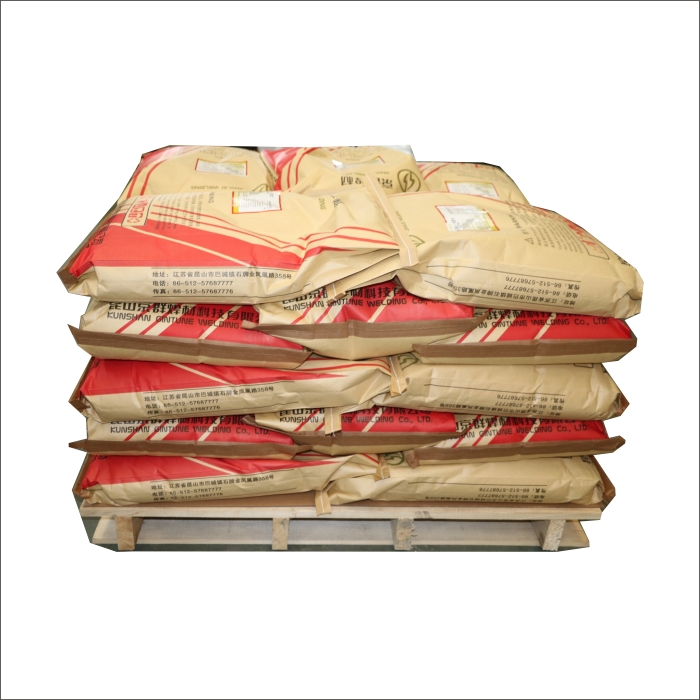
Welding Fluxes
Source premium welding fluxes in bulk from vetted manufacturers and suppliers in China and Asia. Designed for industrial importers, wholesale distributors, and brands requiring reliable OEM and private-label production. Ensure stable arc performance and superior weld quality with factory-direct pricing.
Sourcing welding fluxes in bulk requires strict attention to chemical consistency, moisture control, and particle size distribution. Whether you are importing submerged arc welding (SAW) fluxes for heavy structural fabrication or specialized fluxes for hardfacing, the core sourcing challenge remains the same: ensuring the manufacturer's batch-to-batch consistency matches your exact metallurgical requirements. A slight variation in basicity or moisture content can lead to catastrophic weld failures, such as hydrogen-induced cracking or excessive porosity.
Defining Flux Specifications for Bulk Orders
When communicating with overseas manufacturers, vague specifications lead to unusable product. You must define the exact metallurgical and physical properties required for your target market or application.
| Manufacturing Process | Key Characteristics | Best Application |
|---|---|---|
| Fused Fluxes | Chemically homogeneous, non-hygroscopic, lower dust. | High-speed welding, environments where moisture pickup is a risk. |
| Agglomerated (Bonded) Fluxes | Allows addition of deoxidizers and alloying elements, lower consumption. | Multi-pass welding, applications requiring specific alloy adjustments. |
Key parameters to specify on your purchase order include:
- Basicity Index (BI): Specify whether you need acidic, neutral, or highly basic fluxes. Highly basic fluxes (BI over 2.5) are critical for low-temperature impact toughness but often sacrifice bead appearance and slag detachability.
- Grain Size (Mesh): Clearly define the particle size range (e.g., 10 to 60 mesh). Improper grain size leads to uneven feeding, poor arc stability, and excessive dust.
- Moisture Content: For agglomerated fluxes, specify maximum allowable moisture (typically under 0.05 percent by weight) to prevent hydrogen cracking in high-strength steels.
Struggling to find a manufacturer capable of meeting strict basicity and moisture requirements? Let us connect you with vetted flux producers who consistently deliver to international standards.
Talk to our teamManufacturing Quality and Factory Vetting
The quality of welding flux is won or lost in the baking and mixing stages. For agglomerated fluxes, the raw materials (minerals, ferroalloys, and silicates) must be precisely mixed and baked at temperatures often exceeding 800 degrees Celsius to drive off moisture and cure the binder.
Many lower-tier suppliers cut costs by reducing baking time or lowering temperatures, resulting in fluxes that look fine but introduce hydrogen into the weld pool. Verifying a factory's kiln capabilities and process controls is essential. This is where conducting thorough Factory Audits before placing an order protects your investment. You need to ensure the facility has the proper climate-controlled storage for raw materials and finished goods.
Quality Control and Pre-Shipment Inspection
Even with a top-tier manufacturer, active Quality Control & Inspection is necessary to catch deviations before the product is loaded into containers.
Essential QC Checks for Welding Fluxes
- Moisture content analysis using the combustion method.
- Sieve analysis to verify grain size distribution and dust content.
- Weld test panels to check arc stability, slag removal, and bead profile.
- Packaging integrity (verifying moisture-proof multi-wall paper bags or hermetically sealed steel drums).
Pricing, MOQs, and Lead Times
Welding flux production is a volume-driven industry. While pricing fluctuates based on raw mineral costs (like rutile, fluorite, and high-purity silica), bulk buyers can expect favorable terms when committing to standard factory MOQs.
- Minimum Order Quantities (MOQs): Typical MOQs start at 5 to 10 metric tons for standard formulations. If you require custom chemical compositions or private-label packaging through OEM/ODM Services, expect MOQs to rise to a full 20-foot container (approximately 20 to 24 metric tons).
- Lead Times: Standard production lead times range from 25 to 35 days. Custom formulations may require an additional 15 days for initial testing and formulation approval.
- Packaging: Standard packaging is 25kg moisture-proof bags. For heavy industrial users, 500kg or 1000kg bulk bags (FIBCs) with moisture barrier liners are common.
Need to optimize your supply chain for heavy consumables? We handle supplier negotiation, quality control, and global logistics for bulk hardware imports.
Get a free consultationFrequently Asked Questions
Sourcing welding fluxes at scale requires balancing metallurgical precision with aggressive cost management. By partnering with factories that maintain strict control over their raw material inputs and baking processes, you can secure reliable consumables that keep your end-users' welding operations running flawlessly. If you need boots on the ground to vet suppliers and oversee production, our team is ready to assist.
Get Sourcing Help for Welding Fluxes
Tell us your requirements and our experts will connect you with verified manufacturers.