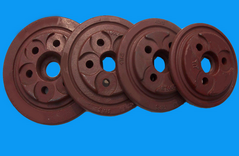
Weight Plates
Source premium weight plates from vetted suppliers and manufacturers in China and Asia. Designed for fitness equipment distributors, wholesalers, and gym brands seeking reliable OEM production, our network delivers scalable manufacturing for commercial and home strength training markets at competitive wholesale pricing.
Sourcing weight plates at scale requires balancing raw material costs against strict performance tolerances. Whether you are importing commercial-grade urethane bumpers, calibrated steel plates, or standard cast-iron discs, the primary manufacturing challenges lie in ensuring consistent weight accuracy, durable rubber-to-metal bonding, and managing the logistics of high-density cargo.
Material Specifications and Manufacturing
The raw material and coating dictate the production method, facility requirements, and ultimate durability of the plate. Facilities in major fitness manufacturing hubs (such as Hebei and Shandong provinces in China) typically specialize in either foundry work (cast iron/steel) or vulcanization/polyurethane injection.
| Material Type | Manufacturing Process | Key Performance Indicator | Typical Application |
|---|---|---|---|
| Cast Iron | Sand casting or die casting | Tensile strength, surface finish | Standard gym, home fitness |
| Virgin Rubber (Bumper) | Vulcanization over steel core | Shore A Hardness (85-92) | Cross-training, Olympic lifting |
| Crumb Rubber | Recycled tire vulcanization | High impact absorption | Outdoor/garage gyms |
| Urethane (CPU) | Polyurethane injection molding | Tear resistance, color stability | Premium commercial gyms |
Urethane (CPU) is increasingly preferred for premium commercial applications due to its superior tear strength and odorless profile compared to vulcanized rubber. However, urethane requires specialized injection molds and longer curing times, which impacts lead times.
Struggling to find a factory capable of precision urethane molding? We can match your technical requirements with vetted manufacturers.
Discuss your production needsQuality Control and Critical Tolerances
Weight plates are deceptively simple, but poor manufacturing controls lead to severe defects: inaccurate weights, rusting inserts, and rubber delamination. Establishing strict inspection protocols is non-negotiable.
Weight Accuracy
Commercial plates should hold a weight tolerance of ±1 percent to ±2 percent of the stated weight. Calibrated powerlifting plates require precision machining (often with calibration plugs on the back) to achieve tolerances of plus or minus 10 grams.
Hub and Insert Integrity
For bumper plates, the center ring is the most common point of failure. Stainless steel inserts (machined from a single piece) offer the best durability. Cheaper plates use two-piece pressed brass or zinc-plated iron, which can bend or rust over time.
Pre-Shipment Inspection Checklist
- Weight tolerance verification using calibrated scales (minimum 10 percent sample size).
- Shore A durometer testing for rubber and urethane plates to ensure correct bounce profile.
- Drop testing (e.g., 10,000 to 30,000 cycles from 2 meters) for bumper plate durability.
- Visual inspection for surface porosity, flash lines, or uneven paint/coating application.
- Center hole diameter verification (strictly 50.4mm for Olympic bars to prevent excessive play).
Implementing rigorous Quality Control & Inspection before the container is loaded is critical, as returning defective heavy cargo is financially unviable.
OEM Customization and Tooling
Most brands require custom logos and specific colorways (often matching International Weightlifting Federation standards). For cast iron plates, logos are typically integrated into the casting mold. For rubber and urethane plates, raised lettering and colored logos require custom mold tooling.
When utilizing OEM/ODM Services, expect to pay a one-time mold fee per weight increment. If you are developing a proprietary plate shape (e.g., multi-grip handles or interlocking designs), you will need to own the 3D CAD files and ensure the factory signs an NNN (Non-Disclosure, Non-Use, Non-Circumvention) agreement.
Pricing Structures, MOQs, and Logistics
Unlike lighter consumer goods, weight plates are priced as commodities—often quoted by the kilogram or metric ton rather than per piece.
- Pricing: Cast iron is the most economical, followed by crumb rubber, virgin rubber, and finally urethane, which commands a significant premium per kilogram.
- MOQ: Factories rarely accept orders based on piece count. Typical Minimum Order Quantities range from 1 to 3 metric tons per order, or 500kg to 1,000kg per specific SKU/weight increment.
- Logistics: Weight plates "weigh out" a shipping container long before they "cube out." A standard 20-foot container can hold roughly 20 to 24 metric tons. Managing Shipping & Freight efficiently requires maximizing container payload limits without exceeding local road weight restrictions at the destination port.
Need accurate landed cost calculations? We can help you source the right factory and optimize your freight consolidation.
Talk to our teamFrequently Asked Questions
Successful sourcing in this category is ultimately an exercise in supply chain optimization. The lowest price per kilogram at the factory door means little if poor packaging leads to transit damage, or if inefficient container loading destroys your freight margins. Partnering with experienced sourcing professionals ensures your specifications are met and your logistics are handled efficiently.
Get Sourcing Help for Weight Plates
Tell us your requirements and our experts will connect you with verified manufacturers.