Webcams
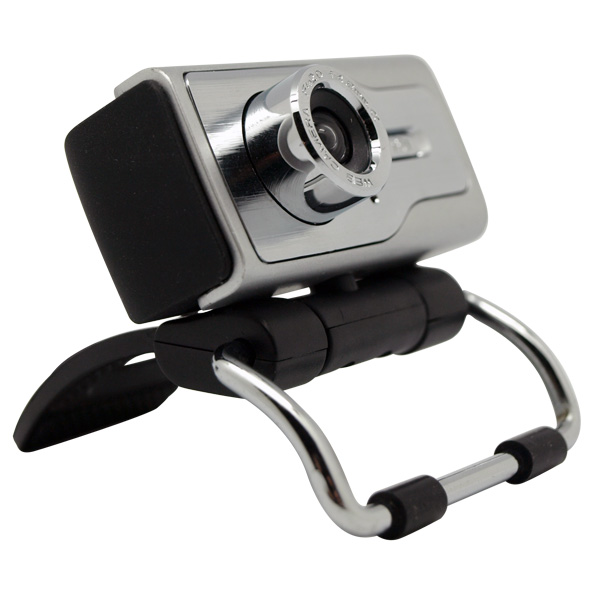
Source high-quality webcams from vetted manufacturers and suppliers in China and across Asia. Designed for importers, wholesalers, distributors, and brands seeking reliable OEM and private-label production, this category covers everything from standard 1080p communication cameras to 4K auto-focus models for enterprise and broadcasting.
Sourcing webcams at scale requires navigating a highly fragmented supply chain where the difference between a premium peripheral and an unusable paperweight lies deep in component selection and assembly environment. The core challenge for volume buyers is verifying that a manufacturer is delivering true hardware performance, rather than cutting corners with plastic lenses, inferior image signal processing (ISP), or relying on software interpolation to hit marketed resolution targets.
Component Architecture: The Core Triangle
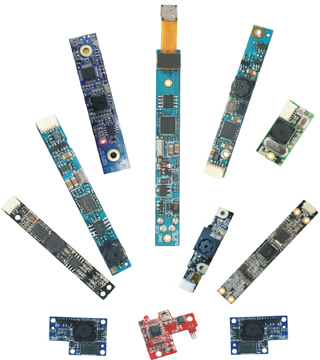
The performance of any webcam relies on the integration of three primary components: the image sensor, the lens assembly, and the Digital Signal Processor (DSP). Specifying these correctly prevents bait-and-switch tactics on the factory floor.
- Image Sensors: The sensor dictates raw image quality. High-end models typically utilize Sony IMX series sensors (known for superior low-light performance), while mid-range devices often rely on OmniVision or GalaxyCore. Pay attention to sensor size; a 1/2.8-inch sensor will capture significantly more light than a 1/4-inch sensor at the same resolution.
- Lens Assemblies: Lenses are categorized by their material makeup. A "4G" lens contains four glass elements, while a "2P2G" contains two plastic and two glass elements. Plastic elements degrade optical clarity and are prone to yellowing over time.
- DSP / Controller IC: The DSP handles encoding (MJPEG, YUY2, or H.264) and houses the ISP algorithms. Realtek and Sonix are dominant players here. Poor ISP tuning results in blown-out highlights, poor auto-white balance (AWB), and sluggish auto-exposure (AE).
| Specification | Budget / Entry-Level | Enterprise / Premium |
|---|---|---|
| Lens Construction | Plastic or Hybrid (2P2G) | All-Glass (4G to 6G) |
| Focus Mechanism | Fixed Focus | Voice Coil Motor (VCM) Auto-focus |
| Video Encoding | MJPEG / YUY2 only | Hardware H.264 / H.265 |
| Microphone Array | Single analog mic | Dual omnidirectional with noise reduction IC |
Need help verifying factory component lists and BOMs? Our sourcing engineers can validate supplier claims before you commit.
Discuss Your SpecsManufacturing Tolerances and Cleanroom Assembly
Webcam assembly is highly sensitive to environmental contamination. The critical step is mating the lens barrel to the sensor board. If this is done in a standard assembly line environment, microscopic dust particles will settle on the sensor, appearing as permanent black spots on the final video feed.
Reputable webcam manufacturers utilize Class 10,000 or Class 1,000 cleanrooms for this specific assembly stage. Furthermore, the alignment of the lens to the sensor plane must be perfectly parallel; slight deviations cause the image to be sharp in the center but blurred at the edges. Conducting thorough factory audits is the only reliable way to confirm a supplier actually possesses and uses these cleanroom facilities, rather than outsourcing the critical assembly to a third-party workshop.
Quality Control and Performance Testing
Factory-level testing must go beyond simply plugging the camera via USB to see if an image appears. Rigorous quality control protocols should mandate standardized optical testing.
Critical Pre-Shipment Inspection Points
- Resolution Verification: Confirm native resolution using specialized software to detect upscaling/interpolation.
- ISO 12233 Chart Testing: Measure true optical resolution, edge sharpness, and chromatic aberration.
- Low-Light Performance: Test auto-exposure and noise levels at 50 lux and 10 lux environments.
- Focus Speed & Hunting: For auto-focus models, measure the time to lock focus and check for continuous 'hunting' behavior.
- Microphone Clarity: Verify noise-cancellation effectiveness and check for audio-video sync drift over extended recording.
Pricing, MOQs, and Lead Times
Webcam manufacturing is highly scalable, but customization depth dictates your minimum order quantities (MOQs) and production timelines. Buyers utilizing OEM/ODM services for custom tooling or proprietary firmware should expect longer lead times compared to white-labeling existing public molds.
Pricing is volatile and scales directly with sensor cost and DSP capabilities. An entry-level 1080p fixed-focus unit might range from $4 to $8 USD, while a true 4K auto-focus model with hardware H.264 encoding and premium Sony sensors will range from $25 to $45+ USD at wholesale volumes.
Want accurate pricing based on your specific technical requirements? Connect with our sourcing team for detailed factory quotations.
Get Current PricingBuyer FAQ
Securing a reliable supply of webcams means looking past the outer housing and scrutinizing the internal component matrix and assembly environment. By specifying exact sensor and lens pairings and enforcing strict optical quality control, you can protect your margins and deliver a product that performs consistently in the field.
Get Sourcing Help for Webcams
Tell us your requirements and our experts will connect you with verified manufacturers.