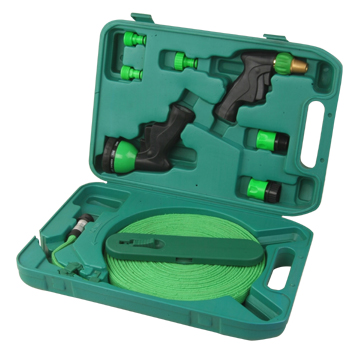
Watering Kits
Source premium watering kits directly from vetted manufacturers and wholesale suppliers. Tailored for importers, distributors, and brands seeking reliable bulk purchasing or custom OEM production. Explore our range of durable irrigation solutions designed for consistent performance and scale.
Procuring complete watering kits in bulk requires strict attention to component compatibility, material longevity, and consistent hydraulic performance. When sourcing these multi-part systems from overseas manufacturers, the primary challenge is ensuring that every fitting, emitter, and length of tubing meets the required pressure ratings and environmental standards without driving up assembly costs. A single poorly molded barb fitting can compromise an entire consumer kit, leading to high return rates.
Critical Specifications and Materials
Watering kits are highly modular, typically comprising mainline tubing, distribution micro-tubing, emitters (drippers or micro-sprinklers), stakes, and connectors. Specifying the exact material grade for each component is essential for market viability.
Tubing is the backbone of any kit. Buyers must define the wall thickness, outer diameter (OD), and inner diameter (ID) with strict tolerances. The choice between Polyethylene (PE) and Polyvinyl Chloride (PVC) dictates the system's durability and flexibility.
| Material | Primary Application | UV Resistance | Flexibility | Cost Profile |
|---|---|---|---|---|
| Polyethylene (PE) | Mainline tubing (1/2 inch or larger) | High (requires carbon black/additives) | Moderate | Economical |
| Polyvinyl Chloride (PVC) | Micro-tubing (1/4 inch branch lines) | Moderate | High | Slightly Higher |
| ABS / POM Plastics | Fittings, valves, and rigid stakes | High | Rigid | Premium |
Emitters demand equal scrutiny. You must specify the flow rate—typically measured in liters per hour (L/H) or gallons per hour (GPH)—and whether the emitters need to be pressure-compensating (PC). PC emitters maintain a constant flow rate regardless of pressure fluctuations along the line, a critical feature for kits targeting sloped terrains or extensive setups.
Manufacturing Tolerances and Quality Control
The reliability of a watering kit is won or lost in the injection molding of its smallest parts. Micro-fittings and emitters require high-precision molds to ensure watertight seals without the need for clamps or glue. Flash (excess plastic) on a barbed tee fitting is a common defect that inevitably causes micro-leaks under pressure.
To mitigate these risks, implement stringent Quality Control & Inspection protocols at the factory level.
Essential QC Checks for Watering Kits
- Dimensional Tolerance: Verify OD/ID of tubing against fitting barbs using digital calipers.
- Burst Pressure Testing: Subject assembled lines to pressures exceeding 60 PSI to check for failure points.
- Flow Rate Consistency: Test a statistical sample of emitters to ensure L/H variance is under 5 percent.
- Environmental Stress Cracking Resistance (ESCR): Verify tubing durability under tension and chemical exposure.
- Component Count: Ensure automated or manual packing lines accurately count all micro-fittings per kit.
Struggling with inconsistent component quality or high defect rates? Let's build a robust inspection framework for your next production run.
Discuss your QC requirementsCustomization and OEM Production
Brands looking to differentiate often move beyond off-the-shelf configurations to develop proprietary kits tailored for specific end-users, such as raised-bed gardeners, greenhouse operators, or urban balcony growers.
Engaging in OEM/ODM Services allows you to customize the tubing length, the exact ratio of drippers to micro-sprinklers, and the inclusion of value-add components like automated water timers or quick-connect faucet adapters. Private labeling extends to custom colorways for tubing (e.g., brown or white to blend with specific environments) and fully branded retail packaging.
Packaging Complexity
Because watering kits contain dozens of small parts, blister packs or compartmentalized color boxes are standard. Ensure your factory has automated counting and bagging capabilities; manual packing of micro-fittings drastically increases the risk of missing components and customer complaints.
Pricing Drivers, MOQs, and Lead Times
The cost of a watering kit is primarily driven by the total length and weight of the tubing, the complexity of the emitters (PC vs. non-PC), and the inclusion of electronic components like timers.
Because tubing extrusion and plastic injection molding are high-volume processes, minimum order quantities (MOQs) are generally dictated by the factory's production run efficiency and the customized packaging requirements.
When negotiating with a new supplier, it is highly recommended to conduct thorough Factory Audits to verify their in-house injection molding capacity. Factories that outsource the production of small fittings often struggle to maintain consistent dimensional tolerances across different batches.
Need to negotiate better terms or consolidate components from multiple specialized factories? We can manage the entire supply chain for you.
Talk to our sourcing teamFrequently Asked Questions
Successfully sourcing watering kits at scale requires balancing material durability with precise manufacturing tolerances. By strictly defining your specifications and enforcing rigorous quality control, you can deliver reliable, leak-free systems that protect your brand's reputation. If managing the intricacies of multi-component assembly and factory verification is consuming too much of your time, professional sourcing support can streamline your operations and secure your supply chain.
Get Sourcing Help for Watering Kits
Tell us your requirements and our experts will connect you with verified manufacturers.