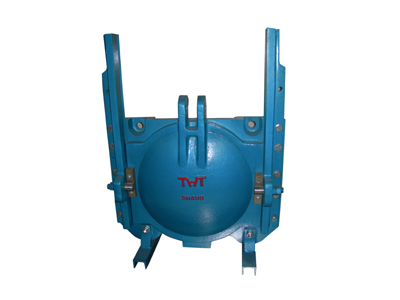
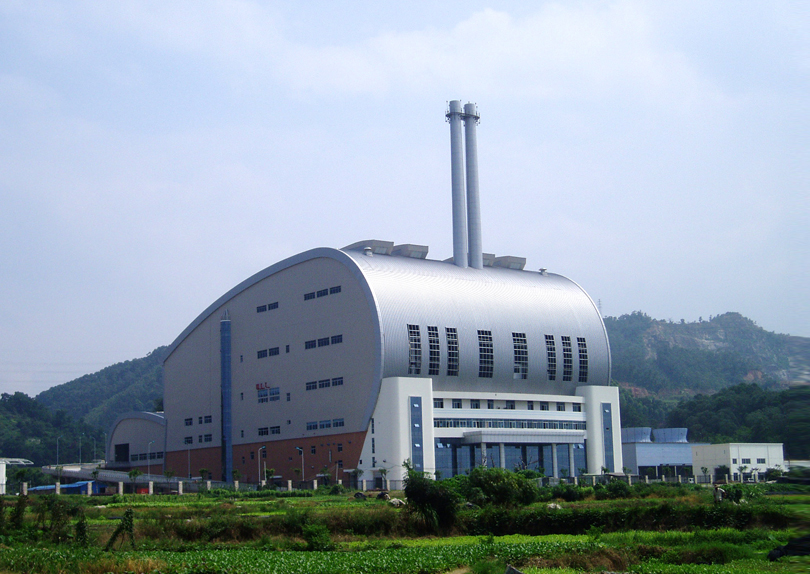
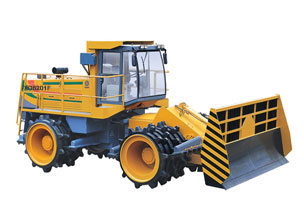
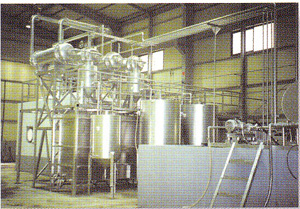
Waste Treatment Machinery
Source industrial-grade Waste Treatment Machinery directly from vetted suppliers and manufacturers. Built for importers, distributors, and procurement managers, our network provides high-capacity solutions for your market. Secure reliable wholesale pricing, bulk fulfillment, and custom OEM production for your specific facility requirements.
Sourcing heavy environmental machinery requires balancing aggressive throughput requirements with the absolute necessity of minimal downtime. When importing waste treatment equipment—whether industrial shredders, balers, sorting lines, or effluent treatment units—the margin for error is exceptionally thin. A poorly specified motor or substandard wear parts can lead to catastrophic line failures, while inadequate documentation can stall your shipment at customs. Success in this category demands rigorous specification control and uncompromising oversight on the factory floor.
Critical Specifications and Component Selection
The performance and longevity of waste treatment machinery are dictated by the core components driving the system. Chinese manufacturers offer a wide spectrum of builds, ranging from budget domestic configurations to premium export-grade systems. Buyers must explicitly define their requirements rather than relying on a supplier's standard spec sheet.
Key variables to lock down in your purchase agreement include:
- Motor and Drive Systems: Specify the exact brand, power rating (kW), and efficiency class. Premium export machines typically utilize Siemens, ABB, or WEG motors to ensure global warranty coverage and reliable continuous-duty performance.
- Control Systems (PLC): Automation dictates operational efficiency. Require globally supported PLCs (like Siemens or Schneider Electric) rather than localized brands, ensuring your technicians can troubleshoot and reprogram the machinery locally.
- Wear Parts and Metallurgy: For shredders and crushers, blade hardness is paramount. Specify the exact steel grade (e.g., D2, SKD-11, or Hardox) and require a target Rockwell Hardness (HRC) of 55 to 60 for high-abrasion applications.
- Hydraulic Systems: For balers and compactors, hydraulic reliability prevents costly leaks and pressure drops. Specify top-tier valves and pumps from brands like Bosch Rexroth or Parker.
| Component | Standard Domestic Build | Premium Export Build |
|---|---|---|
| Motors & Drives | Local brands, standard efficiency | Siemens, ABB, WEG (IE3/IE4) |
| Control Systems | Basic relay logic or local PLC | Siemens/Schneider PLC with HMI |
| Wear Parts (Blades) | Standard alloy steel (HRC 45-50) | High-grade tool steel (HRC 55-60) |
| Electrical Components | Chint or equivalent local brand | Schneider, ABB, UL/CE certified |
Need help verifying technical specifications with overseas manufacturers? Our engineering team can help you lock in the right build.
Talk to our teamManufacturing Oversight and Quality Control
Waste treatment machinery is subjected to extreme mechanical stress. Structural integrity and assembly precision are where top-tier factories separate themselves from lower-tier assemblers.
Before committing to a high-ticket order, conducting thorough Factory Audits is essential to verify the manufacturer's in-house machining capabilities, welding certifications, and testing infrastructure. Many suppliers outsource the fabrication of heavy frames, which can lead to inconsistencies in dimensional tolerances and weld penetration.
During production, implement strict Quality Control & Inspection protocols. Do not wait until the machine is crated to discover issues.
Critical Factory Inspection Points
- Verify steel plate thickness against the approved CAD drawings.
- Inspect weld seams for porosity, undercut, and proper penetration (NDT testing if required).
- Confirm the authenticity of branded components (motors, PLCs) via serial numbers.
- Require an unladen dry run of at least 4 to 8 hours to monitor bearing temperatures and vibration.
- Ensure electrical panels are wired to your destination country's standards (e.g., UL 508A or CE EN 60204-1).
Navigating Pricing, MOQs, and Logistics
Procuring industrial machinery involves high capital expenditure, but the unit cost is only one part of the equation. Logistics, particularly for oversized equipment, can dramatically alter your landed cost.
Shipping Oversized Equipment
Waste treatment lines rarely fit into standard standard shipping containers. Large shredders, trommel screens, and sorting conveyors often require Flat Rack or Open Top containers, which are subject to Out of Gauge (OOG) freight premiums. Furthermore, machinery must be properly coated in anti-rust protectants, vacuum-sealed, and securely lashed to prevent structural warping during transit. Coordinating these complex logistics requires experienced Shipping & Freight management to avoid port delays, excessive demurrage fees, and damage in transit.
Struggling with the logistics of importing oversized industrial machinery? Let us manage the freight, lashing, and customs clearance.
Get a free consultationFrequently Asked Questions
Securing reliable waste treatment machinery requires looking past the initial quotation. The true cost of this equipment is measured in uptime, maintenance overhead, and operational lifespan. By enforcing rigorous technical specifications and maintaining strict quality oversight at the factory level, buyers can successfully source high-performance environmental solutions that deliver long-term value.
Get Sourcing Help for Waste Treatment Machinery
Tell us your requirements and our experts will connect you with verified manufacturers.