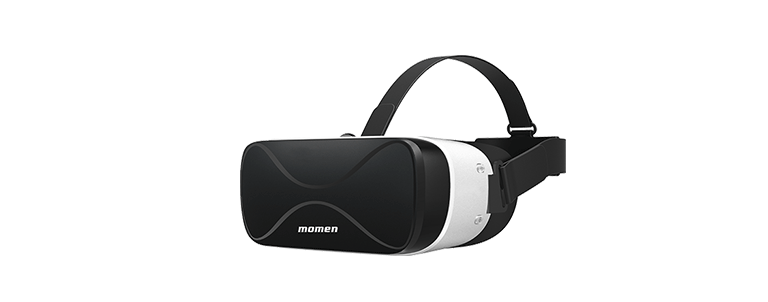
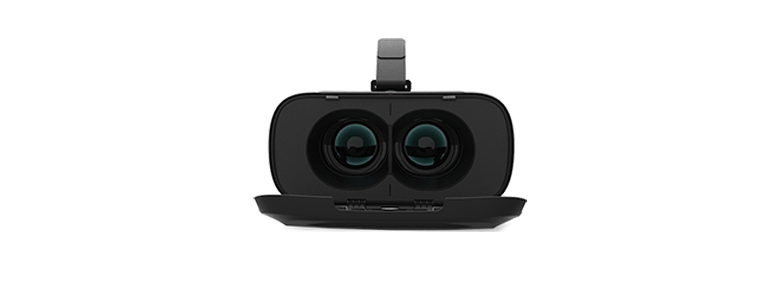
VR Hardware
Source commercial-grade VR hardware from vetted Chinese manufacturers and suppliers. Designed for importers, electronics distributors, and OEM brands buying in bulk, our network delivers reliable virtual reality headsets, controllers, and tracking accessories built to exact specifications and international compliance standards.
Sourcing virtual reality hardware at scale demands rigorous precision. A single misaligned optical module, a poorly calibrated IMU (Inertial Measurement Unit), or inadequate thermal management can render a headset unusable, leading to severe return rates. While the manufacturing ecosystem in southern China offers immense capability for VR production, distinguishing between a dedicated optical-electronics assembler and a generic consumer electronics factory is critical for bulk buyers.
Defining Specifications for VR Hardware
When negotiating with manufacturers, buyers must lock in core component specifications early, as these dictate both the bill of materials (BOM) cost and the required assembly capabilities. The optical stack and display technology are the primary cost drivers.
| Lens Technology | Optical Clarity | Form Factor | Display Requirement |
|---|---|---|---|
| Fresnel Lenses | Prone to god-rays and glare | Requires thicker headset profile | Standard LCD/OLED compatible |
| Pancake Optics | Edge-to-edge sharpness | Enables ultra-thin designs | Requires high-brightness displays due to light loss |
Beyond optics, you must specify the exact tracking architecture. Entry-level hardware often relies on 3DoF (Degrees of Freedom) rotational tracking, suitable for media consumption. True interactive VR requires 6DoF inside-out tracking, which relies on multiple integrated machine-vision cameras and complex SLAM (Simultaneous Localization and Mapping) algorithms. Ensure your supplier has access to the necessary sensor ICs and the technical capability to calibrate them during assembly.
Navigating component selection and factory capabilities? Let us help you identify the right manufacturing partner for your VR hardware.
Talk to our teamManufacturing Complexities and Factory Requirements
VR headset assembly is highly sensitive to environmental contamination. Dust or particulates trapped between the display panel and the lens during assembly will be magnified to the user, resulting in an immediate critical defect.
When conducting Factory Audits, verify that the supplier maintains dedicated cleanrooms (Class 10,000 or better) specifically for optical bonding and assembly.
Critical Factory Evaluation Points
- Verification of ISO Class 7 or Class 8 cleanrooms for optical assembly
- Automated optical inspection (AOI) systems for display defect detection
- Robotic or high-precision jigs for 6DoF camera alignment and calibration
- Thermal chamber testing protocols for battery and processor heat dissipation
Effective Quality Control & Inspection for VR hardware must go beyond standard electronics testing. Pre-shipment inspections must include functional checks of the IPD (Interpupillary Distance) adjustment mechanisms, controller pairing stability, and prolonged stress tests to ensure the unit does not overheat during extended rendering sessions.
Regulatory Compliance and Safety Standards
Because VR headsets are wearable devices positioned near the eyes and contain high-density lithium-polymer batteries, regulatory compliance is strict. Headsets and wireless controllers must pass FCC (US) or CE RED (Europe) testing for electromagnetic interference and wireless transmission. Batteries must carry UL 1642 or IEC 62133 certifications. Working with a partner who understands Compliance & Testing ensures your shipments aren't delayed by customs or flagged by market regulators.
MOQs, Lead Times, and Pricing Dynamics
Production timelines and minimum order quantities vary significantly depending on whether you are purchasing off-the-shelf white-label units or developing a custom chassis.
If you require customized ergonomics, unique controller designs, or proprietary enterprise software integration, leveraging comprehensive OEM/ODM Services is the most efficient route. Custom tooling for plastics and structural components will require an upfront NRE (Non-Recurring Engineering) fee, which typically takes 30 to 45 days to complete before mass production can begin.
Need accurate pricing and lead times for your custom VR hardware project? Connect with our sourcing experts.
Get a free consultationFrequently Asked Questions
Successfully sourcing VR hardware requires looking past the spec sheet and scrutinizing the factory's optical assembly environment, sensor calibration processes, and thermal testing protocols. By ensuring your manufacturing partner has the specific infrastructure required for virtual reality production, you protect your brand's reputation and your bottom line.
Get Sourcing Help for VR Hardware
Tell us your requirements and our experts will connect you with verified manufacturers.