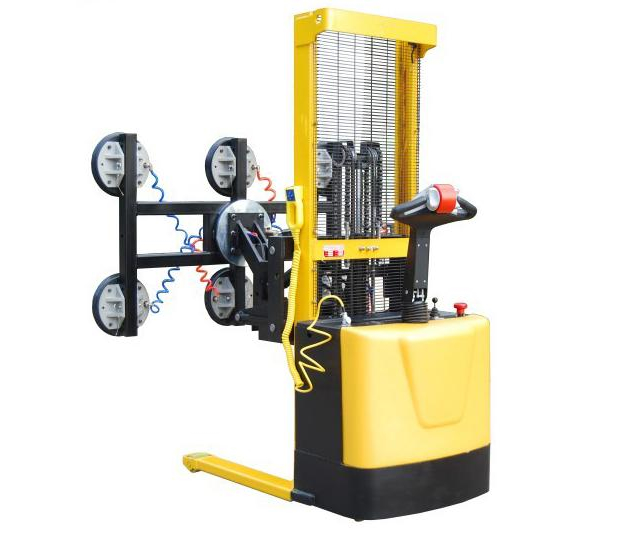
Vacuum Lifters
Source industrial-grade vacuum lifters directly from vetted manufacturers and suppliers. Designed for material handling distributors, heavy machinery importers, and brands seeking OEM/ODM production in volume. Explore our wholesale catalog for reliable lifting solutions engineered for glass, sheet metal, and heavy-duty applications.
Sourcing vacuum lifters at scale requires navigating a complex matrix of load capacities, pneumatic reliability, and stringent safety standards. For industrial distributors and material handling brands, procuring these units from overseas manufacturers demands strict oversight of both component quality and structural integrity. A failure in a vacuum lifting system is catastrophic, meaning your supply chain must prioritize engineering tolerances and rigorous testing over base unit costs.
Core Specifications for Bulk Procurement
When negotiating with manufacturers, vague specifications lead to inconsistent production runs. Buyers must define the operational parameters clearly, as the underlying components—vacuum pumps, accumulator tanks, and suction pads—must be matched to the intended material surface (porous vs. non-porous) and weight.
Specify the exact nature of the load. A lifter designed for smooth architectural glass requires different pad compounds (typically high-grade silicone or specialized NBR) and vacuum flow rates compared to a unit lifting textured diamond-plate steel or porous stone slabs.
Ensure your technical specifications translate accurately to the factory floor. We help define requirements and match them to capable manufacturers.
Talk to our teamManufacturing Quality and Vulnerability Points
The reliability of a vacuum lifter is dictated by the quality of its sub-components and the integrity of its structural frame. On the factory floor, there are several critical areas where inferior manufacturing practices can compromise the final product.
Critical Factory Inspection Points
- Weld Integrity: Load-bearing structural frames must feature continuous, defect-free welds, ideally robotically welded for consistency.
- Vacuum Circuit Redundancy: For loads over specific weights, verify the presence of dual, independent vacuum circuits and non-return valves.
- Pump and Valve Origins: High-wear pneumatic components should ideally be sourced from recognized tier-one component brands (e.g., Thomas, Becker, or reliable domestic equivalents).
- Accumulator Tanks: Ensure vacuum reservoirs are pressure-tested and correctly sized to hold the load in the event of a power failure.
Relying solely on final inspections is risky for heavy lifting equipment. Implementing comprehensive Quality Control & Inspection during the assembly phase ensures that internal pneumatic lines and electrical harnesses are correctly routed and secured before the unit is sealed and painted.
Safety Standards and Compliance
Importing vacuum lifters into Western markets requires strict adherence to regional safety directives. In Europe, EN 13155 dictates that vacuum lifters must hold the load for a minimum of 5 minutes after a power failure and feature a visual/audible low-vacuum warning system. In the US, ASME B30.20 and BTH-1 govern below-the-hook lifting devices.
Verification of Certifications
Never accept a supplier's CE or ASME claim at face value. Always verify the testing reports and the issuing body.
Before committing to a production run, it is highly recommended to conduct thorough Factory Audits to verify that the supplier has the testing infrastructure—such as calibrated load-testing rigs and vacuum decay measurement tools—to validate their compliance claims. If custom modifications are made, utilizing professional Compliance & Testing services ensures the revised design still meets regulatory thresholds.
Pricing Drivers, MOQs, and Lead Times
The cost of a vacuum lifter is primarily driven by its Safe Working Load (SWL), the complexity of its articulation (e.g., manual vs. motorized 90-degree tilt and 360-degree rotation), and the origin of its vacuum pump.
- Minimum Order Quantities (MOQs): Because these are high-value, industrial items, MOQs are typically low. For heavy-duty motorized lifters (500kg+ capacity), factories often accept MOQs of 1 to 5 units. For smaller, manual pump-action suction cups, MOQs usually range from 500 to 1,000 units.
- Lead Times: Standard configurations generally require 30 to 45 days for production. Custom frame designs or specialized pad layouts can extend lead times to 60 days to account for engineering and prototype testing.
Navigating supplier negotiations for heavy equipment requires leverage and local expertise. Let us manage the sourcing and pricing strategy.
Get a free consultationFrequently Asked Questions
Procuring vacuum lifters is an exercise in risk management as much as it is about cost reduction. Success depends on partnering with manufacturers who possess genuine engineering capabilities and a proven track record of uncompromising quality control.
Get Sourcing Help for Vacuum Lifters
Tell us your requirements and our experts will connect you with verified manufacturers.