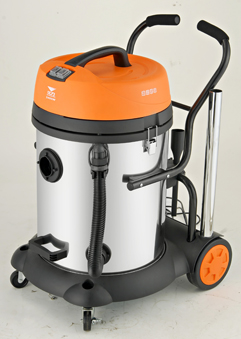
Vacuum Cleaners
Source commercial and industrial vacuum cleaners directly from vetted manufacturers and suppliers. Designed for wholesalers, distributors, and brands seeking reliable OEM/ODM production, our factory network delivers high-performance cleaning equipment built for heavy-duty applications and rigorous daily use.
Sourcing vacuum cleaners for commercial, industrial, or high-volume markets requires looking past basic wattage claims to evaluate true suction performance, motor longevity, and filtration integrity. Whether you are importing heavy-duty wet/dry units or developing a private-label line of commercial backpack vacuums, securing a reliable manufacturing partner means scrutinizing their engineering capabilities and quality control standards.
Defining Performance: Beyond Input Wattage
Many buyers mistakenly evaluate vacuum cleaners based on motor input wattage. While wattage indicates electrical consumption, true cleaning performance is measured by suction power and airflow. When negotiating specifications with a manufacturer, you must define the exact performance metrics required for your target market.
Motor Architecture: Flow-Through vs. Bypass
The core of any commercial vacuum is the motor. The choice of motor architecture directly impacts the unit's lifespan, application suitability, and cost.
| Motor Type | Cooling Method | Application | Durability |
|---|---|---|---|
| Flow-Through | Cooled by vacuumed working air | Dry debris, standard commercial | Moderate (vulnerable to dust bypass) |
| Bypass | Cooled by independent clean air fan | Wet/dry, fine dust, industrial | High (motor isolated from debris) |
If your product roadmap involves custom tooling or specific motor configurations, leveraging dedicated OEM/ODM Services ensures your performance specifications are engineered directly into the product from the ground up.
Need help matching motor specifications to your market requirements?
Discuss your projectManufacturing Quality and Filtration Integrity
A high-performance motor is useless if the vacuum housing leaks air. In commercial environments, filtration integrity is a matter of occupational health and safety. The difference between a premium supplier and a lower-tier factory often lies in their plastic injection molding tolerances and gasket sealing processes.
When conducting Factory Audits on vacuum cleaner manufacturers, assess their assembly lines for the following critical control points:
Critical Assembly & QC Checks
- Injection molding tolerances: Check for warping in the main housing that could cause air leaks.
- Gasket application: Ensure rubber or foam seals around the motor housing and filter seating are uniformly applied.
- Motor balancing: Armatures must be dynamically balanced to prevent excessive vibration and premature bearing failure.
- HEPA certification testing: Verify that the factory tests the sealed system, not just the raw filter media.
- Dielectric voltage-withstand testing (Hi-Pot): Mandatory safety check for all units before packaging.
Catching housing leaks or motor winding defects after production is costly. Implementing rigorous Quality Control & Inspection protocols during the assembly phase ensures that defective units are reworked before they are packed for shipment.
Regulatory Compliance and Certifications
Electrical appliances face strict regulatory hurdles. Importing non-compliant vacuum cleaners can result in customs seizures or liability issues. Ensure your supplier can provide valid, verifiable test reports for your target market.
- North America: UL or ETL certification is mandatory for commercial environments.
- Europe: CE marking, RoHS compliance for materials, and REACH compliance.
- Filtration Standards: If marketing a unit as "HEPA," the entire sealed system must be tested to trap 99.97 percent of particles down to 0.3 microns.
Navigating these requirements can be complex, particularly for new product designs. Utilizing professional Compliance & Testing services helps verify that the factory's certifications are genuine and applicable to your specific production run.
Typical Pricing, MOQs, and Lead Times
Commercial vacuum cleaner production economics differ significantly from cheap consumer models. Because commercial units use heavier-duty components (like bypass motors, thicker ABS or stainless steel tanks, and reinforced hoses), the unit costs are higher, but Minimum Order Quantities (MOQs) are often more accessible.
- Standard MOQs: Typically 200 to 500 units for existing commercial models. Custom tooling or unique colorways will push MOQs to 1,000 units or more.
- Lead Times: 35 to 45 days for standard orders. Allow 60 to 90 days for initial OEM runs requiring custom injection molds.
- Cost Drivers: Motor origin (premium imported motors vs. domestic Chinese motors), tank material (stainless steel vs. polypropylene), and included accessory packages (floor wands, specialized nozzles).
Looking to negotiate better terms and pricing with top-tier vacuum manufacturers?
Talk to our teamFrequently Asked Questions
Sourcing commercial vacuum cleaners requires balancing motor lifespan, filtration integrity, and unit cost. By focusing on verifiable performance metrics like water lift and CFM, and partnering with factories that maintain strict assembly tolerances, buyers can secure reliable equipment that stands up to professional use.
Get Sourcing Help for Vacuum Cleaners
Tell us your requirements and our experts will connect you with verified manufacturers.