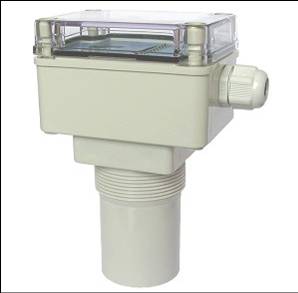
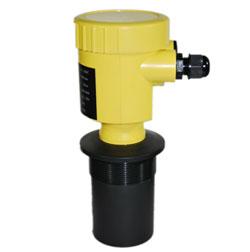
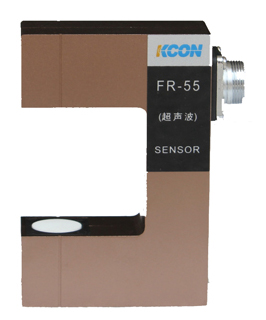
Ultrasonic Sensors
Source bulk ultrasonic sensors from vetted suppliers and manufacturers across Asia. Designed for procurement managers, electronics distributors, and brands requiring reliable OEM and ODM production, our factory-direct network ensures you secure competitive wholesale pricing and consistent quality for your high-volume supply chain.
Sourcing ultrasonic sensors in volume requires navigating a deeply fragmented market of electronic component manufacturers. The core challenge isn't just finding a factory that produces standard 40kHz transducers; it's ensuring consistent beam directivity, reliable blind-zone performance, and stable signal processing across thousands of units without batch-to-batch variation.
Defining Specifications for Factory Production
When negotiating with suppliers, vague specifications lead to inconsistent performance. Professional buyers must define exact parameters to ensure the factory uses the correct piezoelectric ceramics and tuning circuits.
The "blind zone" (the minimum detection distance) is a critical specification; standard 40kHz sensors typically have a blind zone of 20cm to 25cm. If your application requires near-field detection, you must specify a higher frequency transducer or a dual-probe design (separate transmitter and receiver) to mitigate internal ringing. Furthermore, you must define the required output protocol—whether that is a simple analog voltage, PWM, UART, or I2C—as this dictates the MCU the factory must integrate onto the PCB.
| Sensor Type | Typical Frequency | Environment | Primary Manufacturing Challenge |
|---|---|---|---|
| Open Structure | 40kHz | Indoor / Dry | Dust and moisture ingress affecting the diaphragm |
| Closed / Waterproof | 40kHz to 200kHz | Outdoor / Harsh | Acoustic impedance matching and potting consistency |
Struggling with inconsistent sensor batches? Let us vet your suppliers and standardize your technical requirements.
Talk to our teamWhere Quality is Won or Lost on the Factory Floor
The reliability of an ultrasonic sensor depends heavily on the assembly and calibration processes. Matching the acoustic impedance between the piezoelectric element and the air is crucial. Factories must use precise matching layers; if a supplier cuts corners on material selection here, the sensor will suffer from weak signal transmission, drastically reducing its effective range.
Poorly applied potting compounds in closed sensors can cause internal acoustic reflections, leading to false positives. Similarly, if the transducer isn't perfectly aligned on the PCB or within the housing, the beam angle will skew, completely altering the detection zone. Engaging a partner for Quality Control & Inspection is critical to catch these specific electronic and mechanical defects before shipment.
Critical Pre-Shipment Inspection Points
- Transducer alignment and PCB soldering integrity
- Potting compound consistency (checking for internal air voids)
- Blind zone calibration and maximum range testing
- Signal-to-noise ratio consistency across sample batches
- Housing seal integrity for IP-rated models
Sourcing Mechanics: MOQs, Pricing, and Lead Times
Pricing in the ultrasonic sensor market is driven by the complexity of the housing, the precision of the MCU, and the environmental protection rating. Standard open-type modules are highly commoditized and produced by the millions, while industrial-grade, IP67-rated sensors require specific tooling, specialized potting, and rigorous testing.
If you require custom form factors, unique beam angles, or proprietary communication protocols, utilizing OEM/ODM Services will impact your initial tooling costs and lead times. Typical lead times for standard modules range from 15 to 25 days. Custom orders requiring new PCB layouts or specialized waterproof housings often extend to 45 days or more to accommodate prototyping and tooling validation.
Need to negotiate better pricing or develop a custom sensor housing? We manage the entire factory relationship.
Get a free consultationFrequently Asked Questions
Procuring reliable ultrasonic sensors at scale demands strict oversight of both component sourcing and assembly tolerances. By locking down your exact specifications and enforcing rigorous testing protocols at the factory level, you protect your supply chain from costly field failures. If you need experienced boots on the ground to manage your electronics procurement, our team is ready to assist.
Get Sourcing Help for Ultrasonic Sensors
Tell us your requirements and our experts will connect you with verified manufacturers.