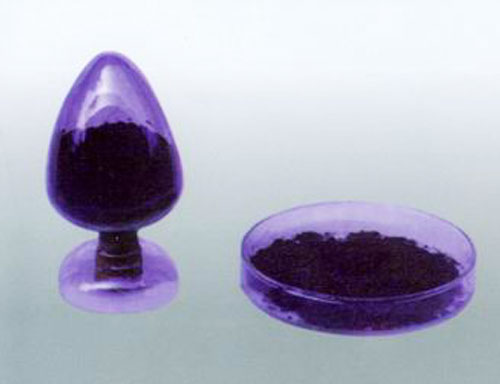
Tungsten Powder
Source premium tungsten powder in bulk directly from vetted manufacturers and suppliers. Designed for procurement managers, distributors, and industrial importers, our supply chain access ensures consistent purity and precise particle size distribution for hardmetal and alloy production.
Tungsten powder is the foundational raw material for cemented carbides, heavy tungsten alloys, specialized electrical contacts, and increasingly, additive manufacturing. Because it is highly dense and possesses the highest melting point of all metals, processing it requires extreme precision. Sourcing this material in volume means navigating volatile global raw material indexes, strict export regulations, and factory-level variations in particle morphology.
Defining Critical Specifications
When procuring tungsten powder, generic purity claims are insufficient. Buyers must define exact physical and chemical parameters, as slight deviations will drastically alter the shrinkage, porosity, and hardness of the final sintered product.
| Classification | Average Particle Size (FSSS) | Common Applications |
|---|---|---|
| Ultra-Fine | 0.4 to 0.8 microns | Micro-drills, fine hardmetals |
| Fine to Medium | 1.0 to 9.0 microns | General cutting tools, wear parts |
| Coarse | 10.0 to 50.0+ microns | Heavy alloys, mining tools, diamond matrices |
Key Quality Metrics to Specify
- Purity Levels: Industrial standard is 99.9%, though high-performance applications often require 99.95% or 99.99%. Trace elements (Iron, Molybdenum, Nickel, Silicon) must be tightly controlled.
- Fisher Sub-Sieve Sizer (FSSS): The standard method for measuring average particle size (APS). Ensure the supplier provides batch-specific FSSS reporting.
- Apparent and Tap Density: Critical for mold filling and pressing operations. These metrics dictate how the powder flows and settles before sintering.
- Oxygen Content: Must be kept exceptionally low (often under 0.15%, depending on APS) to prevent oxidation defects during the sintering phase.
Manufacturing Process & Factory-Level Risks
Tungsten powder is typically produced via the hydrogen reduction of tungsten trioxide (WO3) or ammonium paratungstate (APT). The temperature, hydrogen flow rate, and boat speed through the reduction furnace dictate the final particle size and morphology.
Inconsistent furnace temperature control leads to agglomeration—where fine particles fuse into hard clusters that ruin the uniformity of the powder. Similarly, poor moisture control during cooling and packaging can cause the powder to oxidize rapidly.
Need reliable access to high-purity tungsten? We vet manufacturers for strict furnace controls and handle the complex export compliance so you can secure a stable supply chain.
Talk to our teamTo mitigate these risks, rigorous quality control & inspection is required before the material is sealed. Testing should include laser diffraction for particle size distribution (PSD) alongside traditional FSSS, and chemical analysis via ICP-MS for trace impurities.
Sourcing Hubs and Export Realities
China dominates the global tungsten supply chain, producing over 80% of the world's raw tungsten. The primary manufacturing hubs are located in Jiangxi, Hunan, and Fujian provinces, where deep integration from mining to APT refining to powder reduction exists.
However, tungsten is classified as a strategic metal. This means the Chinese government strictly controls export quotas and requires specialized export licenses. Buying directly from a factory that lacks an active export quota can result in shipments being seized at customs. Partnering with a team that manages comprehensive product sourcing ensures you are only dealing with suppliers who possess the legal framework and quotas to export legally and on time.
Buying Mechanics: Pricing, MOQs, and Logistics
Pricing Dynamics
Tungsten powder pricing is not static; it is directly indexed to the global price of Ammonium Paratungstate (APT). Factory quotes are typically valid for only a few days to a week. When negotiating bulk contracts, pricing is usually structured as the current APT index price plus a processing fee (conversion cost) based on the specific FSSS and purity required. Ultra-fine powders command a higher processing premium due to the slower reduction times required.
MOQs and Packaging
- Typical MOQ: 25 kg to 50 kg for standard particle sizes, as this aligns with standard packaging (one iron drum). Custom particle size distributions may require MOQs of 500 kg to 1,000 kg to justify a dedicated furnace run.
- Packaging Standard: Tungsten powder must be packed in double-layered anti-static plastic bags, vacuum-sealed or backfilled with argon gas, and housed inside sealed iron drums.
Because tungsten is exceptionally heavy (high density), freight costs can accumulate quickly. Efficient shipping & freight consolidation is necessary to optimize the landed cost per kilogram, particularly for LCL (Less than Container Load) shipments.
Stop guessing on APT index fluctuations and export quotas. Let us negotiate pricing, verify factory capabilities, and manage your freight directly from the source.
Get a free consultationFrequently Asked Questions
Securing a reliable supply of tungsten powder requires more than just finding a factory with a low price; it demands a deep understanding of metallurgical specifications, real-time commodity pricing, and strict export compliance. Properly vetting your supply chain ensures you receive material that performs consistently on your production line, shipment after shipment.
Get Sourcing Help for Tungsten Powder
Tell us your requirements and our experts will connect you with verified manufacturers.